Spain has escalated tensions with Italy by announcing it will reinstate temporary border checks on arrivals from across the border, marking a significant rupture in the European Union's cherished Schengen system of borderless travel. The Spanish government confirmed on Friday that the measures would commence at ports and airports the following day, remaining in place until September 7 unless the underlying circumstances shift substantially. This tit-for-tat response represents a rare display of hostility between two major EU economies and underscores the deepening fractures within Europe's migration management framework.
The immediate trigger for Spain's announcement lies in Italy's own decision to unilaterally reintroduce border checks on travellers arriving from Spain on August 1, a move that Madrid characterised as lacking justification, discriminatory in nature, and fundamentally contrary to European Union interests and principles. Spain has demanded that Italy withdraw these measures immediately, framing the Italian action as an unauthorised breach of continental solidarity that disrupts the seamless movement of people that underpins the Schengen agreement. The Spanish government's position reflects frustration at what it views as Italy's overreach in response to the crisis, which remains contained to the Spanish territory of Ceuta.
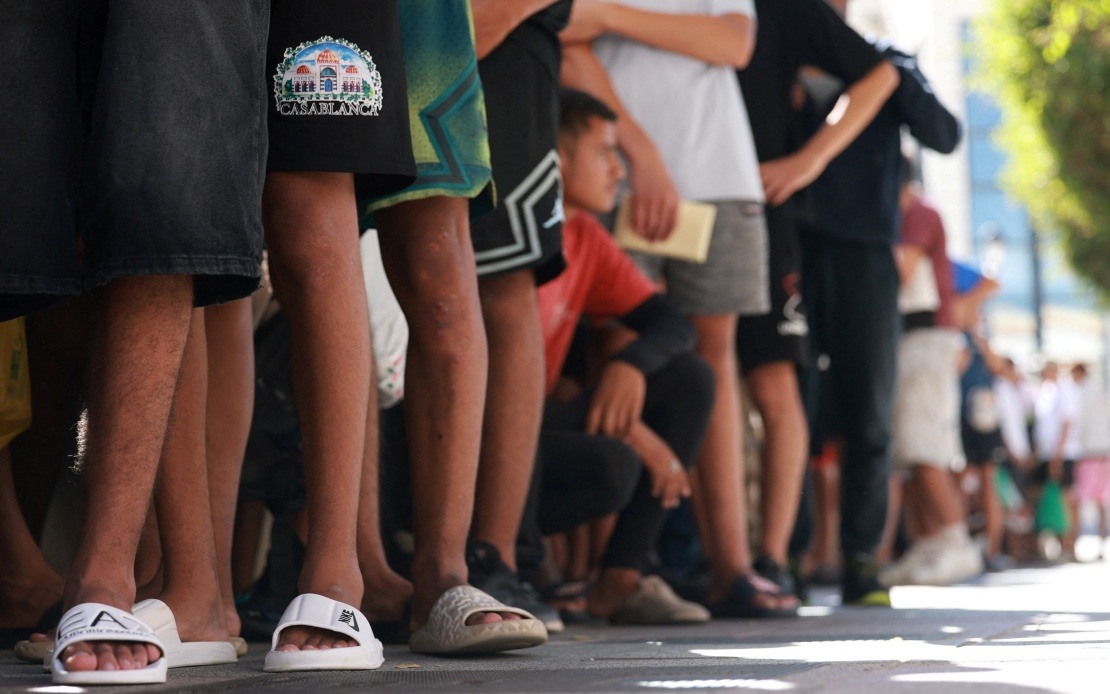
The escalating diplomatic row stems ultimately from a humanitarian emergency unfolding in Ceuta, Spain's tiny North African enclave perched on the Moroccan coast. In a dramatic surge at the end of July, approximately 80,000 people crossed into the Spanish territory, though the vast majority—nearly 75,000—subsequently made the voluntary decision to return. However, between 3,000 and 5,000 migrants remain stranded within Ceuta's borders, severely straining reception infrastructure and creating what local officials have characterised as a severe humanitarian emergency. Ceuta's president, Juan Jesus Vivas, highlighted the precarious situation on Thursday, underlining the desperation of those seeking entry into Europe through this strategic bottleneck.
Italy's position reflects deep anxiety about secondary migration—the prospect that people arriving in one EU state might subsequently travel to another through the open borders of the Schengen zone. Italian Prime Minister Giorgia Meloni announced the border control measures on July 31, explicitly concerned about migrants potentially making their way northward from Spain into Italy and beyond. Rome has stated that it will maintain temporary checks on third-country nationals arriving from Spain through at least August 15, citing legitimate national security and border-management concerns. The Italian government has emphasised that its measures do not target Spanish or other EU citizens travelling by air or sea, a technical distinction designed to demonstrate compliance with EU law while still exerting border enforcement.
Rome has adopted a defiant stance toward international criticism, explicitly rejecting what it characterises as ultimatums and external pressure on matters it deems purely within its national sovereignty. The Italian authorities have stressed that border controls constitute a legitimate exercise of state authority and that they would endeavour to minimise disruptions to legitimate cross-border commerce and movement. This rhetorical positioning reflects a broader conservative approach to immigration that has gained traction across parts of Europe, where governments argue that external pressure undermines their ability to manage borders according to domestic preferences and capacities.
The dispute between Spain and Italy illuminates the profound tensions embedded within the Schengen system, which paradoxically both unites and divides Europe. While the agreement's architects envisioned borderless movement as a fundamental achievement, it simultaneously creates pressures when one state faces a sudden influx, because that state cannot easily prevent onward movement without reimposing controls. For Southeast Asian readers, this parallels dynamics within ASEAN, where the principle of open regionalism coexists with state anxieties about uncontrolled migration and the transnational movement of vulnerable populations. The European example demonstrates how even deeply integrated regional projects struggle to balance mobility, security, and humanitarian concerns.
The Spanish government's decision to impose reciprocal border checks represents an attempt to demonstrate that unilateral measures carry diplomatic costs. By mirroring Italy's actions, Madrid seeks to restore pressure on Rome and reassert the principle that such controls require collective European decision-making rather than individual state initiative. The random identity and document checks that Spain will implement operate within the letter of EU law, which permits temporary border controls under specified circumstances, yet they signal serious displeasure with Italy's approach. This measured retaliation reflects Spain's desire to resolve the dispute through negotiation rather than outright escalation.
The migration surge into Ceuta itself warrants examination, as it reveals how vulnerable populations exploit regional instability and proximity to Europe. Ceuta's status as a Spanish enclave just kilometres from Morocco creates obvious permeability, and periodic surges reflect desperation in North Africa and broader Middle Eastern conflict zones. The fact that approximately 94 percent of those who entered subsequently returned voluntarily suggests that many were acting opportunistically or seeking temporary entry rather than permanent settlement. Nevertheless, the remaining population continues to overwhelm local resources and create cascading consequences throughout the EU asylum system.
For Malaysia and Southeast Asia, this European dispute carries instructive value as regional governments contemplate their own migration and border management frameworks. The Ceuta incident demonstrates how geographically concentrated arrivals can destabilise even wealthy, organised societies with developed infrastructure. Moreover, the willingness of Italy and Spain—both ostensibly bound by supranational commitments—to engage in this form of diplomatic conflict illustrates that treaty obligations frequently bend under pressure from public sentiment and perceived national interest. This observation carries particular weight in Southeast Asia, where varying levels of development, differing security concerns, and diverse governance models already complicate regional cooperation on migration.
The dispute also reflects broader concerns about how the European Union allocates responsibility for managing arrivals at its periphery. Spain, as a gateway state facing Africa, arguably bears disproportionate burden while more distant northern European nations maintain restrictive border policies. Italy, facing the Mediterranean with its own historic migration pressures, has grown increasingly impatient with what it perceives as unequal burden-sharing. These tensions remain unresolved and likely to resurface whenever significant migration pressures materialise. The temporary nature of both sets of border controls—Spain's through September 7 and Italy's through at least August 15—suggests that both governments expect eventual resolution through negotiation, yet the underlying structural issues driving such crises persist.

