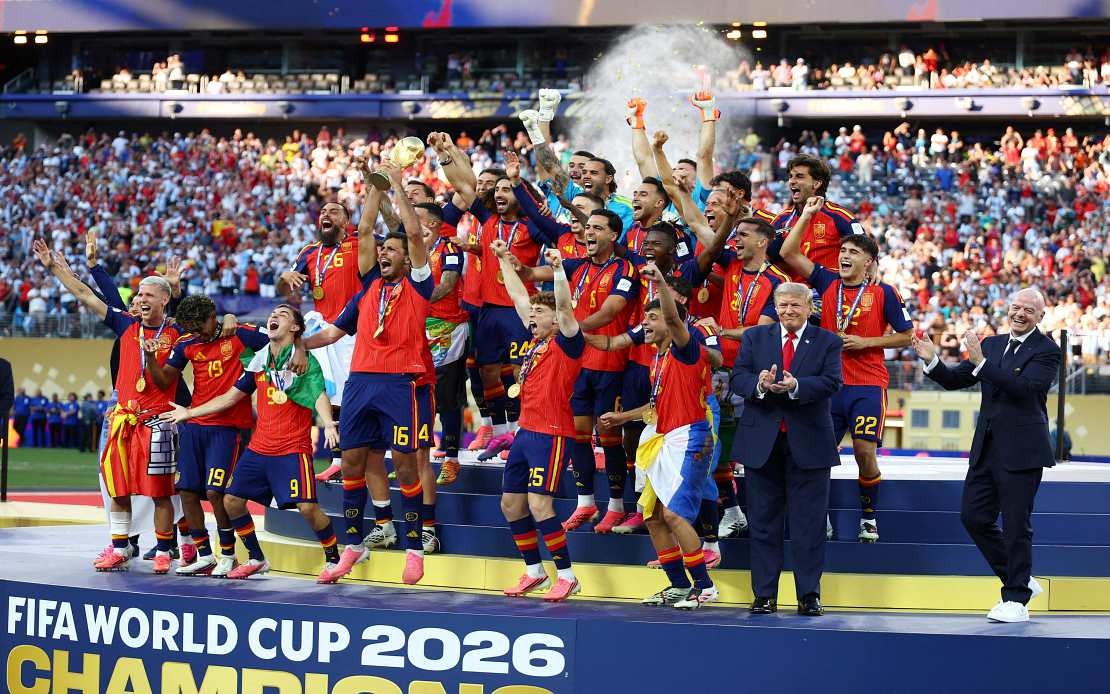
Spain's football squad will touch down at Madrid airport on Monday afternoon to begin a day of triumphant celebrations across the Spanish capital following their stunning World Cup victory in the United States. The team, captained by Rodri, is scheduled to land at 12:50 pm local time, marking the formal conclusion of their journey abroad and the start of a carefully orchestrated series of public events designed to honour their achievement and allow millions of supporters to participate in the festivities.
The carefully planned itinerary reflects the magnitude of Spain's accomplishment. A formal reception hosted by King Felipe VI at the Royal Palace will set the ceremonial tone for the afternoon, underscoring the national significance of the team's performance and providing the players with an audience with Spain's head of state. This traditional protocol demonstrates how deeply football success resonates within Spanish society, elevating the players beyond their athletic roles to become ambassadors of national pride and cultural achievement.
Following the royal engagement, the celebration will transition into a public spectacle as the team embarks on an open-top bus parade through Madrid's streets. Organisers anticipate hundreds of thousands of residents will line the routes to catch glimpses of their heroes, transforming the city into a sea of red and gold. The parade represents a democratic moment in these celebrations, offering ordinary Spaniards an opportunity to participate directly in marking their nation's sporting accomplishment, regardless of economic status or social position.
The festivities are scheduled to culminate at Cibales Square, where a major concert and gathering is planned to commence at 6 pm, with the team expected to arrive at 9 pm. This final destination has been selected to accommodate the anticipated scale of attendance, with the square's capacity and accessibility making it an ideal venue for a mass celebration. The evening show will provide a visual and emotional crescendo to the day's events, allowing the players to interact with supporters in an intimate yet grand setting.
Defender Marc Cucurella articulated the team's enthusiasm for returning home, emphasising the desire to include those supporters who were unable to travel to the United States for the matches. His comments underscored that the players recognise their achievement belongs not only to those in the squad but to the broader Spanish public who sustained their efforts through prayers, hope, and unwavering national support. This inclusive sentiment reflects a mature understanding among the modern generation of Spanish footballers about their responsibilities as public figures and national representatives.
Spain's World Cup victory on Sunday represented a momentous achievement in the nation's football history. The team secured their second men's World Cup title thanks to Ferran Torres' goal during extra time against Argentina, a dramatic finish that settled a tightly contested match. The victory adds another chapter to Spain's illustrious football legacy, coming years after their previous World Cup triumph, and reaffirms the country's status as a powerhouse within international football competition.
The presence of Spain's royal family and Prime Minister Pedro Sánchez at the match in New Jersey underscored the national importance attributed to the tournament. Their attendance symbolised that this was not merely a sporting event but a matter of state significance, with the highest levels of Spanish governance personally witnessing and celebrating the team's performance. Mr Sánchez subsequently took to social media platform X to publicly congratulate the players, posting: "We Are World Champions. Our national team is tremendous. Thanks, Team." His immediate and enthusiastic response reflected the emotional investment that Spain's political leadership has in football success.
For Malaysian and Southeast Asian observers, Spain's homecoming celebrations offer insights into how developed nations commemorate sporting achievements at the highest levels. The coordination between government institutions, the royal family, and sports organisations demonstrates an integrated approach to national celebration that reflects deeply embedded cultural values around monarchy, democracy, and collective pride. The scale of anticipated public participation also illustrates the universal language of football and its capacity to transcend social divisions and unite populations around shared achievement.
The Madrid celebrations also provide a comparative lens for understanding how different nations value and honour their athletes. While Southeast Asian countries have their own traditions of welcoming returning champions, Spain's formal integration of royal patronage with popular celebration reflects the particular institutional structures and historical traditions of European monarchy combined with contemporary democratic values. The planned events suggest that national celebration need not choose between honouring established institutions and embracing popular participation—both can coexist within a carefully choreographed programme.
Spain's World Cup victory arrives at a moment when European football continues to evolve, with Spanish football having undergone significant generational transitions in recent years. The success of this particular squad, under their captain Rodri's leadership, demonstrates the continued relevance and competitive strength of Spanish football despite predictions of decline following earlier tournament disappointments. The homecoming celebration thus carries additional significance as a vindication of the team's methods, their coaching staff's strategies, and the broader football development structures that have sustained Spain's competitive edge.
The logistics involved in managing hundreds of thousands of supporters across multiple venues throughout Madrid will test the city's capacity for crowd control and public event management. Security services will need to balance enthusiasm with safety, ensuring that the joyous atmosphere does not create dangerous circumstances. The success of these celebrations will depend not only on the emotional investment of supporters but also on the meticulous planning and professional execution by Madrid's municipal authorities and security personnel working in coordination with Spain's football federation and government officials.
As Spain prepares for what promises to be one of the most significant public celebrations in recent years, the events scheduled for Monday will demonstrate both the nation's capacity for collective joy and the institutional frameworks that allow such celebrations to occur safely and meaningfully. The homecoming encapsulates fundamental truths about football's role in modern societies, where athletic achievement can bridge divisions and create moments of genuine national unity that transcend the boundaries of ordinary political and social discourse.

