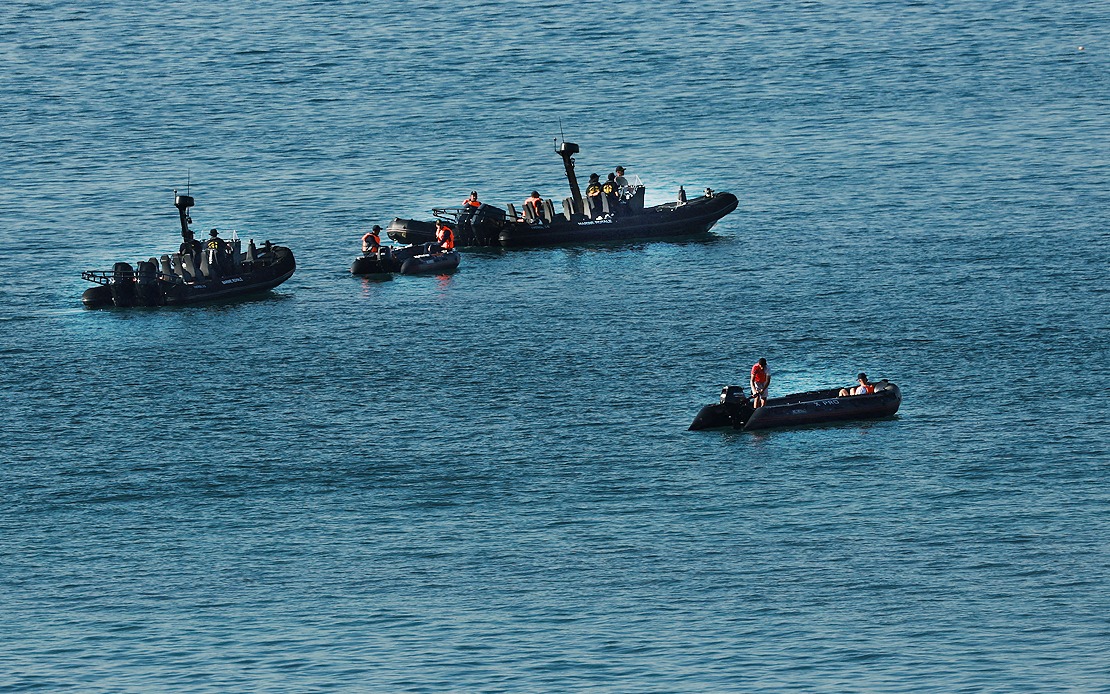
Spanish authorities are engaged in intensive search-and-recovery operations off the coast of Ceuta as the death toll from a dramatic surge in migrant crossings continues to mount. So far, 67 bodies have been retrieved from the waters separating Morocco from the Spanish exclave, each representing a failed attempt to reach European Union territory by swimming across the narrow strait. The tragic toll underscores the desperate circumstances facing those attempting to breach Spain's maritime borders, and the humanitarian consequences of Europe's fractured migration policies.
The scale of the migration event that triggered this humanitarian disaster was extraordinary. Within the span of just a few days, approximately 50,000 migrants crossed from Morocco into Ceuta, a Spanish territory whose total population stands at roughly 85,000 people. This represents one of the largest single-wave border breaches in recent European history, overwhelming local infrastructure and forcing emergency responses from Spanish authorities. The sheer numbers suggest a coordinated or encouraged movement rather than the typical trickle of individual migrants, raising questions about what circumstances or signals prompted such a massive departure from Morocco.
Local officials have mobilised resources to confront the scale of casualties. Authorities are preparing facilities with capacity to accommodate up to 200 bodies, a grim indication of the expected toll as recovery operations continue in waters where visibility and accessibility remain challenging. This preparation reflects the sobering reality that rescuers anticipate finding additional victims in coming days as search efforts expand and deeper waters are explored. The infrastructure itself becomes a symbol of the crisis's human cost.
While the immediate crisis appears to have subsided, the political ramifications continue to reverberate across the European Union. Madrid's Socialist-led government has faced withering criticism from fellow EU leaders over its management of the emergency. This political backlash extends beyond questions of border control effectiveness; it touches on deeper anxieties within Europe about migration policy coordination and the burden-sharing mechanisms between member states. The criticism suggests that Spain's response, regardless of its practical merits, failed to satisfy EU partners who view such surges as collective security threats.
The migratory pressure itself reflected broader patterns that have destabilised European border management. Spanish officials reported that most of the 50,000 individuals who successfully crossed into Ceuta have since voluntarily returned to Morocco, a significant development suggesting that many migrants may have been motivated by temporary circumstances or immediate family reunification rather than permanent settlement aspirations. However, the voluntary return rate belies the exceptional challenge these numbers posed to Spanish and local authorities in real time.
In response to the crisis, Spain has undertaken structural measures designed to prevent future mass crossings. Workers have been engaged in installing maritime buoys that will form a physical barrier in the sea off Ceuta, essentially closing a major vector for irregular entry. This visible response serves both practical and symbolic purposes, demonstrating Spanish commitment to border security while attempting to deter future attempts. The buoy barrier represents an escalation in the militarisation of Spain's maritime boundaries, reflecting European anxiety about uncontrolled migration flows.
The legal circumstances underlying these enforcement measures reveal the complexity of European migration governance. Spain's Supreme Court had previously ruled that individuals entering Spanish territory irregularly through unfenced sections—including maritime approaches—retained the right to individual asylum assessments under EU law. This ruling effectively created an incentive for maritime crossing, as successful water entry provided legal pathways to formal processing that land crossings at official checkpoints might not guarantee. By installing physical barriers, Spain seeks to circumvent this judicial loophole and regain practical control over entry methods.
For Malaysian and Southeast Asian observers, the Ceuta crisis illuminates European contradictions in migration management that parallel challenges across Asia-Pacific. Like Malaysia, Spain finds itself positioned as a gateway state receiving disproportionate migrant flows while other developed nations debate responsibility-sharing. The legal instruments available to European states to manage borders reveal how courts can constrain executive authority, a dynamic familiar to Malaysian policymakers navigating constitutional and legal limits on immigration enforcement. The Spanish experience demonstrates that purely structural or physical barriers prove insufficient without complementary legal frameworks that provide clarity and consistency in asylum processing.
The broader question of why 50,000 individuals attempted crossing simultaneously remains incompletely answered. Analysis suggests coordination through social media, information networks, or deliberate encouragement from smuggling organisations seeking to exploit temporary gaps in border enforcement. Understanding these motivational triggers would be valuable for Malaysia and other Southeast Asian states facing irregular migration pressures, as addressing root causes of mass movement attempts requires understanding the information ecosystems and social networks that mobilise migrants.
The humanitarian cost of these crossings—now quantified in 67 deaths with potentially more to follow—reflects a systemic failure of international cooperation on migration. Neither Morocco nor Spain can unilaterally resolve the fundamental mismatch between aspirations for entry to developed economies and the legal and physical capacity to accommodate mass migration. Southeast Asian nations confront analogous pressures, whether as transit routes or destination countries for irregular migrants. Spain's response, combining enforcement infrastructure, legal reinterpretation, and humanitarian preparedness, offers a partial template for managing crisis situations while highlighting the limitations of national-level solutions to transnational migration challenges.

