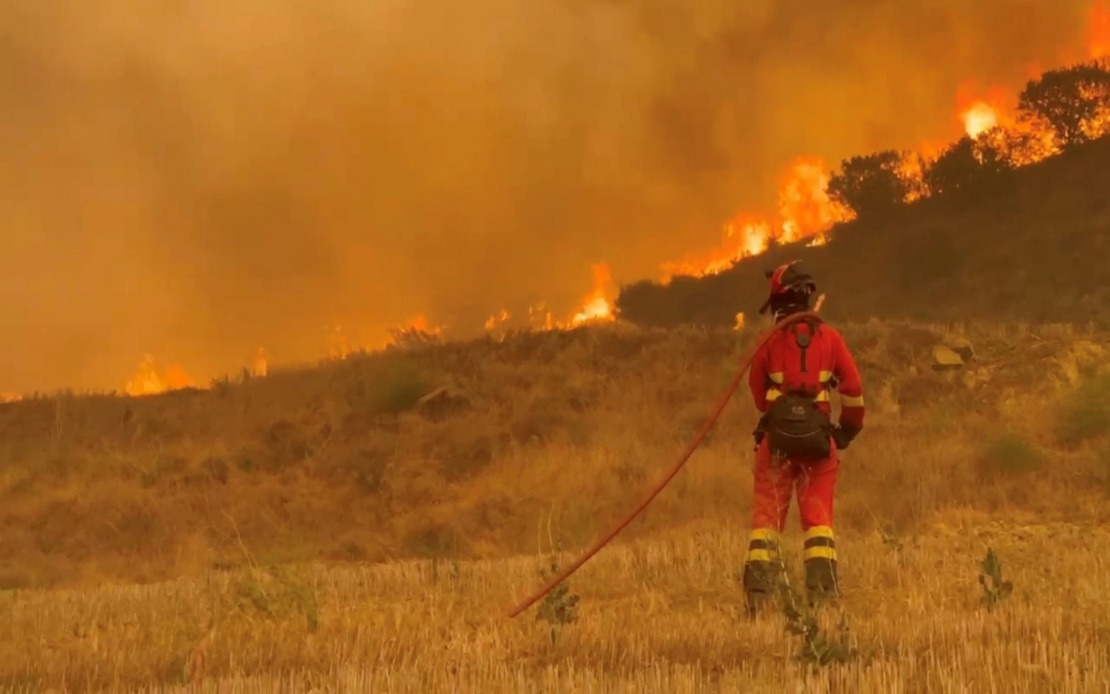
Spain is grappling with its most significant wildfire of 2024 in the northeastern province of Zaragoza, where flames have ravaged approximately 12,000 hectares of land and prompted authorities to evacuate over 1,100 residents. The blaze, which erupted Wednesday in the Cinco Villas region, continues to pose a substantial threat to surrounding communities, with officials describing it as remaining in an active state and experiencing considerable expansion overnight into Friday.
The fire's reach has become increasingly concerning, cutting across an approximately 60-kilometre perimeter and necessitating the closure of several major roads in the affected zone. Authorities have implemented evacuation orders across five municipalities within Zaragoza province and one municipality in the neighbouring Navarre region, disrupting normal life for thousands of families. Local officials have maintained tight restrictions on movement through parts of the Cinco Villas region, with two key transport routes remaining sealed off as a precautionary measure to facilitate emergency response operations and ensure public safety.
Emergency response efforts have mobilised substantial resources to contain the spreading flames. On Thursday, firefighting teams deployed approximately 400 ground personnel alongside 19 aircraft equipped with water-dropping capabilities to attack the fire from multiple fronts. Overnight operations concentrated on safeguarding residential areas in Uncastillo, a priority operation reflecting the immediate threat to inhabited zones. Despite these intensive efforts, firefighters have found the blaze particularly challenging to suppress, as the perimeter continues to expand and new hotspots develop.
The escalating crisis has stretched Spain's emergency response capacity across multiple fire zones simultaneously. In addition to the Zaragoza catastrophe, authorities are managing a separate wildfire in La Mierla within the northern province of Guadalajara, which has already consumed approximately 900 hectares and necessitated evacuations and shelter-in-place measures for nearby populations. The dual crisis prompted regional officials to formally request deployment of Spain's Military Emergency Unit, which dispatched around 100 military personnel to reinforce civilian firefighting operations. A third wildfire near Lozoyuela, situated north of Madrid, continues to burn unchecked, though emergency services report it is progressing with some favourable developments while remaining neither fully contained nor under complete operational control.
The fires have inflicted disruptions to essential infrastructure, though partial recovery efforts have begun. Electricity supplies, which were interrupted across multiple affected towns, have been fully restored, allowing residents to maintain critical communications and provide care for vulnerable populations. However, the road closures and ongoing evacuation zones continue to severely restrict movement and commerce in affected regions, compounding the immediate hardship experienced by evacuated families and local businesses.
Investigations into the fire's origins have yielded preliminary leads in some cases. The Civil Guard has arrested an individual suspected of deliberately igniting the Madrid-region fire, demonstrating that human activity remains a significant component of wildfire causation alongside natural factors. The regional government has indicated its intention to participate as a civil party in the legal proceedings, signalling a serious approach to prosecuting alleged arson and holding responsible parties accountable.
A combination of meteorological and environmental factors has conspired to create exceptionally dangerous fire conditions across Spain's landscape. Persistent high temperatures, powerful wind patterns, critically low humidity levels, and an abundance of dry vegetation have created ideal conditions for rapid fire spread and intensity. This dangerous convergence is particularly pronounced given that the region experienced substantial rainfall during spring, which promoted lush vegetation growth—growth that subsequently dried out during the hot summer months, creating an explosive fuel load awaiting ignition.
Beyond the immediate weather patterns, broader environmental and demographic trends are fundamentally transforming Spain's wildfire risk profile. Climate change has generated a long-term shift toward hotter, drier conditions that extend the traditional fire season and intensify peak-season danger. Simultaneously, the systematic abandonment of rural areas across Spain has reduced active land management, allowing vegetation to accumulate in patterns that accelerate fire spread and reduce opportunities for controlled burns and preventative vegetation clearing. These structural trends suggest that major wildfires may represent an emerging norm rather than exceptional occurrences in Spain's future landscape.
For regional observers, Spain's current wildfire crisis offers a sobering illustration of vulnerability facing Mediterranean and southern European territories as climate patterns shift. Malaysia and Southeast Asia, though facing distinct environmental challenges, are not immune to similar catastrophic fire scenarios, as demonstrated by the transboundary haze episodes that periodically affect the region. The Spanish experience underscores the critical importance of investing in coordinated emergency response infrastructure, maintaining robust rural land management practices, and recognising climate adaptation as an essential governance priority rather than optional policy consideration.

