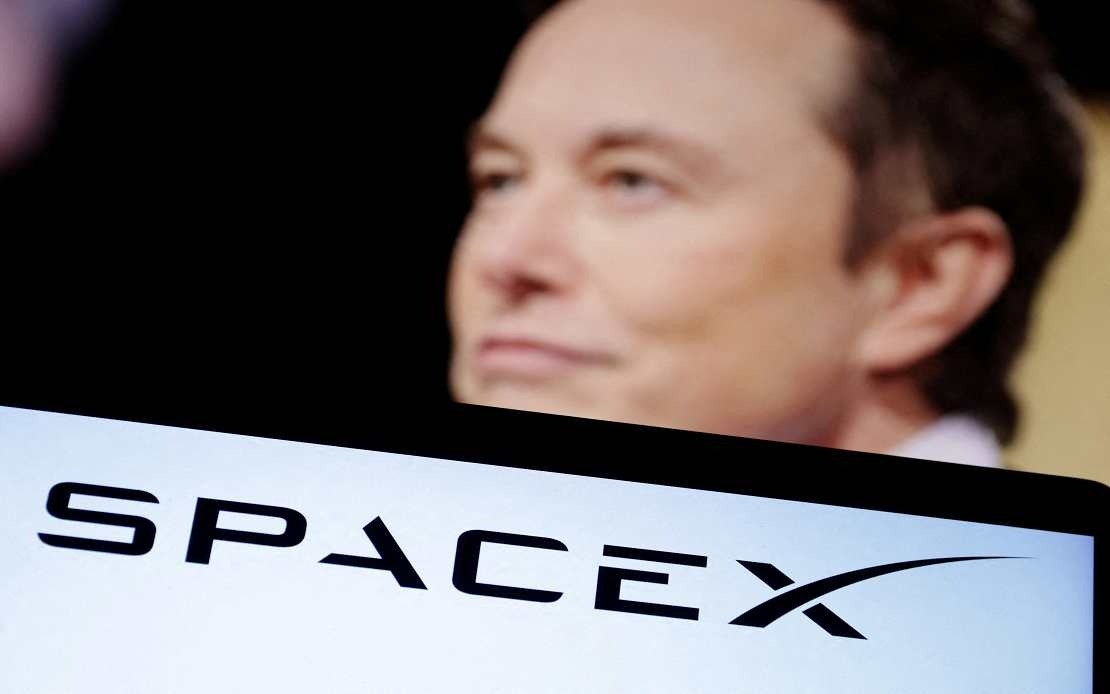
SpaceX has demonstrated a marked improvement in its financial position, cutting its quarterly losses to US$541 million from approximately US$1 billion a year earlier, even as the company navigates the complexities of maintaining its valuation following one of the most significant initial public offerings in recent history. The San Jose-based aerospace manufacturer, owned by entrepreneur Elon Musk, unveiled these results on Tuesday, revealing a company in transition between its historically loss-making early stages and potential future profitability, though challenges remain in justifying its extraordinarily high market valuation.
The company's top-line performance exceeded market expectations substantially, with quarterly revenue reaching US$7.8 billion—a nearly 92 percent year-on-year expansion that considerably outpaced the consensus analyst forecast of roughly US$6.9 billion. This growth trajectory underscores the accelerating demand for SpaceX's commercial services and the broadening appeal of its core business segments. Operating profit improvements further strengthened the narrative, climbing 80 percent to approximately US$1.66 billion, suggesting that SpaceX's operational leverage is beginning to materialise as the company scales its activities across multiple revenue streams.
Starlink, the company's satellite internet service subsidiary, remains the primary engine driving SpaceX's financial momentum. During the quarter, Starlink generated around US$4.3 billion in revenue, representing nearly two-thirds year-on-year growth and now accounting for the majority of the parent company's income. The service has broadened its customer base beyond individual consumers into the commercial sector, with an expanding roster of airlines integrating Starlink connectivity for in-flight passenger services. This diversification into premium commercial customers represents a significant shift in Starlink's business model, potentially offering higher-margin revenue opportunities than consumer subscriptions alone.
Subscriber growth continues to pace the expansion, with the active Starlink customer base climbing from 10.3 million to 12 million users within a single quarter. This trajectory suggests sustained demand for satellite-based broadband connectivity, particularly in regions where terrestrial infrastructure remains underdeveloped or economically unviable. For Southeast Asian nations with sprawling geographies and varied levels of digital infrastructure investment, Starlink's expansion carries implications for bridging connectivity gaps, though regulatory and spectrum allocation issues in the region continue to present obstacles to rapid market penetration.
Looking forward, SpaceX has articulated ambitions to fundamentally alter the competitive landscape of global telecommunications. The company plans to deploy new satellite generations capable of establishing direct connectivity between Starlink and smartphones, effectively creating a satellite-to-handset network that would bypass traditional cellular infrastructure. Such a development would position SpaceX in direct competition with entrenched telecommunications operators worldwide, potentially disrupting established business models and raising questions about regulatory frameworks designed when such direct competition between space-based and terrestrial networks was unforeseen.
The company's unprecedented IPO, launched in mid-June, raised US$75 billion at an issue price of US$135 per share, establishing SpaceX with an initial market capitalisation approaching US$1.8 trillion. This valuation reflects investor enthusiasm tempered by acknowledgment of the company's current losses, which SpaceX has justified through references to ambitious artificial intelligence initiatives and transformative technologies still in development stages. The gap between valuation and current financial performance underscores the speculative nature of growth investing in aerospace and technology sectors, where investors price in decades of potential future cash generation rather than current profitability metrics.
The post-IPO trading trajectory has proven volatile and disappointing for early backers. Following its public debut, the stock climbed to just above US$225 per share, driven considerably by retail investor enthusiasm and momentum trading. However, subsequent weeks witnessed a steady erosion of these gains, with the share price declining substantially below its US$135 issue price to close Tuesday's regular trading around US$125. This eight percent decline in after-hours trading following the earnings announcement suggests that investors may be reassessing the company's valuation multiples relative to its current and near-term financial performance.
A critical juncture approaches on Thursday when the conventional lock-up period restricting share sales by company insiders and early investors expires. The subsequent release of substantial quantities of shares held by these parties into public markets could exert additional downward pressure on the stock price, particularly given current investor sentiment and the gap between issue price and current trading levels. This technical factor introduces near-term uncertainty for shareholders and may test investor conviction regarding SpaceX's long-term value proposition.
Within the United States government and defence ecosystem, SpaceX has become strategically indispensable. The company now dominates the launch services market for both civilian and military space operations, providing critical national security and scientific capabilities that few alternatives can match. This geopolitical importance provides SpaceX a substantial moat against competitive threats and ensures sustained government contracts that underpin revenue stability regardless of commercial market fluctuations.
The company's substantial investment in developing the Starship super-heavy lift vehicle represents the next frontier in SpaceX's technological and commercial ambitions. Currently undergoing extensive test flight campaigns, Starship promises to dramatically reduce payload launch costs by orders of magnitude, potentially revolutionising space economics for satellite constellations, deep space missions, and eventually interplanetary transportation. Success in this programme could validate SpaceX's premium valuation and justify the company's strategic positioning as a foundational infrastructure provider for humanity's expanding presence beyond Earth's atmosphere, though engineering and regulatory obstacles remain substantial.

