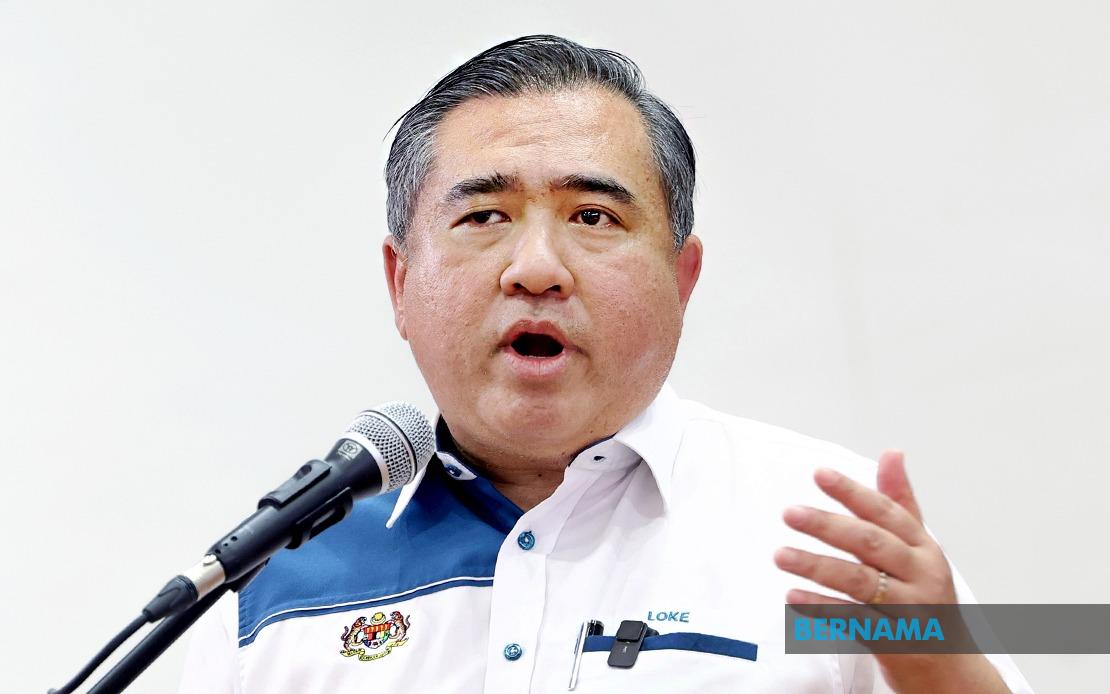
Transport Minister Anthony Loke has defended the use of diesel locomotives on Johor's Southern Shuttle service, characterising the arrangement as an interim step while the nation awaits the arrival of modern Electric Multiple Unit (EMU) train sets. Speaking on social media in Johor Bahru, Loke explained that the Ministry of Transport had faced a pragmatic choice: either maintain operational services for Johor residents using existing rolling stock or force commuters to endure a two to three-year wait for 10 newly ordered EMU train sets to enter service. The minister opted for the former, prioritising immediate mobility solutions for the southern region's population.
The financial commitment underpinning the shuttle service reflects the government's investment in expanded rail connectivity across Peninsular Malaysia. The Transport Ministry has earmarked between RM11 million and RM15 million annually as operational subsidies, a sum intended to broaden public access to rail-based commuting options. This funding allocation signals that policymakers view the Southern Shuttle not as a profit-generating enterprise but as essential social infrastructure requiring sustained financial support to remain affordable and accessible to ordinary Johor residents.
The service currently connects three key nodes in the southern corridor: Kulai, JB Sentral, and Pasir Gudang, offering journey times that are considerably faster than road-based alternatives. The Kulai-JB Sentral leg can be completed in approximately 40 minutes, while passengers travelling from Kempas Baru to Pasir Gudang typically require 40 to 45 minutes. These transit times position the shuttle as a genuine time-saving option for workers and students commuting within the Johor metropolitan region, particularly during peak hours when highway congestion becomes severe.
A noteworthy aspect of the service expansion involves the repurposing of freight infrastructure for passenger operations. The Kempas Baru-Pasir Gudang corridor, previously dedicated exclusively to goods transport, has now been opened to travellers for the first time, reflecting a strategic reorientation of rail assets to serve growing passenger demand. This conversion demonstrates how existing transport networks can be reconfigured to address changing mobility patterns without requiring entirely new infrastructure investment.
The transition away from diesel locomotives will occur upon completion of the Gemas-Johor Bahru electrified double-tracking project, a major infrastructure undertaking that will fundamentally transform rail operations across the southern route. Once this electrification initiative reaches completion, the older diesel trains will be phased out and replaced by the newer Electric Train Service (ETS) platforms. This upgrade path ensures that the Southern Shuttle service will eventually benefit from the technological advantages of electric traction, including reduced operational costs, lower emissions, and enhanced passenger comfort through improved acceleration and climate control systems.
The decision to deploy diesel trains has attracted public criticism, with vocal observers pointing out significant fare disparities between the Southern Shuttle and comparable services in other parts of Malaysia. These commentators have noted that ticket prices for the Johor service are approximately three times higher than fares charged on equivalent routes in Kuala Lumpur and Seremban, raising questions about affordability and pricing equity across the national rail network. This cost differential becomes particularly contentious given that the service utilises older rolling stock rather than the modern EMU units deployed in other regions.
Loke's explanation addresses these concerns by framing the diesel deployment as a temporary accommodation rather than a permanent solution. The minister's position suggests that higher fares may partially reflect the additional operational costs associated with older diesel locomotives compared to electrified services. Once the new EMU trains arrive and the Gemas-Johor Bahru electrification project concludes, there exists potential for fare restructuring that could bring Southern Shuttle pricing into closer alignment with comparable services elsewhere in Malaysia, though no official commitment to fare reductions has been announced.
The Southern Shuttle initiative represents a broader strategy to develop rail transport networks that serve intermediate cities and towns beyond the Klang Valley corridor. By investing in regional rail services that connect secondary population centres like Pasir Gudang and Kulai, the government acknowledges that public transport development cannot concentrate exclusively on Kuala Lumpur and Selangor if the nation aspires to reduce vehicular congestion and carbon emissions across the entire peninsula. The Johor service functions as a pilot project testing the viability of intercity rail operations in southern Malaysia.
For Malaysian commuters, particularly those based in the Johor region, the Southern Shuttle represents a modest but meaningful expansion of transport choices. While the use of diesel trains may appear technologically backward compared to EMU services in other parts of the country, the immediate availability of this option arguably provides greater practical benefit than an extended wait for superior equipment. The challenge facing the Transport Ministry involves maintaining service quality and public confidence in this interim arrangement while ensuring that promised upgrades materialise within a reasonable timeframe.
The government's decision to subsidise the Southern Shuttle substantially underscores recognition that regional rail services typically require ongoing financial support to remain competitive with private road transport. Without these subsidies, operators would likely charge fares sufficient to cover full operating costs, which would price out many lower-income commuters who form the core constituency for public transport. The RM11 million to RM15 million annual commitment therefore functions as a deliberate policy instrument designed to preserve affordable mobility in Johor.
Looking forward, the convergence of the new EMU deliveries and electrification project completion should signal a transition phase for the Southern Shuttle. As modern trains gradually replace diesel units and electric traction replaces diesel engines, both operational efficiency and passenger experience should improve appreciably. The challenge will involve managing this transition smoothly while maintaining service continuity and public confidence in the programme's long-term viability.

