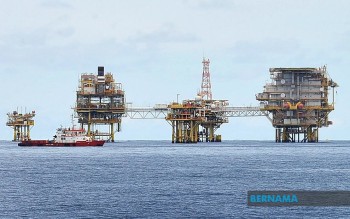
Southeast Asia's offshore energy sector is demonstrating remarkable resilience, with greenfield capital expenditure in the region projected to surpass US$100 billion this year—a robust 12 per cent increase that underscores investor confidence despite recent geopolitical upheaval in the Middle East. According to Hong Leong Investment Bank, this expansion reflects a deliberate shift towards prioritising new offshore developments across the region, positioning Southeast Asia as a critical investment destination for global energy companies seeking diversification away from volatile regions.
The momentum extends beyond greenfield projects into the brownfield segment, where investment in existing infrastructure is also accelerating. South Asia is leading this charge with a projected 23 per cent increase in brownfield capital expenditure, while Southeast Asia itself is tracking a more modest but significant 3 per cent growth. This bifurcated investment pattern reveals a strategic calculus: while companies remain bullish on launching new ventures in Southeast Asia, they are simultaneously channelling substantial resources into squeezing greater productivity from established assets. Such defensive spending protects near-term supply resilience at a time when global energy markets remain sensitive to disruptions.
The geopolitical backdrop underpinning these investment decisions centres on an apparent thawing of tensions between the United States and Iran. Although the ceasefire agreement between the two powers remains fragile, the signing of a 14-point memorandum of understanding has triggered what analysts describe as a potential inflection point in West Asian geopolitical relations. The significance of this development should not be understated: for Malaysian and Southeast Asian energy companies, any moderation in Middle East tensions directly influences their competitive positioning and capital allocation strategies on the global stage.
Shipping data provides a tangible measure of this de-escalation, with traffic through the Strait of Hormuz—one of the world's most critical maritime chokepoints—showing signs of recovery following the US-Iran accord. However, the picture is more nuanced than headline figures suggest. Satellite surveillance indicates that numerous vessels are transiting the strait with their Automatic Identification System transponders disabled, a tactic that obscures their movements and suggests underlying caution persists despite the diplomatic breakthrough. This discrepancy between official traffic data and actual vessel movements illustrates how fragile confidence remains in the region.
Hong Leong Investment Bank has anchored its sectoral outlook on two pivotal themes that will shape investment trajectories over the coming years. The first concerns whether a lasting resolution emerges around energy security and inventory management, particularly the extent to which strategic reserves are replenished globally. Such developments would substantially benefit regional pipeline operators and tank terminal facilities—assets in which Malaysian and Southeast Asian companies hold significant exposure. Resolution of these supply chain concerns would create a more predictable operating environment and potentially unlock new project sanctioning.
The second theme carries particular resonance for Malaysia: Hong Leong anticipates a Petronas capital expenditure upcycle beginning around 2027, which would generate substantial contract opportunities for domestic oil and gas services and equipment providers. Companies specialising in upstream development, hook-up and commissioning activities, maintenance operations, marine support services, fabrication work, and pipeline-related construction would stand to benefit substantially. This timing aligns with the anticipated normalisation of global energy markets and positions Malaysian service providers to capture a disproportionate share of regional activity.
Oil price forecasts have shifted materially in recent months. Hong Leong has revised its 2026 Brent crude projection downward to US$80 per barrel from an earlier US$90 estimate, while maintaining a US$75 per barrel forecast for 2027. These revisions reflect a more tempered view of global demand recovery and acknowledge the downward pressure exerted by improving geopolitical circumstances. Yet the bank's analysis suggests prices are unlikely to collapse dramatically, as global commercial inventory levels remain historically constrained.
U.S. Energy Information Administration data provides crucial context for this price floor. The agency's June Short-Term Energy Outlook projects that OECD commercial oil inventories will decline sharply, with days of supply falling to approximately 50 days by late 2026—substantially below the pre-conflict benchmark of more than 60 days. This inventory deficit creates a structural support for prices, as companies scramble to rebuild reserves to prudent levels. Hong Leong projects Brent crude will remain anchored around the US$80 per barrel level until global energy flows normalise and inventory buffers are reconstituted to historical norms.
Production recovery timelines will prove decisive in determining whether prices remain elevated. Total shut-in volumes across the Strait of Hormuz region peaked at 45 per cent during May 2026, a sharp increase from 35 per cent recorded just two months earlier in March. The sustainability and duration of these shutdowns will shape whether oil prices maintain support above US$75 per barrel through early 2027. Prolonged production disruptions extending beyond inventory replenishment timelines would provide additional upside to energy prices, benefitting regional exporters and energy companies based in Southeast Asia.
Current market pricing reflects a convergence of these various pressures. Brent crude has retreated substantially from recent peaks, stabilising around US$70-75 per barrel, while West Texas Intermediate crude trades in the US$72.67 per barrel range. According to Mohd Sedek Jantan, investment strategy director at IPPFA, this price stabilisation creates meaningful opportunity for energy-intensive businesses across the region by reducing input cost volatility and enabling superior cost forecasting for capital projects.
The macroeconomic implications extend well beyond the energy sector itself. Should oil prices remain anchored within the US$70-75 per barrel band over coming months, global inflation pressures would ease materially, as energy represents a critical cost-push component. Lower inflationary pressure would provide central banks with greater latitude to maintain supportive monetary policies, strengthen consumer purchasing power, and encourage business investment spending. For Malaysian manufacturers and exporters whose competitiveness depends partly on energy input costs, this scenario offers a considerably more benign operating environment than recent alternatives.
For Southeast Asia specifically, the convergence of stable oil prices, accelerating offshore investment, and anticipatory capital spending ahead of the projected Petronas capex cycle creates a distinctive window of opportunity. Malaysian companies positioned in upstream services, marine support, and fabrication stand to capture disproportionate value as regional energy companies execute their development plans. Policymakers and industry participants should view the current investment surge not merely as cyclical recovery, but as evidence of sustained structural repositioning of global energy investment architecture in Southeast Asia's favour.

