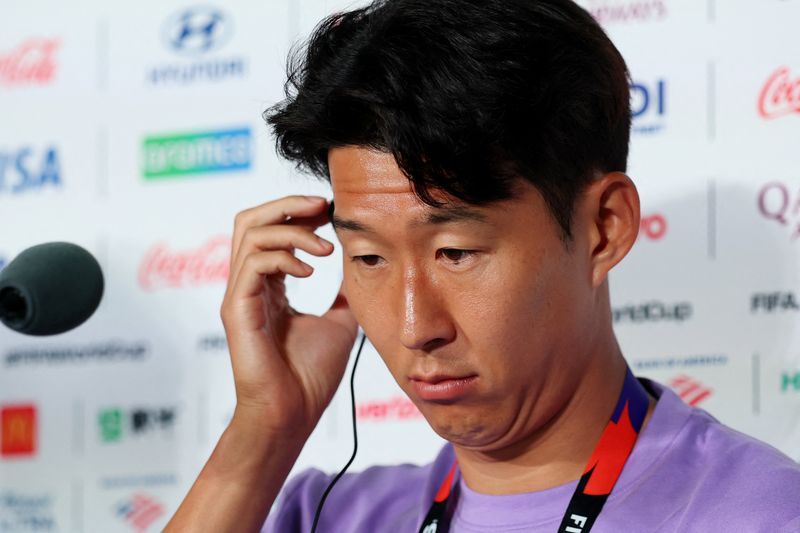
The South Korean national football team has suspended its voluntary media engagements during the World Cup in response to an incident in which journalists allegedly ridiculed captain Son Heung-min's military service record. The incident came to light when reporters were captured on an open microphone making disparaging comments about the 33-year-old Tottenham Hotspur forward while he trained separately from his teammates at the squad's base camp in Guadalajara. The controversy has created significant tension between the team and South Korean sports media, prompting the country's football governing body to issue a formal rebuke and institute protective measures around the squad.
Military service represents a deeply sensitive and contentious topic throughout South Korean society, layered with historical, political, and cultural significance that extends far beyond athletics. Under the country's mandatory conscription laws, all able-bodied male citizens must complete approximately 21 months of active military service, a requirement that stems directly from the ongoing military division of the Korean peninsula and the need to maintain defensive capabilities against North Korea. This obligation has long created tensions for professional athletes whose peak earning and competitive years often coincide with their service requirements, making any perceived slight against those who fulfill this duty particularly inflammatory within Korean public discourse.
The significance of Son's military service is amplified by the exemption he earned through athletic achievement. Like other South Korean athletes who capture gold medals at the Olympic Games or the Asian Games, Son qualified for an exemption from full military service after his country won the football tournament at the 2018 Asian Games. Rather than bypass his obligations entirely, Son chose to complete a three-week accelerated basic military training program, demonstrating a commitment to honoring his national duty while managing his professional career. He undertook this intensive course in 2020 during the COVID-19 pandemic when the Premier League halted operations, an experience that included exposure to tear gas, live-fire exercises, and 30-kilometer forced marches.
The Korea Football Association's formal response underscores the gravity with which the national governing body views the incident and its potential ramifications for team morale and international relations. In an official statement, the KFA expressed deep regret over what it characterized as inappropriate comments made by media personnel at the team's training facility. The association emphasized that the squad bears significant responsibility as representatives of South Korea on football's grandest stage, tasked with repaying the confidence and investment of their supporters. The casual disclosure and circulation of the mocking remarks—described as a leak of private conversations among media officials—dealt what the KFA characterized as a profound shock to the entire organization.
The KFA's appeal for greater professionalism from South Korean sports media reflects broader tensions between athlete protection and journalistic access. The association called upon media outlets to demonstrate heightened consideration and accountability in their interactions with the national team, signaling that future coverage will be monitored more carefully. The statement committed the KFA to prioritizing squad welfare and working toward establishing a more constructive relationship between players and the press. However, this protective posture coexists with practical constraints imposed by international football governance.
While the South Korean players have withdrawn from voluntary media appearances, FIFA's mandatory requirements impose limits on how completely the team can avoid journalists. The sport's international governing body maintains contractual obligations requiring participating nations to fulfill certain media commitments during World Cup tournaments, meaning the squad cannot entirely escape press interaction regardless of the circumstances. This tension between protective instincts and contractual obligations creates an awkward dynamic for the South Korean camp, forcing a continuation of necessary media activities while the underlying conflict remains unresolved.
For Malaysian and Southeast Asian observers, this incident illuminates the particular pressures surrounding military service and national identity in East Asia, where conscription remains a significant cultural and political touchstone. Unlike Malaysia's all-volunteer professional military, South Korea's mandatory system means that athletes' decisions about how to navigate their service obligations become public conversations with profound implications for their standing in society. The willingness of journalists to mock someone's fulfillment of these duties suggests a deeper fracture between media gatekeepers and the values held by both the sporting establishment and the broader public.
The boycott itself represents an unusual form of athlete activism, one that pivots away from the typical protest strategies seen in Western sports contexts. Rather than focusing on social or political causes, South Korean players have chosen to defend their captain's honor and, by extension, the dignity of those fulfilling mandatory national service. This collective action signals solidarity and institutional loyalty, reflecting cultural values around team cohesion and respect for individual sacrifice that characterize East Asian sporting traditions. The episode also demonstrates that conflicts between media and athletes transcend language barriers and geographical boundaries, emerging whenever access and accountability create friction.
The immediate context of the World Cup amplifies the significance of this dispute. At a moment when the national team requires maximum focus and unity to compete at the highest level, internal controversy and fractured relationships with the domestic media create unwelcome distraction. The squad must navigate the psychological and practical challenges of tournament football while managing damaged trust with journalists who will shape how their performances are interpreted and discussed back home. This backdrop could influence both team dynamics and public reception of results, introducing variables beyond what occurs on the pitch.
The resolution of this conflict will likely establish precedent for how the Korea Football Association balances transparency with athlete protection in future tournaments. Whether the KFA pursues formal sanctions against the journalists involved, whether South Korean media outlets impose their own accountability measures, and whether the players eventually resume fuller media engagement will collectively determine whether this incident becomes a watershed moment for reform or gradually fades as a temporary crisis. For now, the tension remains unresolved, with the squad completing its World Cup preparations under circumstances that few would describe as ideal.

