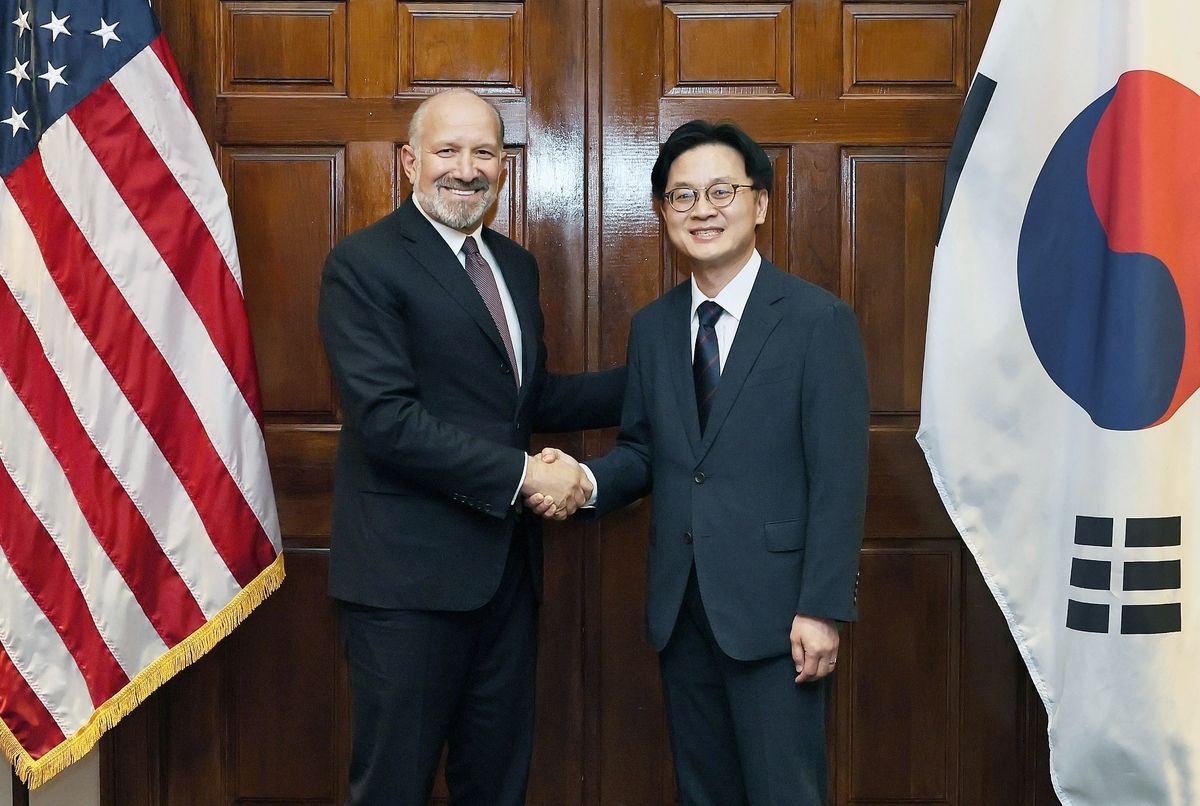
South Korea's Industry Minister Kim Jung-kwan is heading to Washington this week for a crucial round of discussions with top-level American officials, moving swiftly to protect Seoul's trade interests as the United States prepares to announce fresh tariffs on South Korean goods. The visit, scheduled from July 22 to 25, comes at a delicate moment for bilateral relations, with Seoul bracing for an imminent US decision on additional levies under Section 301 of the Trade Act, potentially triggered by an investigation into labour practices in Korean manufacturing.
The timing of the minister's trip underscores the urgency Seoul perceives in managing trade tensions with its closest military ally. Local media reports indicate that a US investigation into forced labour practices could form the basis for the tariff announcement, posing a significant threat to South Korean exporters already navigating volatile global markets. By engaging directly with senior US Commerce and Energy officials, Kim aims to reframe the conversation around cooperation and mutual economic benefit rather than confrontation. This proactive diplomacy reflects Seoul's understanding that while tariffs are a blunt instrument, sustained engagement at the ministerial level can sometimes temper their application or scope.
A centrepiece of Kim's Washington schedule is the opening ceremony for a South Korea-US Shipbuilding Partnership Center on Thursday, which serves as both a practical platform for industry collaboration and a symbolic gesture of Seoul's commitment to deepening economic ties with Washington. The centre emerges from a May agreement between South Korea's Ministry of Trade, Industry and Resources and the US Commerce Department, establishing a formal mechanism for shipbuilders in both nations to coordinate on projects, share expertise, and pursue joint ventures. For South Korea, whose shipbuilding sector remains globally competitive, securing a dedicated channel for partnership with American counterparts signals confidence in long-term demand and helps offset vulnerabilities that tariffs might create elsewhere in the export economy.
Beyond the ceremonial elements, Kim's agenda includes substantive meetings with US Commerce Secretary Howard Lutnick to discuss strategic Korean investment in American soil. This discussion touches on a June South Korean law designed to incentivise and streamline Korean corporate investment in the United States. The timing of this legislation was deliberate: as tensions over trade balances and tariffs escalate globally, Seoul recognised that attracting Korean manufacturing and technology firms to establish US operations could serve dual purposes. It demonstrates commitment to reducing trade imbalances by creating jobs stateside, whilst simultaneously securing Korean business interests by placing them inside the protective perimeter of US trade policy.
Conversations with US Energy Secretary Chris Wright will likely centre on resource security and cooperation in emerging energy sectors. South Korea, as an energy-importing nation heavily dependent on Middle Eastern oil and liquefied natural gas, has strong incentives to deepen energy partnerships with Washington. Similarly, the United States, concerned about supply chain vulnerabilities in critical minerals and renewable energy components, sees value in closer collaboration with Seoul on technology and resource management. For Malaysian readers, these US-Korea energy discussions carry indirect significance: South Korea's energy strategies influence its regional partnerships and competitiveness in Southeast Asia, particularly in the race for renewable technology leadership and rare earth material sourcing.
Kim's outreach to members of Congress represents a particularly important dimension of his visit. Individual legislators wield considerable influence over trade enforcement actions, and cultivating relationships across the Capitol Hill committee structure—particularly those overseeing trade, commerce, and strategic investment—can create advocates for Seoul's interests when tariff decisions are debated. By meeting directly with congressional offices, the minister aims to ensure that Korean business concerns are heard beyond the executive branch, potentially building coalitions that might moderate punitive measures or ensure they target specific sectors rather than blanket Korean industries.
The underlying tension driving this visit reflects a broader pattern in US-Korea trade relations. Washington increasingly scrutinises trade partners' labour practices and supply chain transparency, partly in response to domestic political pressure and partly due to genuine concerns about forced labour in global manufacturing. South Korea, whilst generally maintaining higher labour standards than some competitors, faces periodic investigation and criticism regarding working conditions in certain industries. The Section 301 investigation signals that the Trump administration views labour compliance as a legitimate lever in trade negotiations, not merely as a humanitarian matter.
Seoul's strategy in response is multifaceted. By showcasing partnerships like the Shipbuilding Center and pushing forward with legislation to encourage Korean investment in America, the government shifts the conversation from punishment to partnership. It attempts to reposition South Korea not as a competitor threatening American economic interests, but as a strategic investor contributing to US employment and technological capability. This narrative is particularly potent when emphasised to congressional members representing districts with Korean manufacturing presence or communities that would benefit from Korean corporate investment.
For Malaysia and other Southeast Asian nations, the trajectory of US-Korea trade relations carries important implications. If Washington succeeds in negotiating tariff exemptions or moderate agreements with Seoul—achieved through the kind of ministerial diplomacy Kim is undertaking—it establishes a precedent for managed trade disputes. Conversely, if tariffs proceed aggressively, it could trigger escalatory cycles affecting regional supply chains and trade flows. South Korea's position as a major technology exporter and advanced manufacturer means its experiences navigating American tariff policy serve as a bellwether for other export-dependent Asian economies watching how far Washington will go in enforcing labour standards through trade mechanisms.
Kim's stated objective of stabilising bilateral trade relations and implementing existing tariff agreements reflects Seoul's preference for predictability over surprise. The minister's emphasis on working with Washington to execute prior commitments—rather than renegotiating fundamentals—suggests Seoul hopes to demonstrate good faith compliance, potentially earning forbearance on new tariff initiatives. This approach assumes that American officials prioritise relationship continuity and Korean cooperation on strategic matters like alliance cohesion on North Korea over maximum tariff leverage, a calculation that may or may not prove accurate in the coming weeks.

