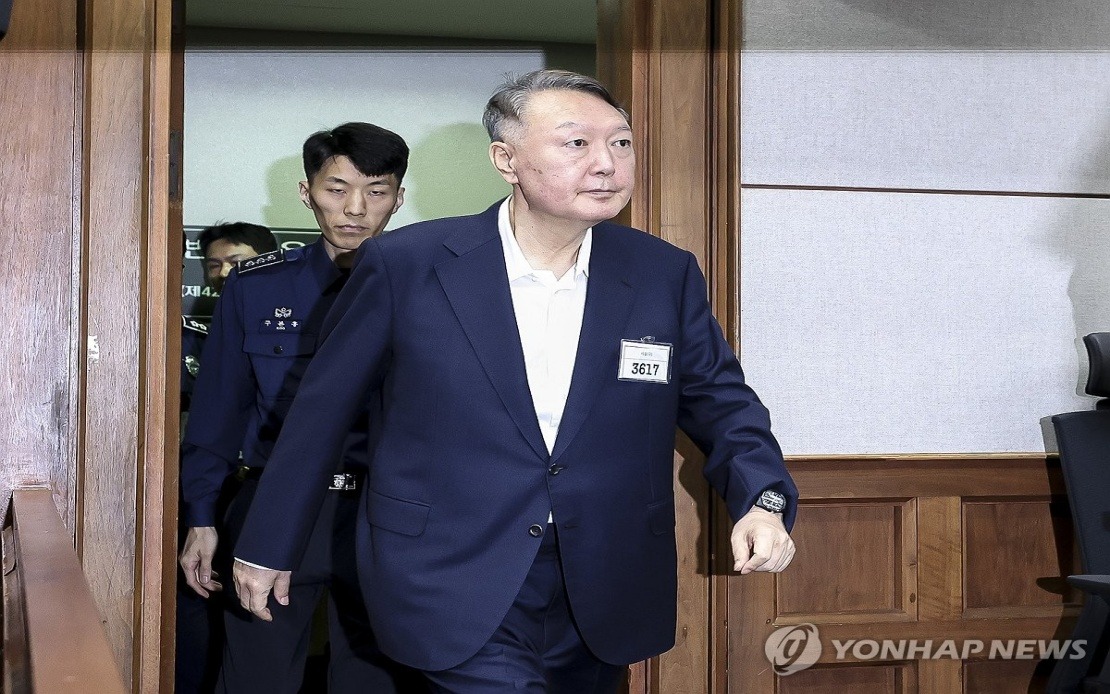
South Korea's Supreme Court has decided to allow live television coverage of its forthcoming verdict in the obstruction of justice case against former President Yoon Suk Yeol, marking a significant moment in the country's ongoing political turbulence. The decision, announced on Tuesday, permits broadcasters to transmit the judgment scheduled for Thursday at 2 pm using footage captured by the court's own equipment, representing a rare instance of such transparency in a high-profile legal proceeding involving a sitting president's successor.
The obstruction charges centre on Yoon's alleged actions in January 2025, when he reportedly instructed his security detail to physically prevent investigators from apprehending him. This incident occurred in the aftermath of his December 3, 2024 martial law declaration, which stunned the nation and triggered a constitutional crisis that has dominated South Korean politics for months. The circumstances surrounding this warrant execution attempt underscore the extraordinary tensions between the executive and judicial systems during this tumultuous period.
Yoon's legal representatives had vigorously opposed the broadcast decision, submitting arguments that live coverage would inflict lasting damage to his entitlement to an impartial hearing, undermine his personal privacy, and irreparably tarnish his public standing. Despite these concerns about the precedent and potential prejudicial impact, the Supreme Court determined that the public interest in transparency outweighed the defence team's reservations, effectively overruling the objection and proceeding with the televised verdict announcement.
The special counsel's office, headed by Cho Eun-suk, had initiated the broadcast request, seeking to ensure public accountability and visibility in what many view as a watershed moment for South Korean rule of law. This move reflects broader debates in democracies worldwide about judicial transparency versus individual privacy rights, particularly when involving powerful political figures whose actions affect national governance.
Beyond the obstruction charge, the indictment encompasses multiple serious allegations that paint a picture of systematic procedural violations. Yoon stands accused of infringing the constitutional rights of nine Cabinet members by neglecting to convene a preliminary meeting where they could have reviewed or objected to his martial law proposal before its implementation. Additionally, prosecutors charge that he falsified official documents by altering the martial law proclamation after it had been revoked, apparently to conceal structural and procedural defects in the original decree, and subsequently destroying evidence.
In April, an appellate court had already convicted Yoon on these obstruction charges, handing down a seven-year prison sentence. This represented an escalation from the lower court's five-year verdict but fell short of the ten-year sentence sought by the special counsel team, indicating the appellate judges viewed the conduct as serious yet not warranting the prosecution's maximum recommendation. The divergence between prosecutorial requests and judicial sentencing reveals ongoing deliberation about appropriate penalties for such governmental overreach.
The obstruction trial represents merely one dimension of Yoon's legal jeopardy. A separate and arguably more consequential proceeding concerning insurrection charges related directly to the martial law declaration itself remains ongoing before an appellate court. In that initial ruling, Yoon received a life sentence, signalling the judiciary's view of the gravity of attempting to overturn constitutional government through emergency powers. These parallel proceedings demonstrate how comprehensively the legal system is examining his actions from multiple angles.
For regional observers, particularly those in Southeast Asia where constitutional stability and executive power frequently collide, the Yoon case illustrates both the strengths and vulnerabilities of institutional checks and balances. South Korea's constitutional court, prosecution service, and judiciary have successfully constrained a former head of state without military intervention or democratic collapse, suggesting institutional resilience. However, the near-success of the martial law bid and the political polarization it exposed underscore how fragile democratic norms can become under pressure.
The decision to broadcast the verdict carries symbolic weight beyond the immediate legal proceedings. It signals that South Korean institutions regard this judgment as belonging not merely to the parties involved but to the citizenry whose constitutional order was challenged. Live coverage democratizes access to justice and potentially strengthens public confidence in institutional legitimacy, though critics worry it risks transforming legal proceedings into political theatre.
The Thursday verdict will significantly influence South Korea's political trajectory in coming months. A conviction upheld at the Supreme Court would likely foreclose Yoon's political future definitively, whereas a reversal could revive his fortunes and embolden his supporters. The broadcast ensures that millions of Koreans will witness the court's reasoning in real time, making the ruling's legitimacy—whichever way it falls—subject to immediate public scrutiny and debate.
For Malaysia and other ASEAN nations grappling with questions of presidential accountability and judicial independence, the South Korean experience offers instructive lessons. The apparent willingness of courts to proceed against former executives demonstrates that institutional strength need not depend on military intervention or authoritarian measures. Yet it also illustrates the immense political pressure such proceedings generate and the necessity of maintaining judicial impartiality under intense scrutiny.

