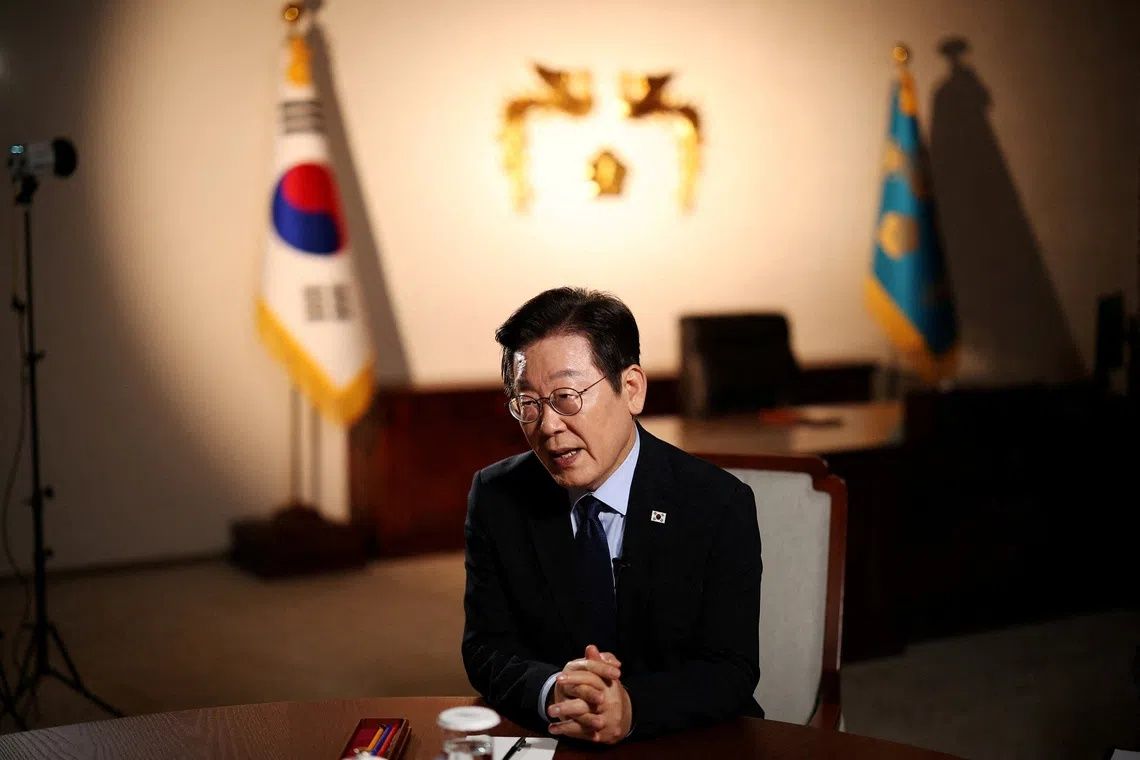
South Korean President Lee Jae Myung has signalled backing for a fundamental restructuring of the nation's presidential system, according to officials from his Blue House administration. The proposed constitutional framework would fundamentally reshape how power operates in Seoul by enabling presidents to serve consecutive four-year terms with the possibility of seeking re-election, a significant departure from the country's current single five-year term restriction that has defined Korean politics for decades.
The presidential office framed this reform proposal as addressing longstanding concerns about the concentration of executive authority in South Korea's system, which critics have frequently described as an "imperial presidency." By introducing term limits alongside re-election prospects, Lee's position attempts to balance competing democratic values: limiting any single individual's accumulated power while providing voters with the choice to retain effective leadership if they wish to do so. This framing represents an attempt to thread a political needle between progressive demands for enhanced democratic accountability and conservative desires for executive stability.
According to Yonhap news agency, the presidential administration contends that the four-year term with re-election model enjoys the broadest acceptance among the South Korean public compared with other constitutional alternatives. This claim about public preference carries strategic weight in a nation where presidential legitimacy has been repeatedly tested by scandals, impeachments, and post-presidency prosecutions that have plagued recent administrations. The polling data, though not detailed in official statements, suggests that South Koreans may favour a middle ground that avoids the perception of indefinite executive entrenchment while permitting demonstrated leaders to continue their agendas.
Crucially, Lee's proposal couples presidential reform with mechanisms to redistribute power away from the executive branch toward the National Assembly. This element distinguishes the proposal from mere attempts to enhance presidential authority and instead positions it as part of broader institutional rebalancing. Strengthening parliamentary powers would theoretically create more robust checks and balances against executive overreach, addressing historical vulnerabilities in South Korea's system where the presidency has occasionally functioned with minimal legislative constraint.
The constitutional amendment process itself presents formidable political hurdles. Any successful reform requires the explicit support of at least 200 lawmakers in the 300-seat National Assembly, meaning amendments demand supermajority consensus that transcends ordinary partisan divisions. This high threshold was deliberately constructed to prevent fleeting political majorities from casually rewriting constitutional fundamentals. Blue House officials have acknowledged this reality by emphasizing that any constitutional reform "should be discussed and pursued in the National Assembly" and must ultimately rest upon genuine political consensus rather than executive diktat.
The current constitutional framework emerged from South Korea's transition to democracy and reflects post-authoritarian anxieties about unlimited executive power. The single five-year, non-renewable term was designed to create clean electoral breaks and prevent power accumulation. However, this system has produced its own pathologies: lame-duck presidents losing political influence during their final years, ex-presidents facing legal jeopardy after leaving office, and a presidency sometimes perceived as isolated and unaccountable during its tenure. The four-year renewable model attempts to remedy these dynamics while retaining guardrails against permanent executive dominance.
For Malaysian observers, South Korea's constitutional debate offers instructive parallels and contrasts. Like Malaysia, South Korea operates within a presidential system adapted from democratic frameworks, though with different institutional balances. The South Korean emphasis on managing executive power concentration through constitutional architecture reflects anxieties about unchecked presidential authority that resonate across Asian democracies. Malaysia's own experiences with prime ministerial authority and recent debates about term limits suggest that questions about executive power distribution remain perpetually salient in the region.
The timing of Lee's statement also carries political significance. A sitting president advocating for constitutional changes affecting presidential powers necessarily involves considerations of personal political survival and succession. By framing the discussion as broadly improving democratic institutions rather than advancing partisan advantage, Lee attempts to insulate reform proposals from accusations of self-interested maneuvering—though critics will inevitably interpret any presidential proposal affecting presidential authority through that interpretive lens.
Implementing such constitutional reform would require intensive negotiations across South Korea's political landscape, potentially engaging civil society organizations, opposition parties, and the ruling coalition. The process would likely involve detailed technical negotiations about transition provisions, the treatment of the current and previous presidents under new rules, and precise delineations of enhanced parliamentary powers. Each of these elements contains potential for contentious debate that could either facilitate or obstruct reform momentum.
South Korea's constitutional evolution continues to reflect democratic societies' perennial challenge: designing institutions that concentrate sufficient power for effective governance while distributing authority sufficiently to prevent autocratic tendencies. The four-year renewable term with strengthened parliament represents one potential solution to this persistent tension, though whether it achieves genuine consensus remains to be determined through the National Assembly's deliberations.

