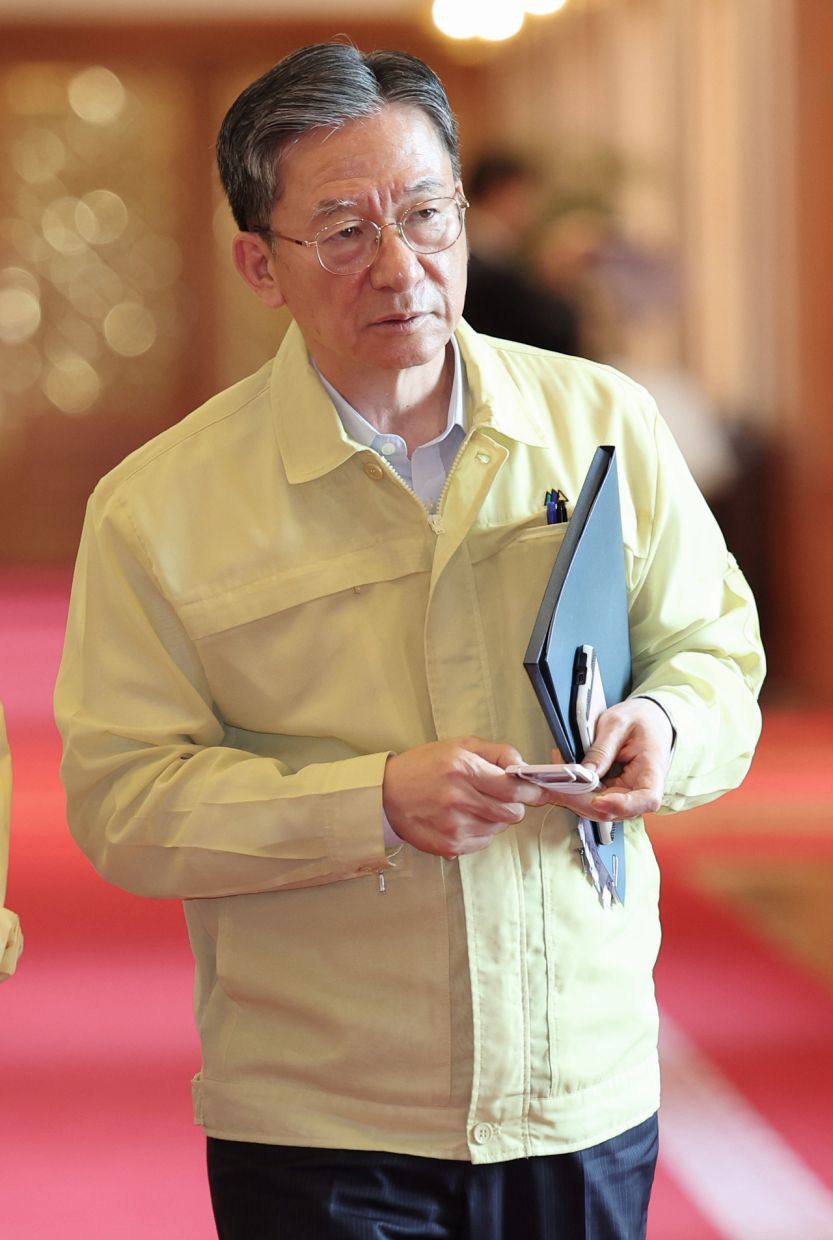
The political landscape in South Korea shifted Tuesday as Justice Minister Jung Sung-ho announced his resignation, marking a significant development in the country's ongoing debate about restructuring prosecutorial powers. The minister's departure comes at a critical juncture in criminal justice reform, with fundamental disagreements between the government's top legal official and the ruling Democratic Party over how investigations should be conducted in the future. Jung's exit signals growing friction within the coalition supporting reforms that would substantially reshape how South Korea's justice system operates.
At the heart of the conflict lies a fundamental philosophical question about the concentration of power within prosecutorial institutions. Jung had consistently opposed eliminating prosecutors' supplementary investigation authority, arguing that such powers serve an important function in ensuring thorough case review. Under current procedures, prosecutors receive cases from police and retain the discretion to order additional investigations if they determine the initial police work lacks sufficient evidence or completeness. This mechanism has long been considered a safeguard against incomplete or inadequate investigations reaching the courts. Jung's resistance to abolishing this authority reflected traditional concerns about maintaining robust prosecutorial oversight of police investigations.
The ruling Democratic Party, however, has embraced a competing vision of criminal justice reform centred on a fundamental separation of investigative and prosecutorial functions. Party leadership contends that concentrating both investigation and prosecution powers in a single institution—the prosecution—creates dangerous opportunities for abuse and excessive influence over the entire criminal process. This argument reflects broader international trends toward separating these functions as a structural check on prosecutorial discretion. The party's position represents a deliberate choice to prioritize institutional checks and balances over the efficiency gains that integrated systems might provide.
The structural transformation outlined in the revised Criminal Procedure Act will take effect on October 2, fundamentally altering how prosecutors interact with investigations. After this date, prosecutors will be prohibited from independently investigating cases, even when they believe police investigations are inadequate. Instead, the prosecution's role will shift primarily toward reviewing completed investigations, making charging decisions, and managing cases through court proceedings. This represents a dramatic curtailment of prosecutorial independence and investigative autonomy—changes that alarmed Jung and others who viewed prosecutors' current powers as necessary for effective criminal administration.
Jung's explanation for his resignation officially emphasised health considerations, a common diplomatic formulation in Korean politics that allows officials to step down without directly challenging government policy. However, his resignation statement also contained a more pointed message, suggesting that it would be "desirable for the new criminal justice system to be completed under new leadership." This language indicated discomfort with the direction of reforms and suggested that Jung believed his continued opposition within the Justice Ministry could complicate implementation of policies he disagreed with—a rare moment of candour in Korean political rhetoric about fundamental policy disputes.
The implications of Jung's departure extend beyond personnel matters to substantive questions about how these reforms will unfold. His resignation removes from the Justice Ministry a prominent voice raising concerns about the prosecution's diminished role, potentially clearing the path for smoother implementation of the Democratic Party's agenda. The move may accelerate legislative processes and regulatory preparations for the October 2 transition, as new leadership might prove more aligned with the party's vision for separating investigative and prosecutorial functions.
For Malaysia and other Southeast Asian jurisdictions, South Korea's prosecutorial reform offers important lessons about the ongoing tension between institutional efficiency and safeguards against power concentration. Many nations in the region continue debating optimal structures for criminal investigation and prosecution, with different models emphasizing either unified systems that enhance coordination or separated systems that build in checks and balances. South Korea's choice to move toward separation represents a significant shift in regional thinking about best practices, particularly given the country's developed legal framework and democratic institutions.
The broader context of this dispute reflects evolving global perspectives on prosecutorial power and accountability. Over the past two decades, democracies worldwide have reassessed whether concentrating investigative authority in prosecution services adequately protects defendants' rights and prevents misuse of legal authority. South Korea's reforms align with this international movement, though not without domestic resistance from officials like Jung who view investigative powers as essential to prosecutorial function. The debate itself demonstrates healthy democratic contestation over institutional design rather than smooth consensus around reform.
Vice Justice Minister Lee Jin-soo will assume the acting justice minister role pending acceptance of Jung's resignation, providing continuity in the Justice Ministry's operations during this transitional period. Lee's assumption of temporary leadership may signal whether the ministry will proceed with implementing the reforms as originally envisioned or whether adjustments might emerge as the October 2 deadline approaches. The selection of acting leadership often provides clues about which officials within the ministry align with government policy directions and which might harbour reservations similar to those Jung expressed.
South Korea's experience with this prosecutorial restructuring will likely influence discussions across Asia about optimal criminal justice architecture. As nations grapple with questions of prosecutorial independence, investigative authority, and institutional checks, the outcomes of South Korea's reform experiment—including both intended benefits and unintended complications—will inform regional conversations about institutional design. The fact that a sitting justice minister felt compelled to resign rather than implement policies he opposed suggests the reforms represent genuinely contested changes rather than technical adjustments, underscoring their significance for South Korea's justice system and potentially for neighbouring democracies considering similar restructuring.

