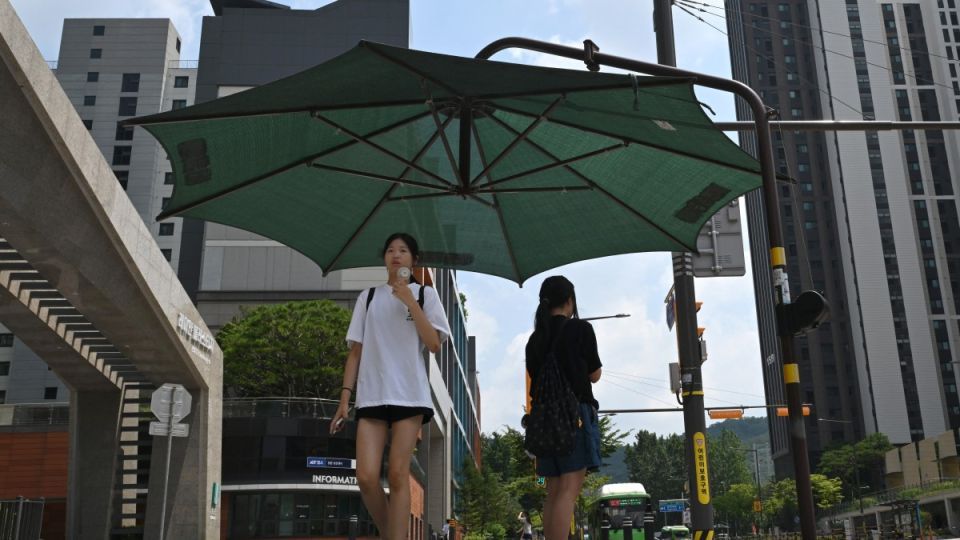
South Korea's sweltering summer has triggered a workplace safety reckoning, with major corporations scrambling to protect employees from potentially lethal heat exposure. Yet the patchwork response underscores a troubling disparity: while large conglomerates can afford sophisticated cooling systems and flexible schedules, smaller enterprises and outdoor workers remain perilously vulnerable to extreme temperatures. The contrast illustrates how industrial capacity and regulatory compliance can diverge sharply across South Korea's diverse economy.
Temperatures have reached alarming levels nationwide, with Yangsan in South Gyeongsang Province recording a national peak of 42.5 degrees Celsius, whilst Seoul has endured consecutive days under the highest-level heatwave warning. These unprecedented conditions have coincided with a troubling spike in workplace casualties. Data provided by Rep. Kim Wi-sang of the ruling People Power Party shows that the Korea Workers' Compensation and Welfare Service recognised 195 heat-related occupational accidents between 2022 and June this year, a toll that included 20 deaths. Notably, thirteen cases—with four proving fatal—had already occurred by June's end, before the historically deadlier months of July and August typically strike.
The legal environment has shifted markedly in recent years, imposing fresh accountability on employers. A district court's landmark conviction last year of a construction company under the Serious Accidents Punishment Act for a subcontractor's worker's heatstroke death represents a watershed moment. This was the first such conviction involving heat-related fatality and has signalled to industry that thermal safety lapses carry severe legal consequences. That pressure has catalysed visible corporate responses, particularly among construction firms that traditionally shoulder disproportionate shares of industrial accident fatalities.
Construction sector leaders have been most aggressive in implementing protective measures. Hyundai Engineering & Construction incentivises workers to utilise designated rest areas, whilst Lotte E&C deploys Internet of Things-based monitoring at roughly eighty construction sites, capturing perceived temperature readings every five minutes and categorising heat risk across five levels. Daewoo E&C has adopted a no-penalty absence policy for workers reporting physical distress, removing a barrier that might otherwise push exhausted employees to continue labouring. These measures reflect recognition that heat illness compounds existing workplace hazards on construction sites where falls, machinery, and heavy lifting already threaten safety.
Migrant workers, who constitute a significant portion of South Korea's construction and agricultural workforce, have received targeted attention from some employers. Hyundai E&C has distributed emergency reporting guides translated into twenty-two languages and supplied cooling vests featuring battery-powered fans alongside oral rehydration solutions. Kumho E&C has partnered with beverage company Lotte Chilsung to deliver bottled water, sports drinks, cooling towels, and portable shelters across its construction sites through September. These initiatives acknowledge that language barriers and unfamiliarity with Korean workplace safety systems place foreign workers at heightened risk of heat-related injury or worse.
Industries unable to halt operations during extreme weather have modified work-rest ratios to provide relief within continuous production cycles. Posco, whose blast furnaces operate perpetually, mandates fifteen-minute rest intervals after every forty-five minutes of work when perceived temperatures exceed thirty-five degrees Celsius, with ten-minute breaks following fifty minutes of labour when temperatures rise above thirty-one degrees. Hyundai Steel similarly requires minimum ten-minute hourly breaks at thirty-one degrees and fifteen-minute breaks above thirty-five degrees. These interval-based approaches attempt to prevent thermal accumulation in workers' bodies without shuttering energy-intensive facilities.
Shipyards have proven especially responsive to heat protocols, reflecting both their workforce size and accident history. Hanwha Ocean has doubled its standard morning and afternoon breaks from ten minutes to twenty minutes through August's conclusion, independently of temperature readings. When temperatures exceed twenty-eight degrees Celsius, the company extends lunch breaks by an additional thirty minutes; above thirty-one point five degrees, it adds a full hour. HD Hyundai Heavy Industries has lengthened lunch breaks from sixty to ninety minutes throughout August and maintains over two hundred seventy cooling facilities across its shipyard operations, whilst distributing cooling vests, ice water, and electrolyte supplements to employees. Samsung Heavy Industries established a dedicated task force to coordinate thermal response measures and deploy supplementary portable cooling equipment across facilities.
Yet this corporate commitment masks a troubling concentration of protective measures among large employers with substantial capital reserves. More than half of the one hundred ninety-five recognised heat-related accidents since 2022 occurred at workplaces employing fewer than fifty people, whilst forty-two cases struck businesses with fewer than five employees. These small enterprises typically lack dedicated safety personnel, cannot afford centralised cooling infrastructure, and struggle to restructure operations without operational collapse. Workers at these sites endure heat exposure with minimal institutional protection, representing the majority of South Korea's workforce yet receiving disproportionately fewer resources.
Agricultural and outdoor work sectors present particularly stark vulnerability profiles. Seasonal migrant workers, often employed through labour brokers with minimal oversight, labour in direct sunlight without adequate hydration infrastructure or shaded rest areas. Last month's deaths of a Thai seasonal worker in Haenam, South Jeolla Province, and a Vietnamese national toiling on a farm in Goesan, North Chungcheong Province, exemplify this deadly gap. These workers occupy an especially precarious position: language barriers prevent them from accessing safety information, employment contracts often lack worker protections, and employers have minimal incentive to invest in heat mitigation for temporary staff.
Rep. Kim Wi-sang has called upon the government to broaden its regulatory lens beyond large worksites and prioritise inspections and practical protections targeting seasonal migrant workers and small outdoor businesses. His intervention signals that existing corporate voluntarism, whilst impressive in scale at major firms, cannot substitute for systemic policy addressing the economy's most vulnerable segments. Without targeted intervention covering small business assistance, migrant worker protections, and agricultural sector oversight, South Korea risks perpetuating a tiered system where heat safety correlates directly with company size and market power. The challenge facing policymakers involves extending comprehensive thermal protection across all workplaces whilst respecting the resource constraints facing smaller enterprises.

