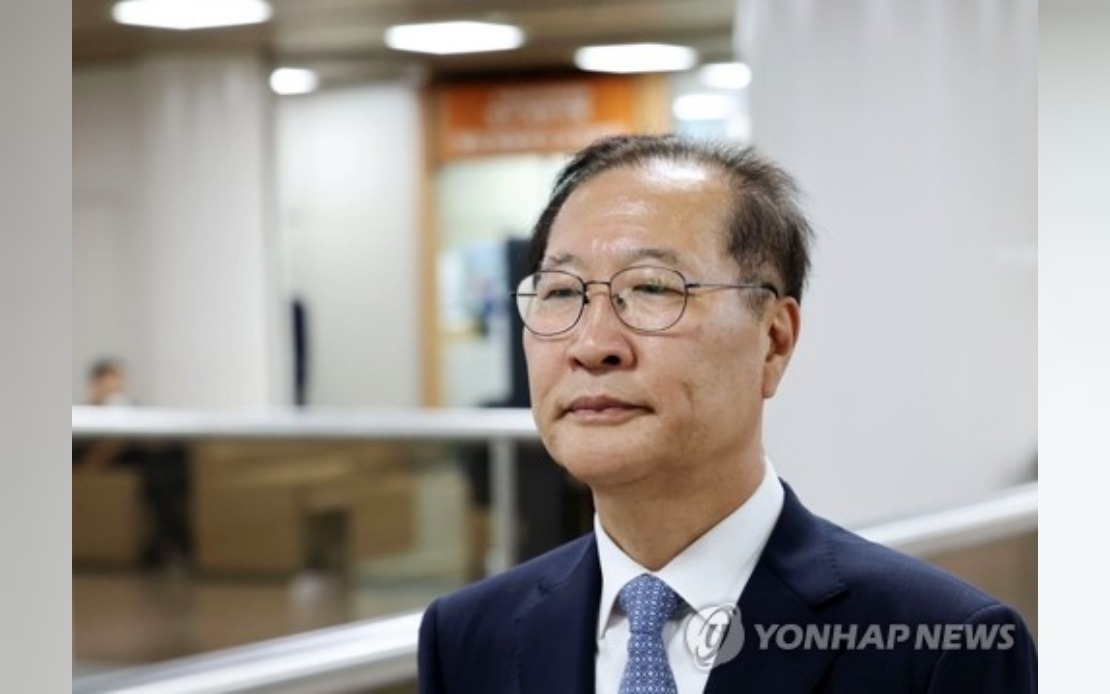
South Korea's legal system has delivered a significant judgment against former Justice Minister Park Sung-jae, who received a 25-year prison sentence on Monday from the Seoul Central District Court. Park's conviction marks another major milestone in the country's reckoning with the extraordinary political upheaval triggered by President Yoon Suk Yeol's ill-fated martial law proclamation in early December 2024. The sentence, which surpassed the 20-year term recommended by the special counsel's office, reflects the seriousness with which the court viewed Park's actions during what prosecutors argue constituted an attempt at insurrection against South Korea's constitutional order.
The court's decision to immediately remand Park in custody underscores judicial concern about potential evidence tampering, a telling indication of the gravity attributed to his alleged misconduct. Park stands convicted on two principal charges: orchestrating an insurrection through his support for Yoon's unconstitutional action, and abusing his ministerial authority in ways that directly facilitated the martial law scheme. The court accepted prosecution arguments demonstrating that Park had strategically convened a gathering of senior ministry officials immediately following Yoon's December 3 declaration, establishing this as a deliberate act of complicity rather than merely passive acceptance of presidential orders.
The specifics of Park's involvement reveal how deeply embedded he became in the machinery of the failed political power grab. Prosecutors established that Park used the hastily arranged meeting to coordinate the deployment of prosecutors toward martial law-supporting bodies, assess detention facility capacities intended to house political opponents and key civilian figures who would face arrest under the martial law regime, and ensure that ministry personnel overseeing travel restrictions were mobilized for duty. Each action represented a conscious decision to operationalize the martial law framework, positioning Park not as an unwilling functionary but as an active administrator of unconstitutional government.
The court's pronouncement carried particular weight in articulating the constitutional dimensions of Park's failure. "The defendant ultimately turned his back on his duty of upholding the Constitution at the idea that the insurrection could succeed, choosing instead to take part in it," the judgment stated. This formulation emphasizes that Park made a calculated choice, consciously abandoning his oath to defend the Constitution in favour of participating in what the court characterizes as sedition. For Malaysian readers, this reasoning parallels constitutional principles that bind ministerial officials across Commonwealth-influenced legal systems, where senior government figures bear explicit responsibility for maintaining constitutional governance even under pressure from political superiors.
Park's conviction extends a pattern of accountability among Yoon's senior officials. Former Prime Minister Han Duck-soo and former Defence Minister Kim Yong-hyun have already faced conviction on identical insurrection charges, indicating systematic rather than isolated breaches of constitutional duty at the cabinet level. Yoon himself received a life sentence in February for orchestrating the martial law declaration, though he maintains an active appeal against that conviction. The successive convictions of multiple cabinet members suggest that the judicial system is treating this episode not as a momentary lapse by individual officials but as a coordinated governmental assault on constitutional order that implicated numerous senior figures across different ministries.
The court's handling of additional corruption charges against Park provides further interpretive guidance about the scope of special counsel investigations. Prosecutors had sought to hold Park accountable for allegedly providing inappropriate ministerial directives in response to a request from Yoon's wife, Kim Keon Hee, in May 2024, concerning details of prosecutorial inquiries into her own corruption allegations. The court dismissed these charges, ruling they fell outside the special counsel's investigative mandate. This procedural determination, while technically separate from the insurrection conviction, illuminates Park's broader pattern of using his ministerial position to accommodate the presidential family's interests.
Park's legal team has signalled immediate appeal against the 25-year sentence, contesting both the factual foundations and legal reasoning supporting conviction. The defence characterizes the judgment as untethered from evidentiary reality and proper jurisprudence, suggesting they view the court as having approached the case with predetermined conclusions. This appellate challenge will likely extend South Korea's constitutional crisis into superior court proceedings, where fundamental questions about martial law powers, ministerial responsibility during extraordinary circumstances, and the scope of judicial review over executive actions will receive additional scrutiny.
The special counsel's office, conversely, has indicated no intention to appeal the sentence, effectively accepting the court's judgment as appropriately rigorous. This prosecutorial stance carries symbolic significance, implying confidence that the conviction adequately advances accountability and that the ruling properly articulates the scope of ministerial duty to resist unconstitutional orders. The special counsel framed the ruling as importantly establishing that justice ministers bear affirmative responsibility to arrest illegal martial law declarations and preserve constitutional governance, a principle with potential enduring influence on how bureaucratic officials understand their constitutional obligations during political crises.
For Southeast Asian observers, this South Korean episode offers instructive lessons about constitutional resilience and institutional checks on executive power. While Malaysia and other regional democracies maintain their own emergency powers frameworks, the South Korean case demonstrates how even advanced democratic systems remain vulnerable to executive overreach when senior officials abandon their constitutional guardianship roles. The systematic conviction of multiple cabinet members who facilitated the martial law attempt suggests that institutional accountability mechanisms, though tested, retained sufficient independence to investigate and judge governmental misconduct at the highest levels.
The broader significance of these convictions extends beyond individual accountability to encompass questions about how democracies preserve constitutional order when sitting executives attempt to unilaterally suspend constitutional governance. The 25-year sentence imposed on Park represents not merely punishment for a single official's misconduct but a statement about the indispensable nature of ministerial fidelity to constitutional principles. As South Korea navigates the judicial resolution of its martial law crisis through ongoing trials and appeals, regional democracies with their own constitutionally defined emergency powers will observe how courts navigate the competing imperatives of respecting executive prerogatives during genuine national crises while simultaneously preventing the abuse of emergency authorities for unconstitutional political purposes.

