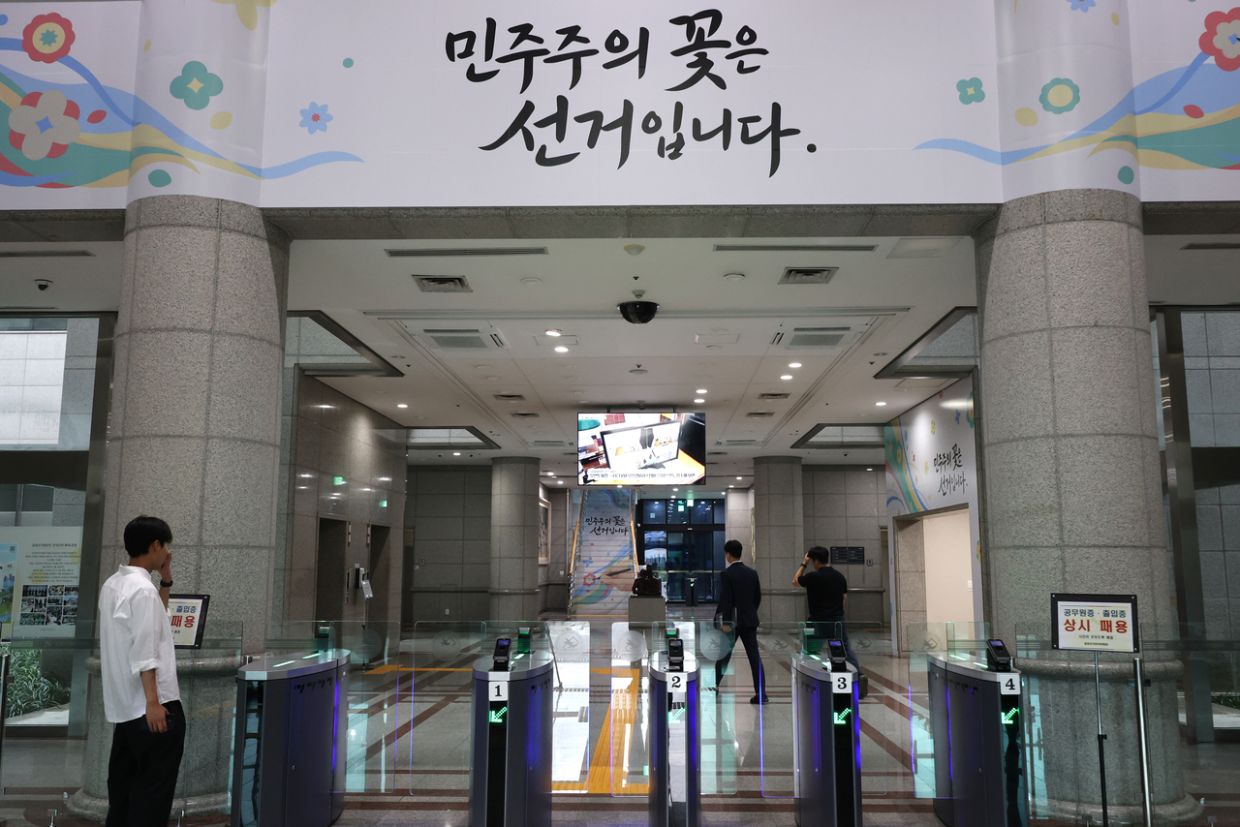
South Korea's electoral integrity has come under renewed scrutiny following raids on the National Election Commission's headquarters in Gwacheon, south of Seoul. The operation, conducted Thursday by prosecutors and a joint task force combining police and prosecution resources, marks an escalation in investigations into a troubling pattern of ballot shortages that disrupted voting during the June 3 local elections. Legal sources confirm that authorities sought to secure evidence pointing to systematic attempts by NEC staff members to obscure the scope of administrative failures through manipulation of internal databases and statistical records.
The raids represent a significant moment for South Korea's democratic institutions. Election administration systems form a cornerstone of public confidence in the political process, and allegations that officials deliberately altered computer records to mask errors strikes at the legitimacy of electoral outcomes. The willingness of prosecutors to move against a government watchdog body signals that investigators view the allegations with sufficient gravity to warrant aggressive evidence gathering, suggesting the probe extends beyond isolated incidents into questions of institutional accountability.
During the June local elections, multiple polling stations reported critical shortages of ballots, creating a situation where eligible voters arrived to cast their votes only to find insufficient materials available. Some citizens were forced to leave polling stations without participating in the electoral process—a denial of voting rights that undermines the fundamental principle of universal suffrage. The disruptions affected enough voters across multiple locations to trigger official inquiries and public concern about operational competence at the NEC.
What distinguishes this case from typical administrative lapses is the alleged intentional concealment. By manipulating statistics within their computer systems, NEC employees are accused of attempting to cover up errors in voter number calculations that contributed to the ballot shortages. This suggests a deliberate effort to obscure responsibility rather than an honest mistake subsequently corrected. The distinction matters substantially for assessing whether systemic problems exist within the institution's management and oversight structures.
For Malaysian observers, the South Korean case offers instructive parallels and contrasts regarding electoral administration. Malaysia's own election systems, overseen by the Election Commission, face periodic scrutiny regarding operational efficiency and public confidence. While Malaysia has not experienced ballot shortages at the scale reported in South Korea, the underlying concern—that election officials might prioritize institutional reputation over transparent acknowledgment of errors—resonates across Southeast Asian democracies where electoral commissions operate with varying degrees of independence and accountability.
The task force structure employed in the South Korean investigation reflects institutional divisions that exist in many democratic systems. Joint prosecution-police operations can enhance investigative capacity but also introduce questions about coordination, jurisdiction, and whether competing institutional interests might influence outcomes. The decision to conduct raids at the NEC headquarters rather than pursuing quieter administrative inquiries signals that authorities view potential obstruction of justice as a genuine risk, justifying more intrusive investigative methods.
Election administration challenges are particularly acute in East Asia, where rapid technological integration, large voter populations, and complex logistical requirements converge. South Korea's experience with ballot shortages and alleged subsequent cover-ups highlights how even advanced democracies can experience significant electoral hiccups. The country's response through vigorous prosecution suggests that when such problems occur, maintaining institutional credibility requires thorough investigation and accountability rather than institutional self-protection.
The broader implications extend to public faith in electoral outcomes. When voters learn that their ballots were unavailable or that officials subsequently altered records about what happened, confidence in election results inevitably suffers. This becomes particularly consequential in contested elections where margins are narrow or where losing candidates might use administrative failures to delegitimize outcomes. South Korea's approach of investigating thoroughly and potentially holding officials accountable provides a mechanism for restoring confidence, though only if investigations proceed transparently and produce meaningful accountability.
For regional election observers, the South Korean case underscores that electoral integrity depends on multiple safeguards functioning simultaneously. Official election bodies require sufficient resources and training to manage operations competently. Internal oversight mechanisms must exist to catch errors before they affect voters. External accountability mechanisms, including investigative powers and potential prosecution of officials, must function credibly. Finally, political leadership must demonstrate commitment to electoral integrity even when doing so means scrutinizing government agencies rather than protecting them from investigation.
The NEC's cooperation with the investigation and evidence gathering will determine how quickly authorities can establish facts. Charges against individual employees are possible if evidence supports allegations of deliberate data manipulation. The case will also likely prompt operational reviews of election administration procedures to identify whether systemic vulnerabilities contributed to the June shortages. Such reforms could include improved inventory management, better voter number forecasting, and enhanced internal audit procedures.

