South Korea stands on the precipice of ending a centuries-old culinary tradition as its landmark ban on breeding, slaughtering and selling dogs for meat draws closer to full implementation in February 2027. The legislation, passed in January 2024 after protracted public debate, represents a dramatic cultural shift in a nation where dog meat consumption has deep historical roots. For animal welfare advocates like musician Annie Ko, who rescued her Labrador DeeJay from a cramped cage on a dog meat farm in Wonju in 2015, the impending prohibition marks a profound victory in a decades-long struggle against the practice.
The transformation is already evident across South Korea's farming landscape. According to the Ministry of Agriculture, Food and Rural Affairs, more than 80 percent of the approximately 1,500 dog meat farms operating before the ban's passage had ceased operations by May 2026, leaving fewer than 300 farms still functioning. This dramatic exodus represents one of the most rapid industrial collapses in recent South Korean history, driven by a three-year grace period that gave farmers time to wind down while simultaneously offering substantial government incentives to accelerate their exit. The financial support package includes compensation of up to 600,000 won per dog, low-interest loans for business transitions, and comprehensive programmes designed to help workers retrain for alternative employment. Such government intervention underscores both the seriousness of the ban and official recognition of the economic hardship it would otherwise impose on vulnerable rural communities.
The economic pressure on remaining operators has become increasingly severe. A vendor at Seoul's Gyeongdong Market, one of the last commercial outlets for dog meat in the capital, revealed that wholesale prices have skyrocketed from approximately 20,000 won per kilogramme in 2024 to 60,000 won currently—a tripling that reflects both dwindling supply and the market's structural collapse. This astronomical price increase makes the business increasingly unviable for traditional retailers, as consumers already accustomed to the cultural shift show little willingness to pay premium prices for a product becoming progressively illegalized and socially stigmatized.
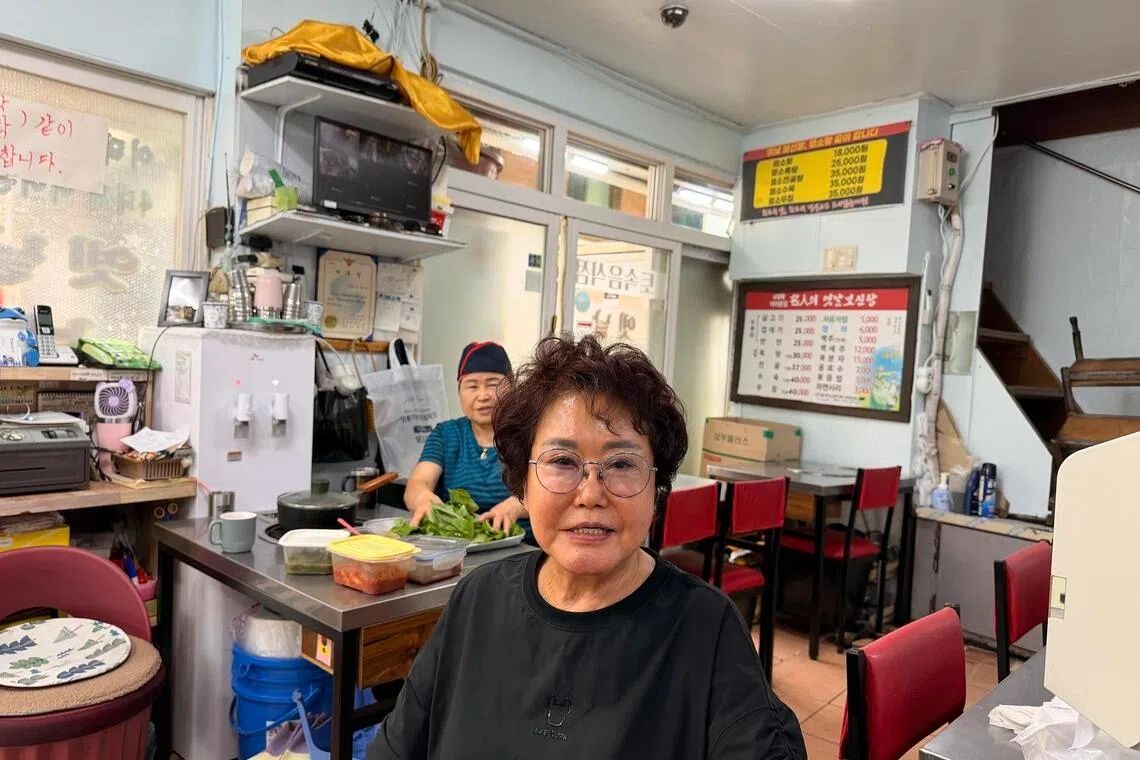
The impact extends most acutely to restaurants serving boshintang, a dog meat stew traditionally consumed during the three hottest days of summer, known as boknal. Lee Deok-sung, who has operated a boshintang restaurant near Seoul's Dongdaemun Market for 45 years, describes the current summer season as a complete commercial disaster. Despite raising menu prices from 16,000 won to 25,000 won per bowl to offset the quadrupling of ingredient costs, Lee struggles to move inventory daily. The proprietor must sell all prepared meat by evening service to break even—a precarious position that many restaurant owners across South Korea's boshintang sector are simultaneously confronting. Lee Kyung-ja, whose neighbouring establishment has operated for over four decades, reports that some days her restaurant receives no customers whatsoever, highlighting how completely consumer demand has evaporated.
Both long-established Seoul restaurants pivoted to serving black goat stew earlier in 2026, selecting this alternative because the meat shares dog meat's characteristic gamey flavour and similar texture. Yet despite identical preparation methods, the alternative has failed to gain meaningful traction. Regular patrons who still visit explicitly prefer dog meat's taste, while some continue relying on recommendations from traditional Korean medicine practitioners who advocate dog meat for patients recovering from severe illnesses. Lee Kyung-ja, now 75 years old, acknowledges that rebuilding a customer base for an unfamiliar protein at her advanced age presents an insurmountable challenge, suggesting she may simply close when the ban takes full effect.
The historical context of dog meat consumption in South Korea extends far deeper than contemporary debates might suggest. Documented evidence indicates that the practice dates back minimally to the Joseon Dynasty, with perhaps the most significant historical reference appearing in the Donguibogam, a celebrated 17th-century medical encyclopaedia compiled by royal physician Heo Jun. This foundational medical text characterizes dog meat as a warming substance capable of replenishing depleted energy and revitalizing bodily vitality—a perception that profoundly influenced subsequent generations. The tradition expanded considerably during Japan's colonial occupation from 1910 to 1945 and subsequently during the Korean War's aftermath, when widespread destitution and nutritional scarcity compelled ordinary Koreans to pursue any affordable protein source for family survival.
The psychological and cultural barriers to abandoning this practice remain substantial, particularly among older generations. For elderly restaurant proprietors whose entire professional identities have become intertwined with boshintang preparation and service, the transition represents not merely an economic adjustment but an existential challenge to their personal and professional legacy. Lee Kyung-ja's hesitation about starting anew encapsulates the genuine human cost accompanying industrial transformation, even when that transformation aligns with contemporary ethical standards and global animal welfare norms. Many longtime practitioners find themselves economically marginalized without clear pathways toward viable alternative livelihoods.
The government's compensation and transition support programmes, while comprehensive by regional standards, cannot fully address the intangible losses accompanying cultural discontinuation. The offered compensation of 600,000 won per dog, though substantial in absolute terms, often falls short of covering actual infrastructure decommissioning costs, let alone the emotional toll of abandoning multigenerational family enterprises. Job-transition assistance and counselling programmes face inherent limitations when targeting workers whose specialized skills possess limited transferability. For aging practitioners particularly, reemployment prospects remain dim regardless of governmental support intensity.
Yet the ban simultaneously reflects profound transformations in South Korean society. Contemporary urban South Koreans increasingly identify as pet owners rather than consumption practitioners, particularly among younger demographic cohorts who view dog meat consumption as culturally archaic and ethically indefensible. This generational divide has accelerated the practice's marginalization, with younger Koreans predominantly opposing continuation while older cohorts display greater ambivalence. The landmark legislation therefore represents not merely regulatory intervention but codification of evolving social values that increasingly align South Korea with global animal welfare movements and international companion animal protection standards.
The organizational landscape supporting this transition has proven instrumental in facilitating the industry's collapse. Non-profit entities like Humane World for Animals have successfully rescued approximately 2,800 dogs from farms and arranged their placement in overseas adoptive homes across the United States, Britain, and Canada. These rescue operations have simultaneously generated international media attention highlighting individual animals' stories—such as DeeJay's transformation from farm confinement to secure domesticity—that resonate powerfully across culturally diverse audiences. The emotional narratives surrounding rescued animals have effectively countered historical justifications rooted in medical tradition and economic necessity.
As February 2027 approaches, South Korea stands positioned to become the first East Asian nation implementing comprehensive prohibition on dog meat production and commercial sale. This distinction carries implications extending beyond national borders, potentially influencing comparable regulatory debates in neighbouring jurisdictions where similar consumption practices persist. South Korea's demonstrated capacity to transition an entrenched agricultural sector through combination of regulatory authority, financial incentives, and cultural reorientation offers an instructive model for addressing contentious food production practices across diverse cultural contexts. The country's experience suggests that legal prohibition combined with robust transition support, though economically disruptive to incumbent producers, can effectively facilitate rapid industry discontinuation without complete humanitarian crisis.
The final boknal season preceding the ban's February 2027 implementation will occur on July 15, July 25, and August 14, 2026—dates already shadowed by the knowledge that subsequent summers will witness fundamentally transformed culinary landscapes. For traditional practitioners like Lee Kyung-ja and Lee Deok-sung, these final opportunities to serve their signature dishes represent not merely seasonal business cycles but harbingers of professional obsolescence. The convergence of legal prohibition, market collapse, and cultural transformation has effectively rendered dog meat farming and retail an anachronism in contemporary South Korea—a fate that industry participants must now navigate with whatever support systems and personal resilience they can marshal.

