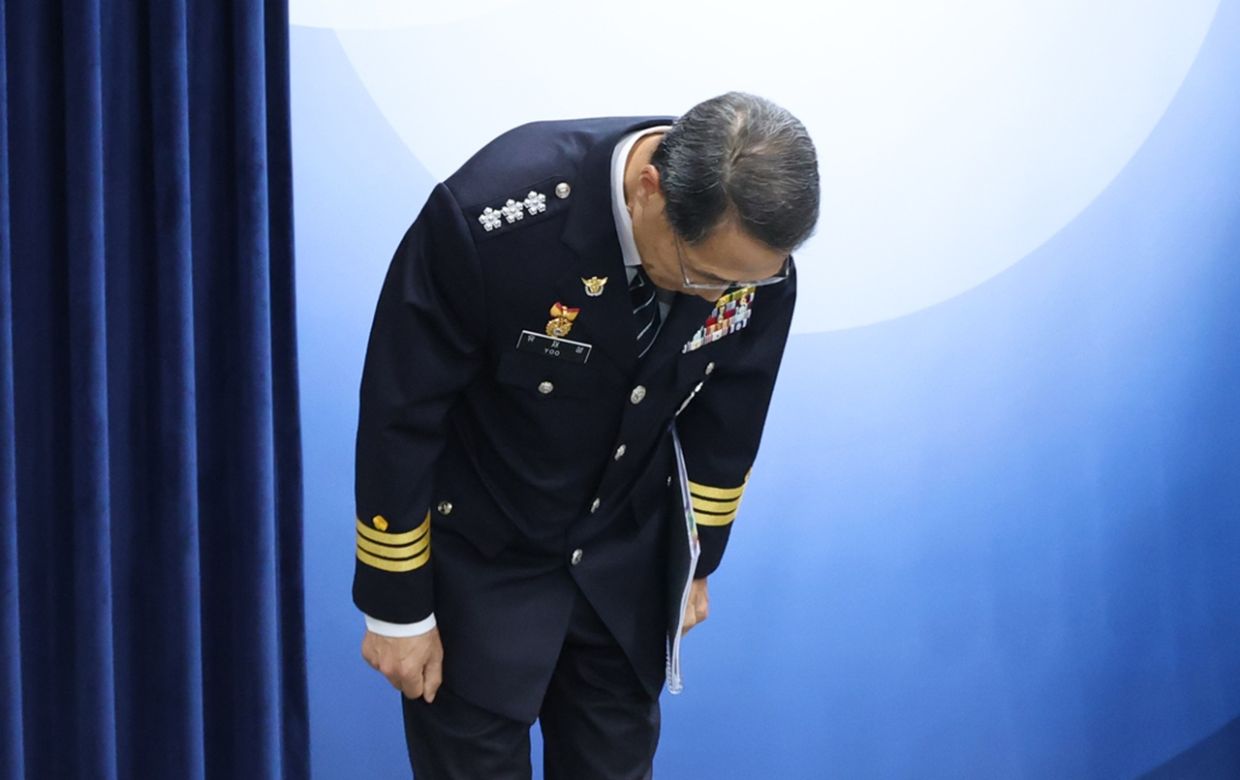
South Korea's acting police leadership is embarking on an ambitious institutional overhaul following intensifying public fury over a high-profile murder investigation marred by alleged impropriety and officer corruption. At a press conference on Monday at Government Complex Seoul, Acting National Police Agency Commissioner General Yoo Jae-sung acknowledged the gravity of recent controversies and committed the police force to fundamental changes in how it conducts investigations and maintains public accountability.
The catalyst for these reforms stems from the case of Jang Yoon-gi, arrested in connection with the May killing of a teenage girl in Gwangju. The investigation has become emblematic of systemic failures within the police establishment, particularly after revelations that officers allegedly disclosed sensitive investigative details to Jang's father, a serving police officer, while simultaneously failing to properly secure crucial evidence. These breaches of protocol have triggered widespread criticism and raised serious questions about the integrity of the investigative process and the trustworthiness of those charged with maintaining law and order.
Yoo's public acknowledgment that the police must treat this crisis as a turning point signals recognition at the highest levels that incremental adjustments will no longer suffice. In his remarks, he stressed that the force must harness this moment of accountability to fundamentally recalibrate its investigative methodologies and restore the confidence of a sceptical public. His assurance that he would faithfully execute his responsibilities without prioritising his own tenure suggests institutional acknowledgment that systemic reform takes precedence over career preservation—a noteworthy statement in hierarchical police bureaucracies where such declarations carry symbolic weight.
The proposed reform architecture is comprehensive and multi-layered. A dedicated investigative reform task force, scheduled to launch by month's end, will comprise between seven and ten members, with outside specialists constituting the majority. This outsider-heavy composition reflects an attempt to inject independent perspective into police self-examination, addressing the persistent risk that purely internal reviews may lack sufficient distance from institutional interests. The task force's mandate encompasses personnel restructuring to eliminate problematic relationships between officers and local communities, alongside procedural improvements for cases involving victims from marginalised populations.
A parallel institutional innovation involves establishing an internal affairs investigation unit operating under the National Office of Investigation. Significantly, this body will pursue serious duty-related criminal matters without regard for an officer's rank—a crucial safeguard against the protective tendencies that often shield senior personnel from scrutiny in hierarchical organisations. This democratisation of accountability represents a departure from traditional practices where rank frequently insulated officers from investigation.
Beyond internal mechanisms, the police propose creating a civilian-led oversight body under the Korean National Police Commission. This body would employ approximately one hundred civilian investigators to examine alleged human rights abuses and procedural misconduct in investigations. The establishment of such a body necessitates legislative amendment to the Police Act, with relevant proposals already submitted to the National Assembly. Yoo emphasised that this oversight mechanism must have genuine enforcement teeth, with investigative findings directly enabling personnel recommendations and disciplinary actions. Without such linkage, oversight bodies risk becoming symbolic rather than transformative.
The reforms also address operational matters affecting rank-and-file officers. The police intend to expand a rotation system currently applied to superintendent-level officers to broader employee categories, a measure designed to prevent entrenched local relationships that can compromise investigative integrity. However, Yoo acknowledged that extending rotations across all ranks presents practical and financial complications. The provision of official residences currently accompanies transfers for senior officers, and expanding this benefit system to lower-ranked personnel would trigger significant budgetary implications and fairness considerations. The agency will therefore pursue a phased approach, implementing immediately viable measures while the reform task force deliberates longer-term solutions.
Yoo's candid recognition of these implementation challenges demonstrates awareness that institutional transformation requires careful calibration between reform ambitions and operational realities. Expanding the rotation system indiscriminately risks demoralising frontline officers burdened by frequent transfers while underfunding relocation support. Conversely, exempting lower ranks perpetuates the very localism that enables misconduct. This tension illustrates how anticorruption measures, while essential, demand sustained thought regarding implementation logistics.
The timing and breadth of these reforms reflect pressure from multiple directions. South Korean civil society has demanded comprehensive police accountability following high-profile investigative failures, particularly those affecting vulnerable victims. Political leadership, keen to demonstrate responsiveness to public concerns, has signalled that police reform constitutes a priority governance objective. The appointment of Yoo in an acting capacity itself may reflect transitional positioning pending broader leadership changes.
For Malaysia and Southeast Asia, South Korea's police reform trajectory offers instructive precedent. Regional democracies frequently grapple with police accountability deficits, especially in investigations involving individuals with institutional connections. South Korea's explicit commitment to civilian oversight, transparent investigative procedures, and rank-agnostic accountability mechanisms represents a model that neighbouring democracies might contemplate as they navigate similar institutional challenges. The integration of external experts into reform design, rather than relying exclusively on police self-regulation, provides a template for bolstering investigative credibility in contexts where public confidence has eroded.
The ultimate test of these reforms will manifest in their implementation. Institutional change in police bureaucracies proves notoriously difficult, particularly when reforms challenge entrenched practices and require sustained resource commitment. Yoo's pledge to conclude the internal inspection of Jang's father only after the special investigation team submits its final assessment demonstrates deference to ongoing processes, suggesting the police remain in reactive rather than proactive mode regarding individual accountability.
The scandal surrounding Jang Yoon-gi's investigation has exposed vulnerabilities in police institutional integrity that institutional reforms seek to address. Whether South Korea's police leadership can translate pledges into durable systemic change will substantially influence whether this moment catalyses genuine transformation or becomes another episode of symbolic reform. The comprehensive nature of announced measures suggests serious intent, yet implementation will ultimately determine whether the police force emerges from this crisis with rebuilt public legitimacy.

