South Korean authorities have moved to prosecute a woman in her 30s accused of orchestrating an extensive ticket scalping operation targeting K-pop concerts, marking a significant enforcement action against what has become an increasingly sophisticated form of concert fraud. The Seoul Metropolitan Police Agency announced on August 26 that it had referred the suspect to prosecutors on charges encompassing violations of the Information and Communications Network Act, obstruction of business, and breaches of the Public Performance Act. The case underscores the growing challenge posed by automated ticket purchasing schemes in South Korea's fiercely competitive live entertainment market, where fans compete intensely for access to performances by major acts.
According to police investigations, the suspect deployed macro software—programmes designed to execute repetitive digital tasks far faster than manual effort allows—to systematically circumvent standard ticketing safeguards between April 2023 and March 2026. Over this roughly three-year span, she successfully obtained approximately 2,600 tickets to concerts featuring popular K-pop artists. The operation specifically targeted performances where demand significantly outpaced available supply, enabling her to resell tickets at substantial markups. Most K-pop concerts throughout South Korea implement protective measures limiting individual purchases to one or two tickets per performance, restrictions designed precisely to prevent the type of hoarding that characterises scalping operations.
To evade these purchase restrictions, the suspect employed a technically sophisticated approach involving multiple identity spoofing techniques. Rather than purchasing tickets through a single account, she created or utilised accounts registered under the names of relatives and acquaintances, leveraging this distributed account structure alongside her macro software to exceed official purchase limits. This layered deception strategy allowed her to accumulate substantially larger inventories than any single purchaser would normally be permitted to obtain, demonstrating deliberate circumvention of both technological and procedural safeguards implemented by ticketing platforms.
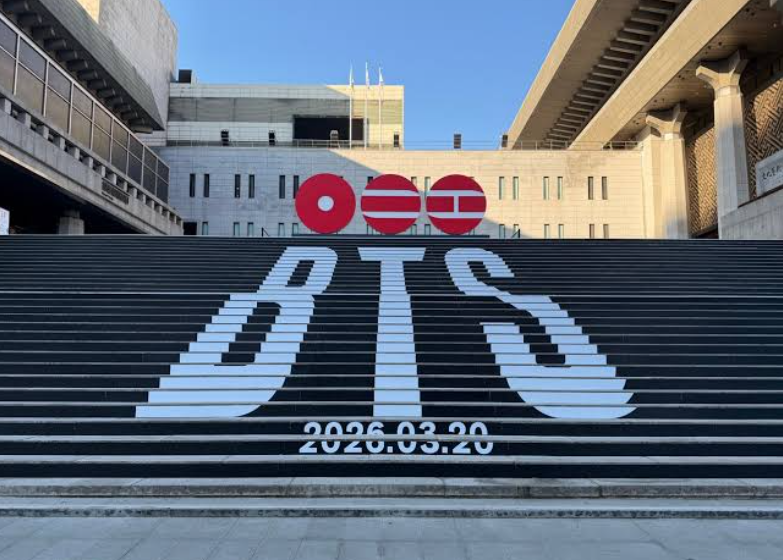
A particularly high-profile incident within this broader scheme involved nine tickets to a BTS Gwanghwamun concert scheduled for March 2026. BTS concerts represent the apex of Korean music ticketing demand, with fans worldwide competing for access to one of the industry's most sought-after live experiences. Police discovered her involvement with these tickets during their monitoring operations in February 2026, when the concert's ticket sales took place. Officers were maintaining enhanced surveillance specifically because of the exceptionally intense public demand anticipated for the event. Crucially, law enforcement intervention prevented her from successfully reselling these nine particularly valuable tickets, mitigating at least a portion of the potential illegal proceeds.
Financial estimates from the investigation reveal the substantial scale of the operation's illicit profits. Authorities determined that the suspect generated approximately 442 million won—equivalent to roughly US$319,000—through her ticket resale activities. The size of this figure demonstrates that scalping, despite often being viewed as a minor nuisance by casual observers, actually constitutes significant organised fraud when examined across multiple transactions and extended timescales. Police have filed formal requests for pre-indictment seizure and asset preservation orders, legal mechanisms designed to prevent the suspect from disposing of or transferring these proceeds before her case proceeds to trial.
The Seoul prosecution case forms part of a broader pattern of ticket scalping prosecutions that authorities have prioritised with increasing intensity. Simultaneously, police announced a separate case in Ulsan involving another suspect in his 30s who independently developed and deployed his own macro programme targeting K-pop concerts. This individual allegedly purchased more than 1,700 tickets between November 2024 and October 2025, reselling them at prices ranging from triple to thirteen times their original face value. That operation generated approximately 420 million won in estimated profits, suggesting that ticket scalping rings operate with considerable consistency across South Korea's entertainment industry.
These enforcement actions arrive at a strategically significant moment in South Korea's legislative calendar. Beginning August 28—just two days after police announced the Seoul case—stricter penalties for illegal ticket resales commenced under revised provisions of both the Public Performance Act and the National Sports Promotion Act. Previously, authorities possessed limited enforcement tools to deter scalping operations. Under these new regulations, South Korean agencies gained authority to impose administrative fines reaching up to fifty times the face value of illegally resold tickets. This represents a dramatic escalation in penalties, fundamentally altering the cost-benefit calculation that potential scalpers undertake when contemplating such schemes.
For Malaysian and broader Southeast Asian readers, these developments carry significant implications for how concert ticketing operates regionally. South Korea's entertainment industry serves as a technological and regulatory bellwether for the region, with practices adopted in Seoul frequently propagating throughout Asia's entertainment sector. The sophistication demonstrated by Korean scalpers—utilising macro software, distributed account networks, and organised resale channels—reflects methods that may already be emerging in Malaysian concert ticketing environments. Local authorities and ticketing platforms should view these cases as instructive examples of vulnerabilities that require preemptive technical and legal countermeasures.
Moreover, the scale and coordination of these operations demonstrates that ticket scalping has evolved beyond individual opportunism into organised commercial activity. The two cases announced simultaneously, combined with the coordinated legislative response from South Korean authorities, suggest that policymakers increasingly recognise scalping as a genuine public harm warranting systematic intervention. For Malaysian entertainment venues, concert promoters, and ticketing platforms, this Korean precedent indicates that comprehensive strategies—encompassing technological barriers, legislative penalties, and coordinated enforcement—produce more effective results than ad hoc responses to individual scalpers.
The broader context reveals important dynamics about consumer access to cultural experiences and digital equity. When scalpers dominate ticket distribution channels, ordinary fans—particularly those lacking technical sophistication or financial resources to pay inflated prices—face exclusion from experiencing major cultural moments. South Korea's response through both criminal prosecution and administrative penalties reflects official recognition that uncontrolled scalping undermines public access to cultural goods. This principle resonates across Southeast Asia, where K-pop and Korean entertainment command enormous audiences, and where fans deserve equitable access to ticketing opportunities.
The investigation methodology employed by Seoul Metropolitan Police, including real-time monitoring of high-demand ticket sales periods and coordination with ticketing platforms, offers a replicable model for Malaysian law enforcement and entertainment industry stakeholders. As K-pop concerts and other major international performances continue driving unprecedented ticket demand in Malaysia, implementing similar monitoring systems during high-demand periods could identify and interrupt scalping operations before they generate substantial illegal proceeds. The South Korean experience demonstrates that technological vigilance, combined with legal consequences, creates effective deterrence.
Facing prosecution under multiple criminal statutes, the Seoul suspect confronts potential imprisonment as well as substantial financial penalties under the newly enhanced administrative fine provisions. This dual approach—combining criminal prosecution for particularly egregious cases with administrative penalties for broader deterrence—suggests a comprehensive enforcement model that authorities across the region may consider adopting. For Malaysia's entertainment ecosystem, the message is clear: ticket scalping is no longer a tolerated minor infraction but an organised crime category warranting serious legal consequences and coordinated enforcement action.
The timing of these prosecutions and the immediate implementation of enhanced penalties demonstrates South Korea's determination to restore fair access to concert tickets for ordinary consumers. As K-pop's global influence continues expanding, and as Malaysian audiences increasingly seek access to premium entertainment experiences, comparable regulatory frameworks ensuring equitable ticket distribution become increasingly necessary. The Seoul cases establish a cautionary precedent for would-be scalpers while providing a regulatory blueprint for jurisdictions committed to protecting consumer interests in the digital ticketing era.

