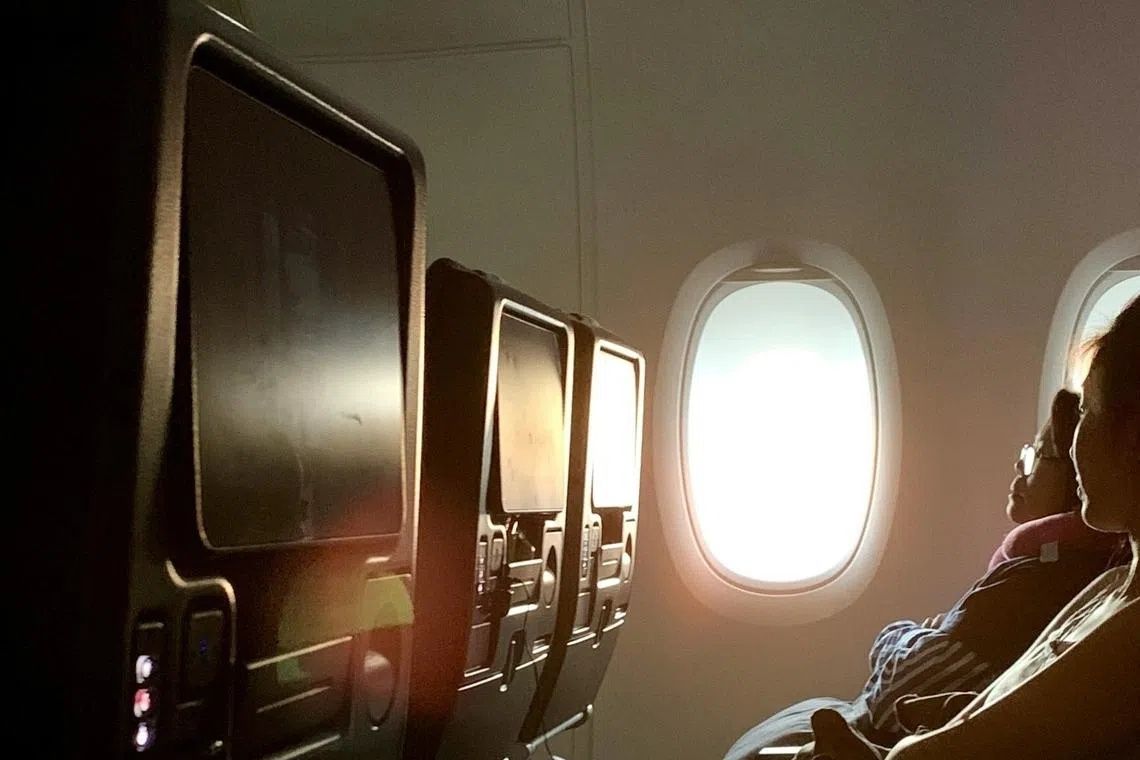
A middle schooler in South Korea has lodged a formal complaint through the government's Petition 24 platform, operated by the Ministry of the Interior and Safety, demanding tougher safeguards to shield children from objectionable material displayed on aircraft. The petitioner described struggling to avoid watching violent and sexually suggestive content that played on seat-back monitors during their flight, and noted that their elementary school-aged sister was similarly exposed to inappropriate scenes. The complaint highlights a recurring tension between passenger comfort, entertainment options, and child welfare in the commercial aviation sector across the region.
The petitioner's proposal centres on implementing mandatory privacy measures to block younger passengers from viewing content rated beyond their age group. They specifically suggested installing privacy screens on in-flight seat monitors, analogous to filtering systems that could prevent access to films and shows designated for adult audiences only. This approach reflects growing parental and child advocacy concerns about the passive nature of in-flight environments, where young people have limited ability to leave or control their exposure to onscreen material. The petition underscores how confined spaces—such as aircraft cabins—present unique challenges for content regulation compared to ground-based cinemas or streaming platforms where viewers have greater autonomy.
The teenager's complaint invokes South Korea's existing legal frameworks. Both the Child Welfare Act and the Youth Protection Act explicitly mandate protection for minors against harmful media exposure. These statutes establish government responsibility to ensure that entertainment systems in public or semi-public spaces respect age-appropriate standards. The petitioner's reference to these laws suggests that current airline practices may not fully comply with legislative intent, or that implementation gaps leave children vulnerable. This legal argument carries weight in South Korea, where child protection has become an increasingly prominent policy priority and where regulatory compliance is typically rigorous.
South Korea's two dominant carriers, Korean Air and Asiana Airlines, have historically taken steps to moderate in-flight content. Neither airline screens films rated for audiences aged 19 and above—a threshold that effectively bars the most explicit adult material. Additionally, both airlines customarily edit theatrical releases, removing or censoring the most graphic violence and sexual content to create edited-for-broadcast versions suitable for the airline's mixed-age passenger demographic. These measures suggest industry awareness of content sensitivity, yet the teenager's complaint implies that such precautions remain insufficient.
A notable precedent illustrates this inconsistency. In 2020, both Korean Air and Asiana removed the internationally acclaimed film Parasite from their in-flight libraries despite its 15-plus rating, judging that certain violent and sexual sequences fell below acceptable thresholds for captive aircraft audiences. The decision to exclude a critically celebrated work—which won the Academy Award for Best Picture—demonstrates the airlines' willingness to err on the side of caution, yet it also reveals ambiguity about where content boundaries should lie. The removal of Parasite suggests that a 15-plus rating does not automatically guarantee suitability for airline viewing, particularly when younger elementary-age children may be present.
For Malaysian and Southeast Asian readers, this South Korean precedent carries significance. Airlines operating across the region, including Malaysia Airlines and other carriers serving Malaysian routes, must navigate similar questions about in-flight entertainment standards. Many regional airlines follow comparable policies to their Korean counterparts, restricting adult-rated content and using edited versions. However, enforcement consistency and passive exposure—especially for very young children in family cabins—remains an unresolved problem. This complaint signals that passengers and advocacy groups across Asia are increasingly willing to challenge airlines' content curation practices through formal regulatory channels.
The petitioner's anonymity prevents identification of the specific film involved, leaving questions about what triggered the complaint. Whether the content in question was a borderline case slipping through the airlines' filters or a more egregious oversight affecting the curation process remains unclear. This ambiguity also underscores a broader interpretive challenge: determining which scenes cross acceptable thresholds depends partly on subjective judgment. What one parent considers tolerable may distress another, and what an airline deems acceptable after editing may still disturb sensitive viewers.
The complaint arrives amid a broader global conversation about digital safety for minors. Streaming services, social media platforms, and digital entertainment increasingly face pressure to implement transparent, enforceable systems protecting children from inappropriate content. In-flight systems, by contrast, operate under less public scrutiny and fewer standardised regulations. Airlines have considerable autonomy in selecting content and setting age thresholds, creating a fragmented landscape where protections vary by carrier and jurisdiction.
Moving forward, the petition may prompt South Korea's aviation regulatory authorities to establish clearer guidelines on in-flight content standards. Enhanced rules could require technical solutions like mandatory privacy filters for certain ratings, or they could mandate age-verified access systems for seat-back entertainment. Alternatively, regulators might specify minimum editing standards that airlines must apply to films before screening. For the regional aviation industry, any regulatory shift in South Korea—as a major economy and cultural influencer in Asia—could establish precedent that other governments and airlines subsequently adopt.
The complaint also invites broader scrutiny of airline passenger policies around children and family seating. Whether airlines should guarantee family cabin zones with pre-screened content, or require parental controls on seat monitors, are questions likely to intensify as more complaints surface. The balance between maximising entertainment options for adult passengers and ensuring child safety in shared spaces will increasingly define airline service standards across Asia and globally.

