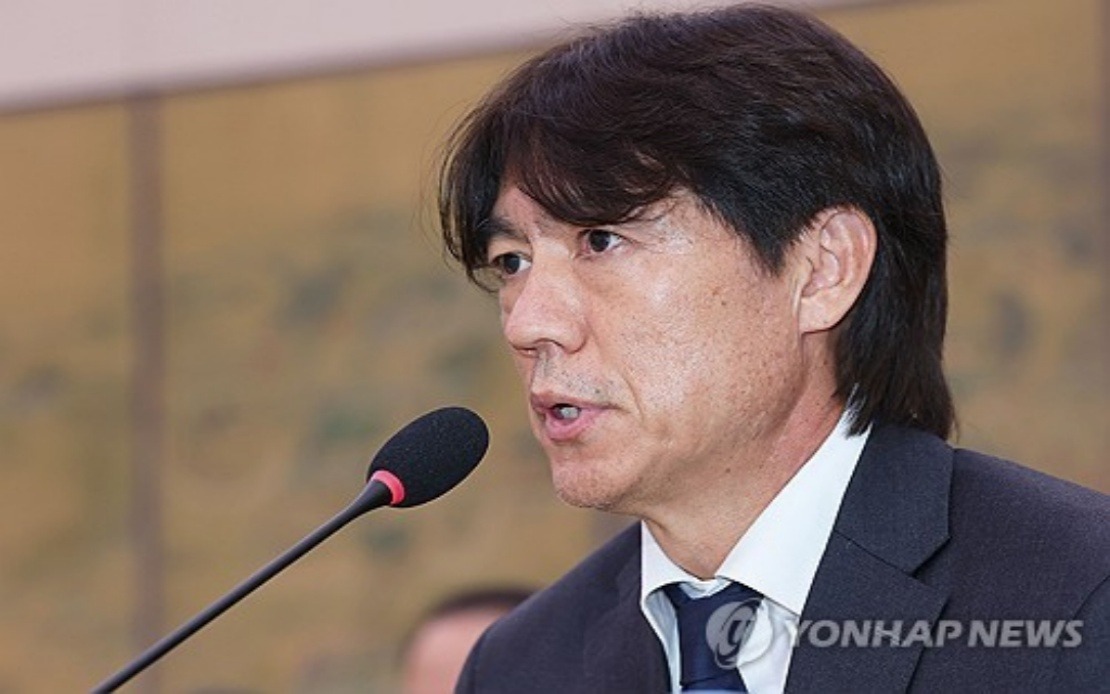
South Korea's national football federation faced a major investigation on Thursday when police conducted simultaneous raids on its offices, targeting allegations of procedural irregularities surrounding the controversial 2024 appointment of former men's team head coach Hong Myung-bo. The operation involved searches at the Korea Football Association headquarters in Cheonan, situated approximately 90 kilometres south of Seoul, and the KFA House in the capital, as authorities sought to establish whether federation executives had improperly influenced the coaching selection process that took place in July 2024.
The timing of the police action gained fresh urgency following South Korea's disappointing group-stage elimination from the FIFA World Cup, an outcome that triggered renewed public scrutiny of the federation's governance and decision-making processes. Hong had assumed his position after stepping down from the role at the end of June following the national team's failure to progress beyond the group stage, creating a narrative of leadership change amid institutional crisis that drew widespread media attention and public criticism.
Investigators are examining whether senior KFA officials, including former federation president Chung Mong-kyu and ex-technical director Lee Lim-saeng, exceeded their authority by steering Hong's selection through improper channels. The allegations centre on whether the appointment bypassed standard procedural safeguards and competitive evaluation mechanisms that typically govern such significant institutional decisions. According to reports, Lee—who held no formal responsibility for coaching staffing matters—allegedly offered Hong the position during an informal meeting at a bakery located near Hong's residence, a detail that has fuelled concerns about the casualness and lack of transparency surrounding the entire recruitment process.
The football community and civic organisations have raised fundamental questions about the legitimacy of Hong's hiring, arguing that the process lacked transparency and proper governance standards. A civic group filed formal complaints against both Hong and Chung, alleging obstruction of official duties, breach of fiduciary trust, coercion, and intimidation in connection with the appointment. These serious allegations suggest potential violations extending beyond mere procedural irregularities to include possible abuse of power and misconduct by federation leadership.
Remarkably, the police investigation itself had been underway for approximately two years before the raid took place, suggesting that the probe had proceeded at a measured pace until the World Cup elimination refocused public and institutional attention on the matter. The extended timeline raises questions about investigative priorities and whether the authorities had accumulated sufficient evidence justifying the more aggressive search and seizure operations now being conducted. The delay also indicates that high-profile sports governance failures sometimes require accumulated public pressure before receiving intensive investigative resources.
Police questioned Hong in his capacity as a suspect in the case just days before the raid, signalling an escalation in the investigation's intensity. This development reflected a shift from preliminary inquiry to active suspect interrogation, suggesting that authorities had gathered material sufficient to warrant direct questioning of the former coach himself. The questioning represented a pivotal moment in the investigation, positioning Hong at potential legal jeopardy depending on what evidence investigators could establish regarding his knowledge of and participation in any irregularities.
The matter had previously received parliamentary attention when lawmakers conducted a hearing featuring both Hong and Chung, during which legislators grilled the two men extensively on various topics spanning the federation's broader management practices and the specific circumstances of the coaching appointment. The parliamentary forum provided a public platform for scrutinising the federation's governance failures and allowed elected representatives to press the individuals involved for explanations, though such hearings typically carry less legal weight than criminal investigations conducted by police and prosecutors.
For Malaysian observers of regional sports governance, the Korean case illustrates systemic vulnerabilities that can emerge when appointed officials exercise discretionary authority with insufficient institutional oversight and transparency mechanisms. The apparent informality of how the appointment was allegedly conducted—a bakery meeting rather than structured interviews and evaluations—represents a departure from professional standards that increasingly define major sporting institutions across Asia. The scandal underscores the necessity of implementing robust administrative procedures and maintaining clear separation between technical competence, administrative authority, and personal relationships in sports organisations.
The investigation also reflects broader concerns about accountability within Asian sports federations, where governance structures sometimes lack the transparency and institutional independence that characterise more mature sporting administrations. The fact that a senior federation official who lacked formal responsibility for coaching appointments could nonetheless offer such a position suggests organisational boundaries were either poorly defined or deliberately circumvented. For Southeast Asian sports administrators and federation officials, the Korean case serves as a cautionary example of how failures in governance and institutional integrity can damage credibility and invite state intervention.

