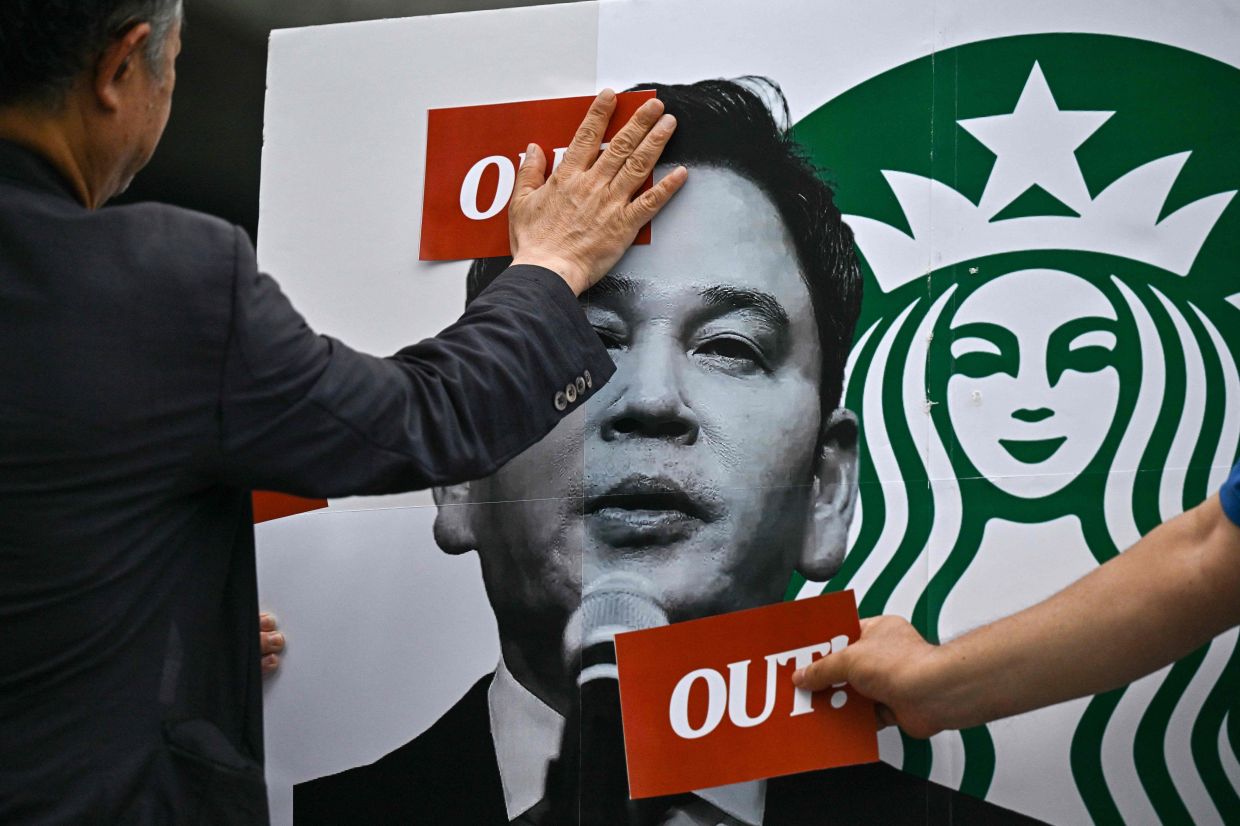
The South Korean authorities have intensified their scrutiny of Starbucks Korea's parent company, Shinsegae Group, by interrogating a senior executive as part of their investigation into a deeply controversial marketing campaign that unintentionally aligned with one of the nation's most traumatic historical events. The questioning of Yang Jong-hwan, head of Shinsegae Group's audit team, marks an escalation in a matter that has already cost the company its Korea chief executive and prompted a public apology from its chairman, signalling the gravity with which South Korean society views perceived disrespect toward the Gwangju uprising.
The origins of this public relations catastrophe trace back to Starbucks Korea's "Tank Day" reusable cup promotion, which the company scheduled for May 18. The date proved devastatingly inauspicious, coinciding precisely with the 46th anniversary of the Gwangju uprising, the 1980 pro-democracy movement that resulted in the deaths of 165 civilians according to official figures, though historians and survivors' organisations maintain the actual toll was considerably higher. The naming of the promotion itself—evoking military hardware—added an additional layer of insensitivity to the timing, as tanks were famously deployed during the crackdown to suppress the uprising.
The immediate aftermath saw swift corporate damage control measures. Shinsegae Group dismissed its Korea chief executive on the very day the scandal broke, a decisive move intended to demonstrate accountability and remorse. Chairman Chung Yong-jin subsequently made a formal public bow, a significant gesture in Korean corporate culture acknowledging serious wrongdoing. Despite these efforts, the company faced further legal jeopardy when a civic group filed a formal complaint against Chung and other executives, citing violations of a 2016 statute specifically designed to protect the historical record of the 1980 pro-democracy crackdown. The complaint additionally alleged defamation and insult, broadening the legal exposure beyond the historical sensitivity issue.
The 2016 law referenced in the complaint represents South Korea's legislative commitment to preserving accurate historical memory of the Gwangju uprising, a pivotal moment in the nation's democratic evolution. By filing a complaint under this statute, the civic group elevated the incident from a mere commercial misstep to a matter of national historical integrity. This legal action underscores how deeply Koreans regard the 1980 events and suggests that corporate negligence touching upon this sensitive historical memory carries potential criminal consequences rather than mere commercial penalties.
According to the company statement, the catastrophic oversight resulted from multiple layers of organisational failure. Officials approved the campaign without properly reviewing the design file, indicating a breakdown in quality control and due diligence procedures that would normally catch such glaring historical insensitivity. This negligence became particularly damaging given South Korea's cultural and educational emphasis on remembering the Gwangju uprising as a defining moment in the struggle for democracy and human rights. The failure to implement basic checking mechanisms suggests systemic carelessness rather than deliberate malfeasance, though this distinction provided little comfort to an outraged public.
The commercial impact of the scandal proved severe and immediate. Starbucks stores across South Korea experienced a sharp decline in sales during the early days following the public outcry, demonstrating that Korean consumers were willing to vote with their wallets in response to perceived historical insensitivity. Protests erupted in both Seoul and Gwangju, with the latter city—the epicentre of the 1980 uprising—being particularly affected by the perceived disrespect. The incident revealed the limits of corporate brand strength when confronted with breaches of national historical consensus.
In response to the controversy, Starbucks has initiated mandatory historical education for its workforce. All stores across South Korea will close for half a day on the Monday following the police questioning, allowing staff members to attend a structured lesson about the Gwangju uprising and its historical significance. This educational initiative extends to senior management, with Shinsegae's chairman and other executives scheduled to participate in a similar programme two days later. The company's commitment to this remedial education suggests a recognition that institutional cultural literacy needs to be rebuilt and reinforced across the organisation.
The broader context positions South Korea's Starbucks operation as a commercially significant market for the American coffee chain. As the company's third-largest market globally after the United States and China, South Korea represents both tremendous opportunity and substantial reputational risk. The incident demonstrates that market size does not insulate international corporations from the consequences of disrespecting local historical sensitivities and collective memory. For multinational enterprises operating across diverse cultural contexts, the scandal serves as a cautionary lesson about the necessity of rigorous historical awareness and cultural due diligence.
The government's attention to the matter, as evidenced by President Lee Jae Myung's public expression of outrage and the police investigation, reflects broader societal expectations regarding institutional respect for historical memory. By characterising the conduct as "inhumane and disgraceful," the President elevated the incident beyond a commercial context into a matter of national values and dignity. This political dimension suggests that any eventual legal outcome will carry significance beyond the immediate parties involved, potentially influencing how other corporations approach similar historical sensitivities.
Shinsegae Group's statement promising swift and transparent clarification, coupled with its commitment to full cooperation with investigators, indicates the company's understanding that comprehensive accountability is essential to rebuilding public trust. The questioning of the audit team executive represents police movement toward establishing responsibility and intent, distinguishing between negligence and potential deliberate indifference to historical sensitivity. The investigation's progression will likely determine whether this episode results in criminal charges or remains a matter of corporate accountability and reputational damage.

