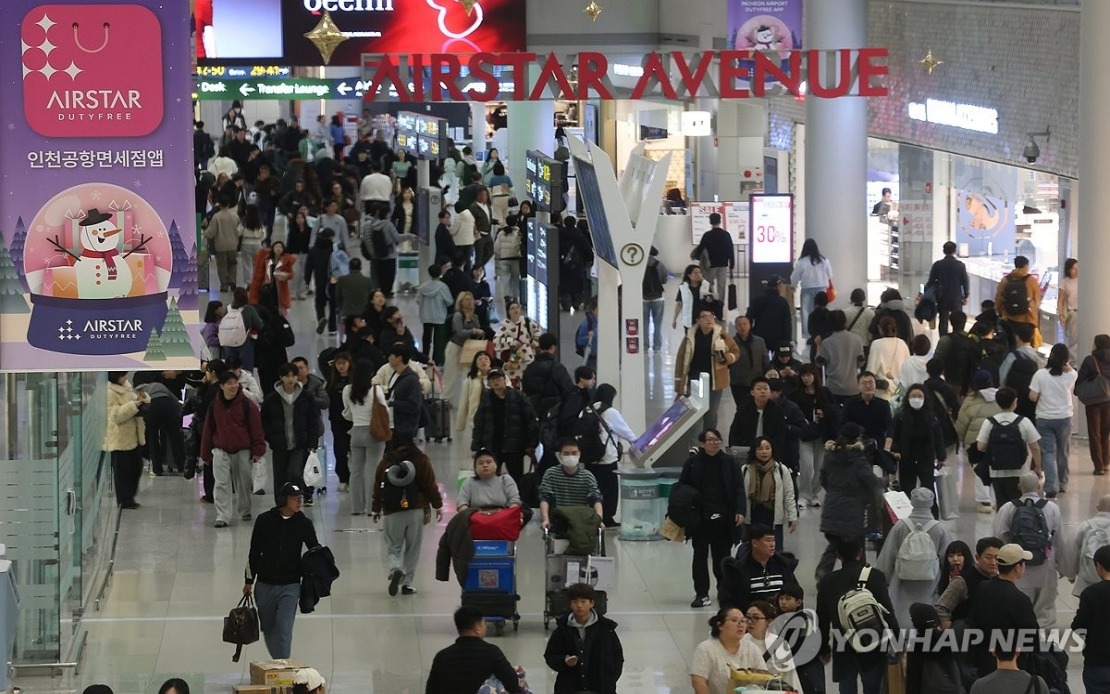
South Korea is on course to establish a new annual tourism record, having surpassed the 10 million foreign visitor threshold by mid-June—a milestone reached nearly four weeks earlier than the previous year. The Ministry of Culture, Sports and Tourism confirmed that this represents the first occasion the country has achieved this figure during the opening half of any calendar year, underscoring the strength of the current tourism cycle and the confidence attracting visitors to the peninsula.
The acceleration in arrival numbers reflects a marked rebound in inbound travel following the disruptions of recent years. May alone recorded 1.95 million international visitors, representing a 19.4 percent increase compared to the same month in the prior year. This pace of growth, if sustained through the remainder of 2024, could push annual figures significantly higher than historical norms. For Malaysian travellers and tourism operators, this trajectory signals intensifying competition within the Northeast Asian tourism market, as South Korea demonstrates renewed appeal across multiple visitor segments.
China constitutes the primary source of South Korea's incoming tourists, with 560,000 Chinese arrivals documented in May alone. This dominance reflects both geographical proximity and the resilience of Chinese outbound tourism following pandemic restrictions. Japanese visitors ranked second with 360,000 arrivals, while Americans contributed 210,000 visitors during the same month. This diversification across multiple origin countries—despite concentration from China—suggests that South Korea's appeal spans different cultural and commercial communities, reducing vulnerability to disruption from any single market.
A particularly notable development involves the geographic dispersal of tourists beyond Seoul's dominant metropolitan region. Regional airports experienced steady growth in passenger volumes, climbing from 230,000 arrivals in January to 360,000 by May. This expansion reflects deliberate strategies to distribute tourism benefits across provinces and reduce pressure on capital-region infrastructure. For Southeast Asian competitors like Malaysia, this trend underscores the importance of developing secondary tourism hubs beyond Kuala Lumpur and Penang, as visitors increasingly seek authentic regional experiences and lower-cost alternatives to established metropolitan destinations.
Foreign visitor spending in May reached 2.12 trillion won, equivalent to approximately US$1.38 billion. Significantly, this represents the inaugural instance since systematic data collection began in 2018 that monthly card expenditure—encompassing both in-country purchases and online transactions—has exceeded the 2 trillion won threshold. This metric carries particular weight for Malaysian economists and hospitality operators, as it demonstrates that tourism recovery translates into measurable economic impact through retail consumption, accommodation, dining, and entertainment sectors.
The achievement becomes more impressive when contextualised against external headwinds affecting air travel. South Korea's tourism apparatus expanded visitor numbers by 21 percent year-on-year through May despite higher fuel surcharges resulting from Middle East regional tensions. These surcharges typically increase ticket prices on long-haul routes originating from Southeast Asia, yet demand remained robust. This resilience suggests that South Korea's value proposition—encompassing K-pop cultural exports, culinary attractions, shopping infrastructure, and entertainment offerings—possesses sufficient strength to overcome cost barriers that might dampen travel demand in price-sensitive markets.
The South Korean government has explicitly committed to amplifying these growth trajectories. Kang Jung-won, heading the Ministry of Culture, Sports and Tourism's policy division, outlined plans to deepen collaboration with private-sector partners, including K-pop entertainment companies and export-oriented businesses, to strengthen positioning of South Korea as a tourism destination. This strategic integration of cultural industries with tourism promotion mirrors approaches adopted by Singapore and increasingly by Malaysia, reflecting recognition that contemporary destination branding extends beyond natural attractions and heritage to encompass contemporary popular culture.
For Malaysia's tourism sector, South Korea's performance conveys both competitive pressure and instructional lessons. The peninsula's success in accelerating visitation timelines reflects consistent messaging, strategic partnership development, and investment in infrastructure spanning beyond traditional tourist zones. Malaysian operators should note South Korea's emphasis on experiential diversification—moving away from concentration in singular attractions toward distributed regional offerings. Additionally, the prominence of Chinese visitors to South Korea suggests comparable opportunities within Malaysian tourism if marketing and service quality adapt effectively to this demographic's preferences and expectations.
The sustainability of South Korea's tourism surge remains an open question heading into the second half of 2024. Seasonal patterns, potential shifts in exchange rates, and geopolitical developments could moderate the growth trajectory. Nevertheless, the achievement of 10 million arrivals by mid-June establishes a baseline suggesting annual totals could reach unprecedented levels if momentum persists. For Malaysia's tourism industry, this benchmark serves as both competitive reference point and potential opportunity—indicating that Southeast Asian destinations possess capacity to capture growth within regional tourism markets if differentiation strategies and investment priorities align effectively with evolving traveller preferences and spending patterns.