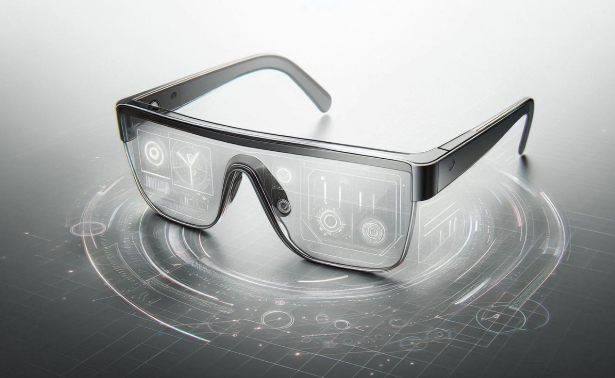
The Gwangju District Prosecutors' Office has become the first in South Korea to bring charges against an individual for deploying artificial intelligence-enabled eyewear to gain unfair advantage during a major examination. The indictment of the man in his 40s, filed under violation of the National Technical Qualification Act, represents a watershed moment in the country's struggle to keep pace with technological innovation in the context of educational integrity and professional credentialing.
The defendant was apprehended in May while attempting to sit for a fire protection facilities engineer certification examination in Gwangju. What proved his undoing was not advanced counter-surveillance technology but rather a moment of inattention to his own appearance. An alert examination supervisor noticed an unusual light reflection bouncing off the surface of his glasses lenses—a tell-tale sign that the frames were equipped with active electronic components rather than ordinary optical elements. This simple observation opened the door to further investigation and ultimately to the charges that followed.
During questioning, the accused individual acknowledged his cheating attempt and provided insight into his methodology and motives. He explained that he had personally developed a customized artificial intelligence application that interfaced wirelessly with his glasses, designed to capture examination questions in real time and transmit the correct answers directly into his field of vision. Notably, his stated purpose was not necessarily to fraudulently obtain a qualification for commercial gain, but rather to conduct what amounted to a proof-of-concept trial—to verify whether his technological setup functioned as intended. This explanation, whether compelling or not, did little to shield him from legal consequences.
The Gwangju case, while the first to result in formal prosecution, is far from an isolated incident. Investigators have uncovered a pattern of similar misuse extending across South Korea's examination landscape. Two additional men in their twenties were detained after being discovered employing identical tactics at national technical qualification examination venues in Seoul and Mokpo during the same month. The rapid proliferation of this particular form of cheating across different geographic locations and different test-takers suggests that knowledge of the method is circulating and that the technical barrier to entry remains low enough to attract amateur practitioners.
The problem extends beyond the world of technical certifications. South Korea's TOEIC examination system, which certifies English language proficiency and carries significant weight in employment and university admissions contexts, has also fallen victim to AI glasses cheating schemes. Authorities detected and apprehended two individuals attempting this method in May, followed by another case in June. The fact that cheaters have successfully deployed the same technology across multiple examination categories indicates that test administrators face a moving target as sophistication levels increase.
The cumulative effect of these discoveries prompted the South Korean examination oversight authorities to convene an emergency session on July 10. Representatives from the various agencies responsible for administering the nation's major qualification examinations gathered to devise response strategies and tighten security protocols. The urgency reflected in this meeting underscores the genuine concern that technological cheating could undermine the credibility and fairness of systems that millions of South Koreans depend upon for career advancement and credential recognition.
During their discussions, officials explored multiple avenues for tightening examination security. One straightforward approach under consideration involves explicitly cataloging AI-enabled glasses and similar wearable computing devices as prohibited items within examination rooms, bringing them into the same category as mobile phones and unauthorized notes. However, identification poses its own challenge—as the Gwangju case demonstrated, sophisticated eyewear can appear innocuous to the naked eye unless specific light conditions expose its electronic nature. A second, complementary strategy focuses on the consequences side of the equation: by substantially elevating the penalties imposed on individuals caught cheating, authorities hope to make the risk calculation far less attractive to potential offenders.
The emergence of this particular form of examination fraud reflects broader tensions facing education and professional licensing systems globally as artificial intelligence and compact wearable technology continue to advance. South Korea, as a technology-forward nation with world-leading semiconductor and consumer electronics industries, confronts these challenges with particular acuity. The country's intensely competitive examination culture, where performance on standardized tests frequently determines access to top universities and prestigious professional designations, creates powerful incentives for individuals to seek any available advantage.
For Malaysian readers and officials, the South Korean experience offers cautionary lessons worth heeding. As similar technologies become cheaper and more accessible throughout Southeast Asia, examination boards and credentialing bodies should begin implementing preventive measures before such cheating becomes endemic. The technical sophistication required is not exceptionally high—the accused in Gwangju reportedly developed his application personally—which means that as the technology diffuses, detection becomes increasingly difficult and prevention increasingly important. South Korea's rapid policy response, including the emergency meeting and prosecution, demonstrates how seriously that nation treats threats to examination integrity, a standard that other regional examination authorities might well adopt.
The legal and administrative responses now taking shape in South Korea will likely influence how other nations approach similar threats. The balance between security measures that do not unduly burden legitimate test-takers and penalties that genuinely deter cheating attempts remains delicate. As these cases proceed through South Korea's courts, the decisions rendered may well establish important precedents for how examination fraud statutes apply to artificial intelligence-enabled devices—precedents that will reverberate throughout examination systems across Asia and beyond.

