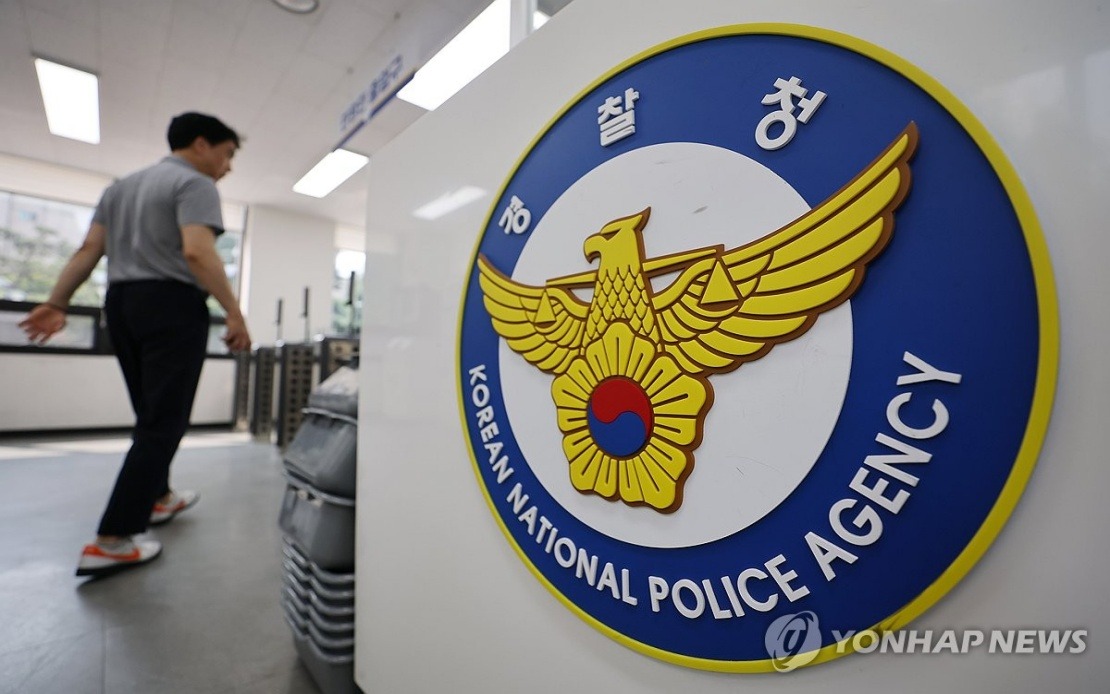
South Korea's law enforcement apparatus is mobilising for an extensive nationwide campaign against organised crime beginning this week, concentrating resources on apprehending younger members of criminal networks who have increasingly turned to high-value financial offences. The Korean National Police Agency announced the initiative on Sunday, signalling an escalation in its enforcement strategy amid growing concerns about the sophistication and reach of organised criminal enterprises throughout the country.
The operation, scheduled to run from Monday through the final day of October, will deploy police units to combat a troubling spectrum of financial wrongdoing that has proliferated in recent years. Officers will zero in on orchestrated fraud rings, unlicensed money-lending operations, clandestine online gambling networks, and the laundering of criminal proceeds—offences that generate substantial illicit revenues while destabilising legitimate financial markets. This multifaceted approach reflects law enforcement's recognition that modern organised crime has evolved far beyond traditional territorial disputes, now centred on exploiting digital platforms and financial systems for rapid wealth accumulation.
A particularly concerning dimension of the police strategy involves targeting criminals who publicly flaunt their ill-gotten gains through social media and online channels. Such displays, authorities contend, seed fear and normalise criminal behaviour within communities, especially among younger populations susceptible to recruitment into these networks. Simultaneously, police will pursue asset-freezing measures designed to starve criminal organisations of operating capital by identifying and immobilising the proceeds of their illegal activities—a preventative approach intended to disrupt organisational functionality at its financial core.
On the international front, the police agency has designated drug trafficking as a priority area, with synthetic narcotics including ketamine receiving particular enforcement attention. Beyond narcotics, investigators will focus on transnational organised crime involving foreign nationals, recognising that South Korea's role as a regional hub has attracted criminal entrepreneurs operating across borders. Enhanced intelligence-gathering operations will concentrate on communities housing foreign populations and their commercial districts, as well as entertainment venues known to facilitate illegal transactions—a targeted surveillance strategy designed to intercept criminal activity before it becomes entrenched.
This enforcement push responds directly to alarming statistical trends that emerged during the first half of this year. Between early March and the end of June, police apprehended 1,185 alleged gang members, with 225 formally arrested—figures representing a 9.7 percent increase in total apprehensions and a dramatic 48.3 percent jump in arrests compared to the corresponding period previously. The data underscores both the scale of organised crime activity and law enforcement's intensified response capacity, yet also suggests that criminal enterprises continue to outpace arrest rates, indicating an ongoing challenge.
Demographically, the composition of arrested suspects reveals a troubling generational shift within criminal organisations. Those aged thirty or younger represented 63.6 percent of apprehended individuals, suggesting that recruitment pipelines have successfully drawn youth into organised crime structures. Among this cohort, fraud-related offences dominated the criminal portfolio, accounting for 42.7 percent of suspected criminal activity—a pattern distinct from historical organised crime profiles and indicating a deliberate shift toward financial crimes that demand minimal physical confrontation while generating substantial returns. This transformation has profound implications for how authorities must adapt investigative and prosecutorial techniques.
During a four-month segment of the year's opening half, police detained 641 individuals, with 133 formally incarcerated, reflecting the resource intensity required to process and adjudicate complex organised crime cases. The foreign national dimension of criminal activity expanded considerably: police processed 18,130 foreign nationals in the first half of the year, a 9.1 percent increase from the corresponding prior-year period. This expansion suggests either growing criminal activity among foreign populations or enhanced detection efforts—likely both—and complicates enforcement through jurisdictional and diplomatic considerations. Concurrently, drug-related criminal charges surged by 29 percent, signalling that narcotics markets remain robust despite prior enforcement initiatives.
For Southeast Asian readers and policymakers, South Korea's approach offers instructive precedent. The nation confronts challenges analogous to those affecting regional economies: young populations vulnerable to recruitment, digital platforms facilitating transnational crime, foreign criminal networks exploiting trade routes and migration corridors, and synthetic drug proliferation. The police agency's emphasis on intelligence-gathering within foreign communities and entertainment districts mirrors tactical approaches regional governments have adopted, yet South Korea's comprehensive asset-freezing strategy and coordinated inter-agency operations represent a more integrated enforcement model than many Southeast Asian counterparts currently deploy.
The timing of this operation reflects a strategic calculation by authorities that concentrated effort during a defined period, combined with public messaging, can disrupt criminal networks' operational continuity and deter recruitment. Whether this approach proves sustainable and effective will depend heavily on resource allocation post-October and on securing cooperation from neighbouring countries and relevant government agencies. The police agency's statement emphasising "close cooperation with relevant authorities" signals recognition that organised crime's international dimensions and financial complexity demand institutional coordination beyond traditional police functions.
For investors, businesses, and residents across East Asia, the South Korean police operation underscores the region's shared vulnerability to organised financial crime and the significant enforcement resources required to address it. The surge in young offenders engaged in fraud and money laundering suggests that criminal networks have successfully adapted to digital transformation, recruiting digitally native youth capable of exploiting financial systems' technical complexities. Successfully countering this trend requires not only law enforcement action but also financial sector vigilance, digital platform accountability, and community-level engagement—elements that South Korea's operation acknowledges but whose ultimate effectiveness remains to be demonstrated.

