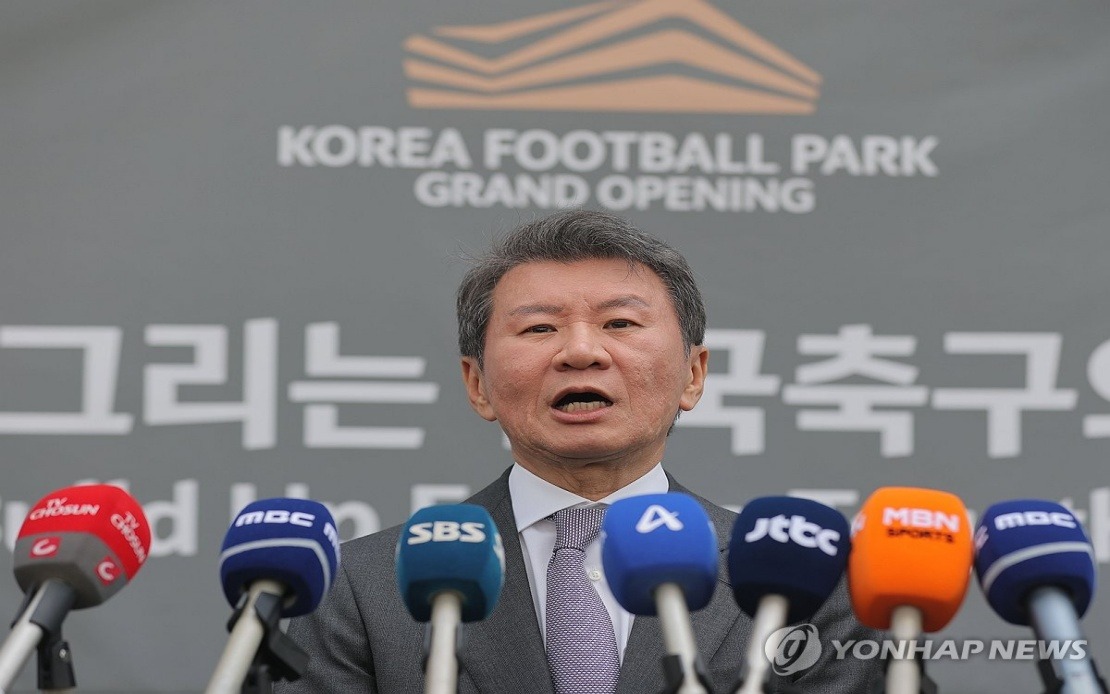
Chung Mong-gyu has relinquished his position as president of the Korea Football Association (KFA), stepping down on Monday after formally submitting his resignation at the federation's headquarters in Cheonan, approximately 90 kilometres south of Seoul. The decision came after he presided over what would be his final senior management meeting, marking an abrupt end to his tenure just days after South Korea's disappointing early exit from the World Cup competition.
While Chung had publicly announced in May his intention to depart once the FIFA World Cup concluded on July 20, he accelerated his departure by a fortnight following the national team's failure to advance beyond the group stage. The squad, under the stewardship of coach Hong Myung-bo, accumulated merely three points from one victory and two defeats, finishing third in Group A and falling short of qualifying as one of the eight best-ranked third-place finishers. This premature elimination triggered immediate repercussions within the federation's leadership, with Hong stepping down immediately after the team's mathematical elimination became certain.
Chung's departure cannot be separated from the intense criticism he faced over what observers characterised as an opaque and questionable recruitment process when appointing Hong in July 2024. The controversy swelled substantially when South Korea's Ministry of Culture, Sports and Tourism launched a comprehensive investigation into the KFA's administrative practices throughout that year. The ministry's findings concluded that Chung and other high-ranking federation officials warranted disciplinary measures for numerous operational breaches and procedural violations discovered during the audit.
The institutional tension between the KFA and the government continues to escalate. Beyond the already-completed investigation that found governance failings, the ministry intends to undertake yet another comprehensive audit of the football body in response to the World Cup elimination. This dual-pronged scrutiny reflects broader concerns among Korean sports officials about the federation's administrative standards and decision-making transparency. The adversarial dynamic has evolved into an ongoing legal contest, with the two institutions locked in disputes over findings and recommendations.
Under established KFA protocols, the federation will be temporarily administered by one of its four vice presidents until a formal election determines Chung's successor. Given that Chung's fourth term contained nearly three years of remaining tenure, election rules mandate that the KFA must conduct a successor election within 60 days. This compressed timeline differs from scenarios where departing presidents have minimal time remaining on their contracts, reflecting the substantial unfinished period requiring new leadership direction.
Historically, KFA presidential candidates have been elected by an electoral college comprising representatives from regional football associations, chief executives from K League professional clubs, player delegates, coaching staff representatives, and refereeing officials. The previous electoral contest in 2024 demonstrated robust participation, with 183 of 192 eligible voters casting ballots, indicating a functional electoral apparatus. However, this traditional mechanism now faces mounting political pressure to reform.
Culture Minister Chae Hwi-young has publicly signalled governmental dissatisfaction with the existing election framework, acknowledging awareness of public concerns regarding presidential selection procedures. The minister's statement—suggesting that if the KFA recognises the profound disappointment affecting citizens following the World Cup performance, the federation will be unable to maintain its current electoral methodology—represents barely veiled pressure for substantial reform. This rhetorical positioning effectively positions the government as an intervening actor in the federation's internal governance structures.
The Korean Sport and Olympic Committee (KSOC), which functions as the apex sports governance body overseeing all member associations including the KFA, is preparing to implement electoral reforms affecting affiliated organisations. The KSOC has scheduled a general assembly meeting for July 16 to deliberate potential modifications to election procedures governing member associations. Among the contemplated changes are extending the traditional 60-day electoral window following a president's departure and potentially introducing direct election mechanisms whereby all eligible voters participate equally rather than through the current electoral college framework. These proposed alterations would represent fundamental shifts in how Korean football leadership is selected and democratically legitimised.
For Southeast Asian observers, South Korea's institutional crisis within its football federation illuminates broader regional dynamics around sporting governance, ministerial oversight of autonomous sports bodies, and the political consequences of international athletic underperformance. Many nations across the region similarly grapple with balancing government accountability interests against federation operational independence. The Korean situation demonstrates how World Cup elimination can catalyse not merely managerial changes but fundamental restructuring of sports administrative systems and processes.
In his resignation statement, Chung expressed gratitude toward football supporters while acknowledging the disappointment his leadership generated during certain periods. He emphasised his unwavering commitment to advancing Korean football's development and international standing, attributing successes to players and fans while accepting personal responsibility for institutional shortcomings. Chung maintained conviction that Korean football possesses inherent resilience to overcome current adversities and ultimately achieve renewed heights, referencing the nation's historical trajectory of recovery from previous sporting setbacks and challenges. His characterisation of the federation's future prospects reflects optimism tempered by acknowledgment of immediate institutional crisis requiring substantial remedial action.

