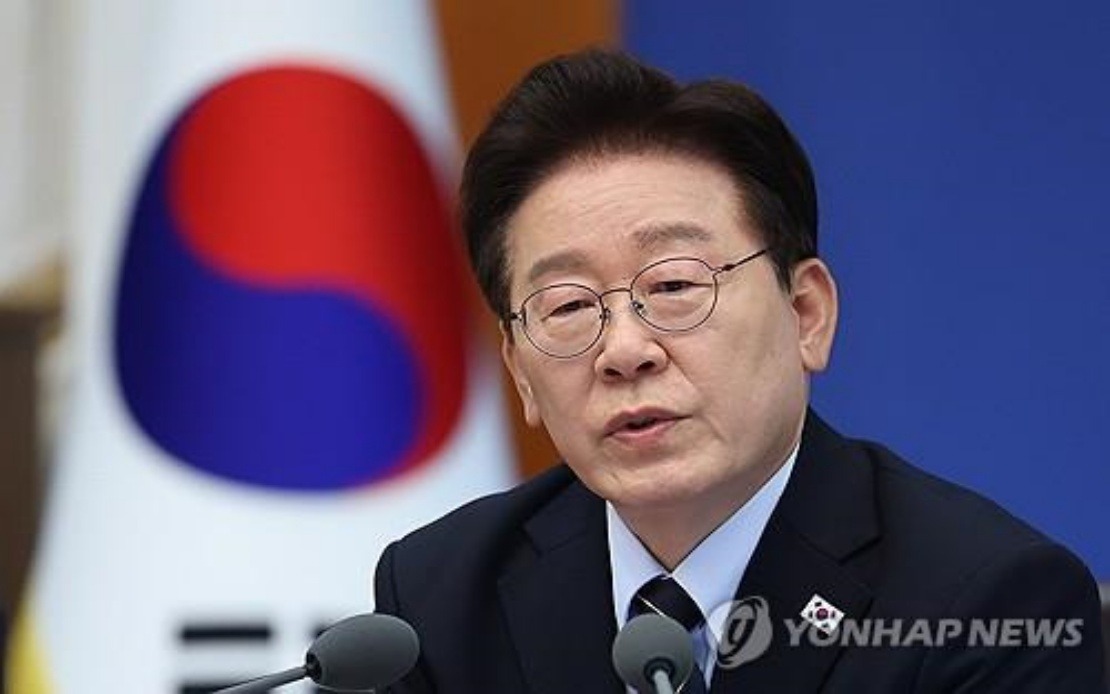
South Korea's government has signalled an ambitious shift in its approach to national defence, moving away from traditional personnel-heavy military models towards a technology-centred force structure. President Lee Jae Myung outlined these strategic priorities during a high-level meeting with senior government officials, framing the proposed changes as essential responses to the country's persistently low birth rate and the resulting pressure on military recruitment and retention.
The centrepiece of Seoul's defence strategy involves building what officials term a "smart" military—one that leverages cutting-edge technology and advanced equipment to maintain security capabilities while reducing reliance on sheer manpower. This approach acknowledges a hard demographic reality facing South Korea: the traditional conscription model, which has underpinned the nation's security posture for decades, is becoming increasingly unsustainable. With fewer young people entering the population each year, maintaining military strength through conventional force expansion has become neither feasible nor strategically sound.
Selective conscription represents a fundamental departure from South Korea's long-standing universal military service requirement, which mandates that all able-bodied men serve at least 18 months in uniform. Implementing such a system would require substantial legal and institutional restructuring, yet Lee's administration views it as necessary for adapting to demographic constraints. The transition would mean some citizens would serve while others might fulfil military obligations through alternative service pathways, allowing for a more flexible and efficient utilisation of human resources.
Beyond pure military restructuring, Seoul's proposals address a deeper social anxiety regarding military service. For many South Korean families, conscription has long been viewed as an inevitable but disruptive interruption to career development and educational advancement. Lee's government recognises this concern and has framed military service not as a sacrifice but as a pathway to improved employment prospects and economic stability. The administration is exploring mechanisms to ensure that military service translates into tangible benefits for participants—whether through enhanced job placement assistance, educational credits, or wealth-building opportunities.
This reframing carries significant implications for South Korean society, particularly for younger generations already grappling with economic uncertainty and intense competition. By positioning military service as a productive investment rather than lost time, the government hopes to restore cultural legitimacy to conscription at a moment when demographic decline makes compulsory service more contentious. Such an approach could serve as a model for other ageing democracies wrestling with similar military sustainability questions.
The defence overhaul must be understood within the broader context of South Korea's strategic environment. The nation faces continuous security challenges from North Korea, requiring maintenance of robust defensive capabilities despite demographic headwinds. Technology-driven defence solutions—including enhanced surveillance systems, autonomous capabilities, and precision weaponry—offer a means to preserve deterrence while reducing the aggregate personnel requirements that demographic decline makes increasingly burdensome.
For Southeast Asian observers, South Korea's experience offers relevant lessons. Many ASEAN nations face comparable demographic challenges, though perhaps less severe than South Korea's. As populations age and birth rates decline across the region, questions about military sustainability and the balance between technology investment and traditional force structure become increasingly pertinent. South Korea's willingness to fundamentally reimagine military organisation may inspire similar strategic recalculations elsewhere in Asia.
The government's emphasis on linking military service to career advancement also reflects broader shifts in how states approach conscription in developed economies. Rather than appealing primarily to nationalist sentiment or patriotic duty—appeals that traditionally anchored military recruitment—Seoul is anchoring its defence strategy to individual aspirations. This pragmatic approach acknowledges changing values among younger generations and shifts the conscription debate from moral obligation towards mutual benefit.
Implementing selective conscription will require navigating considerable political and social obstacles. Questions about fairness in selection criteria, potential socioeconomic disparities in burden-sharing, and the institutional capacity to manage more complex military personnel systems all loom large. The government's success in building consensus around these changes will significantly influence both South Korea's defence readiness and social cohesion during the transition period.
Parallel to defence reform discussions, Lee's administration is also prioritising housing policy as a critical challenge. The government announced plans to supply more than 230,000 additional homes in the Seoul metropolitan area through accelerated development on public land, selective degreening of protected areas, and incentives for private sector construction. Lee attributed current housing shortages partly to permit restrictions introduced in 2022, arguing that extraordinary interventions are necessary to address resulting supply deficits.
The government's proposed solutions include streamlining permit procedures and revising legal frameworks governing land use and development. These housing initiatives, though distinct from defence policy, reflect a broader government agenda addressing quality-of-life concerns for younger South Koreans—directly connecting to retention challenges within the military context. A more robust housing market and improved economic prospects for young people could indirectly support military recruiting efforts by improving the attractiveness of national service.
South Korea's dual focus on defence modernisation and housing accessibility reveals leadership understanding that military sustainability cannot be separated from broader social and economic conditions. Building a technology-driven military capable of selective conscription requires not only institutional restructuring and investment but also a social contract convincing citizens that service aligns with their individual wellbeing and future prospects. Whether Seoul can successfully navigate these interconnected challenges will have implications extending beyond Korean security concerns.

