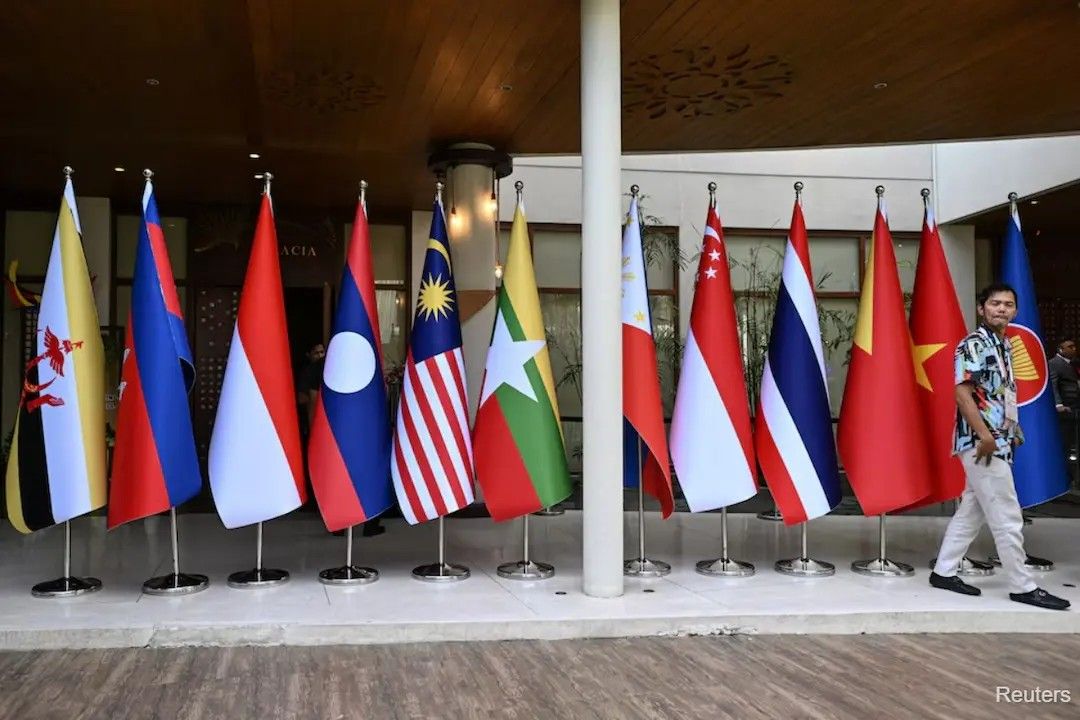
The upcoming ASEAN foreign ministers' gathering in Manila faces mounting pressure from competing geopolitical interests, with the South China Sea dispute emerging as a flashpoint just as United States Secretary of State Marco Rubio arrived in the Philippines. His swift condemnation of what Washington terms "dangerous" Chinese maritime conduct signals that territorial rivalries will feature prominently in discussions, potentially crowding out consensus-building on other pressing regional issues.
The timing of the US intervention proves particularly delicate. Rubio's remarks came within minutes of landing in the Philippine capital, underscoring Washington's determination to position itself as a counterweight to Beijing's expanding assertiveness in one of the world's most economically vital shipping corridors. Yet beneath this display of commitment lies a deeper calculation: the incoming administration seeks to reassert American influence in Southeast Asia at a moment when economic pressures, supply chain vulnerabilities, and energy insecurity are reshaping how regional players calibrate their diplomatic allegiances.
The clash between Philippine and Chinese personnel at Second Thomas Shoal on Monday demonstrates how routine interactions in the disputed waterway continue escalating into physical confrontations. Beijing's version of events—that Manila deliberately provoked the encounter through aggressive maneuvers in rubber boats—differs sharply from Filipino accounts describing assault by China Coast Guard operatives. These dueling narratives reflect a fundamental absence of mutual trust that undermines any path toward peaceful coexistence in contested waters. For Malaysia and other ASEAN members whose territorial claims overlap with China's expansive nine-dash-line demarcation, such incidents serve as uncomfortable reminders that military pressure tactics remain Beijing's preferred instrument for managing disagreement.
Rubio's op-ed published in Philippine media frames the stakes in starkly civilizational terms, warning that if any single power achieved dominance over South China Sea shipping lanes, both American and ASEAN interests would face "serious new threats to their sovereignty, security, and economic future." This language deliberately invokes memories of Cold War geopolitical competition while implicitly challenging ASEAN members to choose sides. The argument carries particular resonance for nations like the Philippines and Vietnam that depend heavily on these waterways, yet it also risks reinforcing perceptions among other ASEAN states that external powers are instrumentalizing regional disputes for their own strategic purposes.
The absence of a binding Code of Conduct between ASEAN and China remains the elephant in the meeting room. Decades of negotiations have yielded only aspirational frameworks lacking enforcement mechanisms or meaningful constraints on either party's behavior. Analysts viewing this week's discussions suggest little hope for breakthroughs; rather, incremental modifications to existing arrangements seem more realistic. For Malaysian policymakers observing these dynamics, the stalemate underscores the limitations of multilateral diplomacy when fundamental interests diverge so sharply and military capabilities remain asymmetrically distributed.
Beyond maritime boundaries, energy security has emerged as an unexpected leverage point reshaping regional alignments. The Philippines' declaration of a national energy emergency last March forced Manila into remarkable diplomatic contortions, compelling the nation to purchase crude oil from Russia—a move unthinkable in earlier decades. This desperation purchasing reflects how disruptions to Middle Eastern supplies, coupled with the Strait of Hormuz tensions, have destabilized Southeast Asia's energy markets. Russia's Foreign Minister Sergei Lavrov's presence in Manila signals Moscow's opportunistic engagement, offering energy lifelines precisely when traditional Western suppliers cannot guarantee uninterrupted flows. The region-wide push for ratifying ASEAN's Framework Agreement on Petroleum Security thus acquires urgency transcending its bureaucratic language, representing a collective attempt to insulate member states from external energy coercion.
Myanmar's political impasse, however, threatens to expose ASEAN's institutional fragility more acutely than maritime disputes. The military junta's seizure of power in 2021 triggered a civil war that has displaced millions and created a humanitarian catastrophe, yet the bloc remains fractured over how aggressively to punish Myanmar or whether engagement offers better prospects for eventual normalization. Thailand's Foreign Minister Sihasak Phuangketkeow's recent announcement that Myanmar's leader Min Aung Hlaing might visit in August reflects Bangkok's conviction that isolation breeds intransigence rather than compliance. Thailand's own strategic calculations—protecting its lengthy border with Myanmar, managing refugee flows numbering in the millions, and maintaining influence over Naypyidaw—drive its comparatively conciliatory stance.
Philippine President Ferdinand Marcos's May call for "fine-tuning" the five-point peace plan represented diplomatic circumlocution masking deeper frustrations. The original framework, designed to nudge Myanmar incrementally toward civilian rule, has yielded virtually no tangible progress. Five years of declarations, meetings, and statements have generated neither meaningful ceasefire progress nor credible transition timelines. Malaysia's Foreign Minister Mohamad Hasan articulated the opposing perspective in May, arguing that engagement with the junta while "oppression is still taking place" would constitute moral compromise unsuited to ASEAN's professed values. This fundamental disagreement between Southeast Asian members themselves—not merely between ASEAN and external actors—highlights how the Myanmar crisis has fractured consensus mechanisms that previously allowed the bloc to present unified positions on controversial matters.
The convergence of these multiple crises in Manila this week exposes the structural vulnerabilities within ASEAN as a diplomatic institution. The bloc remains theoretically committed to non-interference in members' internal affairs, yet this principle increasingly conflicts with humanitarian imperatives and security concerns. When one member faces civil war, when contested waterways threaten shipping security affecting all members, and when energy supplies remain uncertain, the doctrine of non-interference becomes less coherent and less tenable. Regional powers like Malaysia must navigate these contradictions carefully, balancing traditional solidarity principles against practical strategic interests that may demand more assertive positions.
The presence of both Wang Yi and Rubio in Manila creates opportunity for bilateral US-China conversations potentially disconnected from formal ASEAN proceedings. Such sideline diplomacy, while sometimes productive in smoothing disagreements, risks marginalizing Southeast Asian voices precisely when their interests deserve central consideration. Smaller ASEAN members worry, justifiably, that great power negotiations conducted in corridors might produce arrangements that further constrain their own policy autonomy without delivering proportional benefits. This dynamic—where regional forums become venues for external powers to manage their relationships rather than platforms for genuine Southeast Asian agenda-setting—represents a long-standing frustration that this week's meetings may only intensify rather than resolve.

