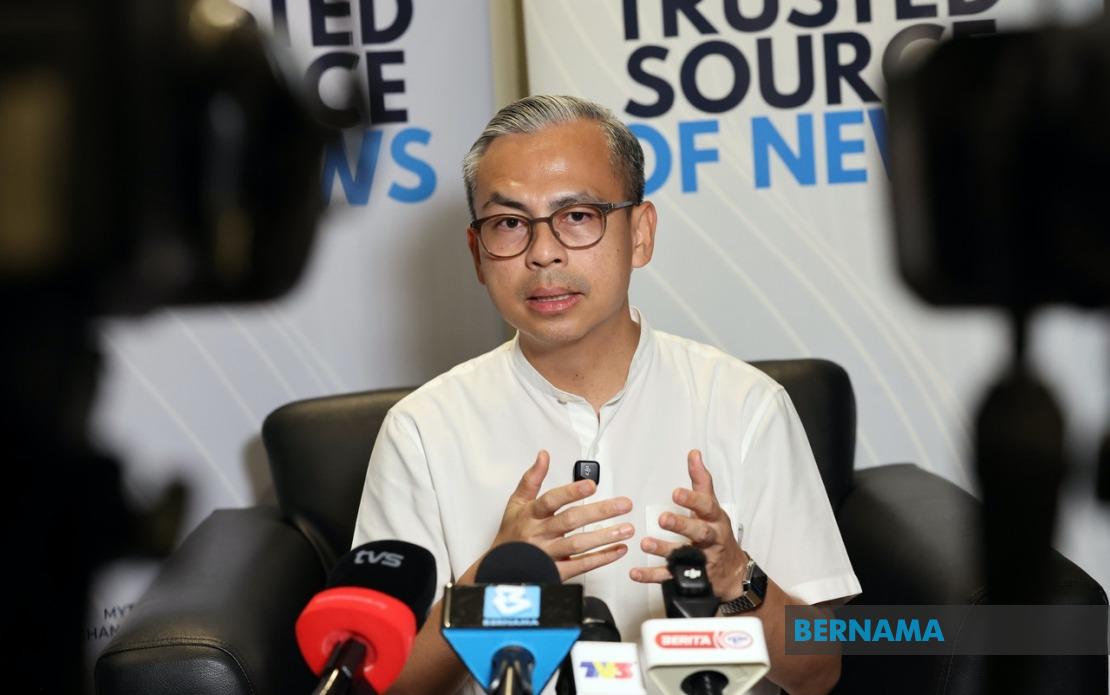
Communications Minister Datuk Fahmi Fadzil has warned that social media platform providers must strengthen their vigilance in combating misinformation related to the 16th Johor state election, with particular concern surrounding polling day operations. Speaking after observing the Malaysian National News Agency's election coverage coordination centre in Johor Bahru, Fahmi emphasized that while these platforms maintain formal policies against false information dissemination, the practical implementation and real-time enforcement remain inadequate to meet the challenges posed by rapid-fire digital communication during high-stakes electoral moments.
The Communications Minister articulated apprehension about the potential for deliberately false claims regarding vote tallies or seat outcomes to circulate on election night itself, creating voter confusion and potentially undermining public confidence in the democratic process. He stressed that Saturday's polling would represent a critical test of whether platforms could demonstrate sufficient operational responsiveness to contain damage from coordinated or spontaneous misinformation campaigns. This concern reflects a broader regional anxiety about digital information integrity during elections, a pattern increasingly evident across Southeast Asia as voters and institutions grapple with technology's dual capacity to inform and deceive simultaneously.
Fahmi, speaking in his capacity as MADANI Government spokesperson, articulated a collaborative framework requiring social media companies to partner actively with Malaysia's regulatory apparatus, specifically the Malaysian Communications and Multimedia Commission, to address the multifaceted challenge. He acknowledged that regulatory bodies and the Malaysian Media Council had already signalled their willingness to participate in monitoring and enforcement efforts, particularly regarding the fabrication of election graphics that incorporate unauthorized media logos and institutional branding to create false legitimacy. However, the minister recognized that this technical intervention addresses only partial dimensions of the broader disinformation ecosystem.
The substantive challenge, according to Fahmi's analysis, extends beyond sophisticated graphic manipulation to encompass the vast corpus of user-generated content circulating across social platforms. This encompasses both visual materials and textual narratives potentially containing false or misleading claims about electoral matters, representing the more difficult enforcement frontier since it involves monitoring millions of individual posts rather than identifying unauthorized use of institutional logos. The decentralized nature of this content production means that relying solely on platform algorithms or reactive moderation becomes insufficient; proactive identification and removal at scale demands technological sophistication coupled with human contextual judgment that platforms have historically struggled to deploy effectively during time-sensitive situations like election cycles.
Notably, Fahmi reported that the Malaysian Communications and Multimedia Commission has not yet fielded substantive complaints regarding social media campaign misconduct violations, suggesting either effective voluntary compliance or a lag in reporting mechanisms. This apparent calm preceding the election could mask underlying vulnerabilities in how quickly problematic content escalates through complaint channels to enforcement action. The minister's comments implicitly signal government expectation that platforms will adopt more anticipatory stances rather than waiting for formal complaints before mobilizing their moderation resources.
Parallel to misinformation concerns, Fahmi outlined the Pakatan Harapan coalition's strategic focus for the election's final week, emphasizing intensive outreach to voters working outside Johor who retain voting rights in their home constituencies. The coalition's confidence in its campaign approach reflects calculations about the electoral impact of turnout variations, particularly whether workers in other states could be motivated to return home specifically to vote. This strategy reveals how modern Malaysian electoral politics increasingly involves managing geographic voter dispersion, a consequence of internal migration and employment patterns that traditional campaign models did not adequately address.
The government has facilitated voter mobilization through coordination with public transport authorities, securing special packages and scheduling arrangements that reduce the practical barriers preventing outstation voters from participating. Additionally, the Youth and Sports Skills Training Institute has granted leave to its enrolled students to enable their return to Johor, recognizing that student populations represent a distinct demographic whose participation rates significantly influence outcome trajectories. This institutional coordination demonstrates how contemporary elections require mobilization infrastructure extending beyond party apparatus into government agencies and private sector cooperation.
Fahmi has urged retail and food and beverage sector employers to accommodate employee requests for voting time, framing electoral participation as both civic responsibility and employer social obligation. This appeal recognizes that service industry workers face structural disadvantages in exercising voting rights when business operations continue normally during polling hours. The appeal reflects implicit recognition that turnout variations between demographic groups can alter electoral mathematics significantly, making workforce voting accessibility a competitive consideration.
Regarding overall participation targets, Fahmi expressed hope that voter turnout would exceed 60 percent, a threshold reflecting government assessment of what constitutes healthy democratic engagement for state elections. Turnout above this level would indicate that government mobilization efforts succeeded in overcoming the natural friction that deters voters from traveling distances to participate. He specifically appealed to parents and family networks to encourage younger voters living outside Johor to return, framing the election as an opportunity for Johoreans collectively to shape their state's governance trajectory for the subsequent four to five years. This multigenerational appeal underscores how electoral campaigns now systematically activate family networks as force multipliers for turnout mobilization, recognizing that personal relationship channels often prove more persuasive than institutional messaging alone.

