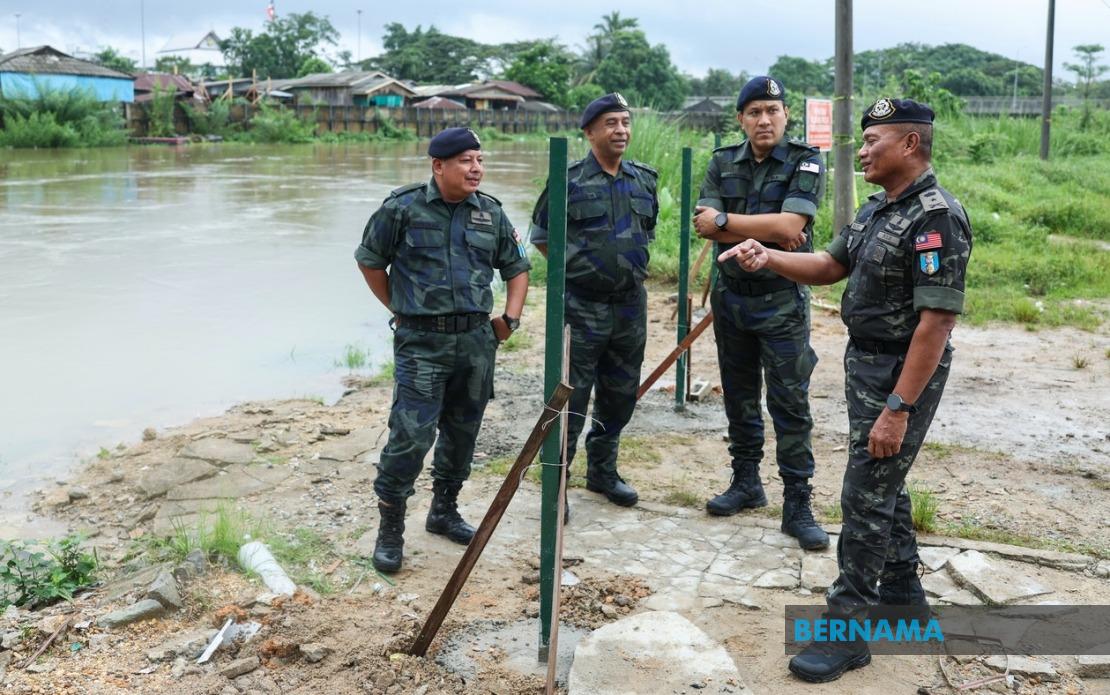
Security forces in Malaysia have identified a troubling evolution in human trafficking tactics, with migrant smuggling syndicates increasingly fragmenting their operations into smaller groups as a deliberate counter-intelligence strategy against law enforcement. The General Operations Force announced the discovery during a major operation in Kelantan last week, signalling how criminal networks operating along Malaysia's northern borders are becoming more sophisticated in their methods to circumvent security measures.
The Southeast Brigade of the GOF, led by SAC Ahmad Radzi Hussain, conducted Operasi Taring Wawasan Kelantan in partnership with the Criminal Investigation Division of the Pasir Mas district police. The operation culminated in the arrest of 13 Myanmar nationals, comprising eight men and five women aged between 20 and 37 years. The interception took place following early morning intelligence work that led GOF personnel to intercept a suspicious Proton Exora vehicle near Kampung Banggol Kemian in Pasir Mas. When the driver spotted security forces approaching, he abandoned the vehicle and fled into the adjacent forest, successfully evading capture, though four Myanmar nationals found in the vehicle's rear seats were immediately taken into custody after failing to produce travel documentation.
The subsequent forest search, completed within approximately one hour, led to the discovery and arrest of an additional nine Myanmar nationals in the surrounding area. This secondary group had evidently just crossed into Malaysian territory through illegal routes and were awaiting transportation. Interrogation of the detainees revealed that two unidentified smugglers had orchestrated their journey from Thailand across the Golok River, deliberately spacing their arrivals and drop-off points throughout the forest to minimise the visibility of large migrant movements. This dispersal strategy represents a marked departure from traditional smuggling operations that would transport entire groups together, creating larger concentrations of people that are easier for authorities to detect and intercept.
The deliberate stagewise release of migrants into Malaysian territory reflects criminal adaptation to intensified border surveillance and checkpoint operations. By distributing arrivals across multiple locations and time intervals, smugglers reduce the probability that security patrols will encounter suspicious concentrations of undocumented individuals. The arrested individuals indicated they had been destined for employment opportunities in the Kuala Lumpur region, suggesting broader networks connecting Thai-Malaysia border crossings to urban labour markets across the peninsula. Such arrangements typically involve documented agreements with employers or labour brokers willing to hire undocumented workers at substandard wages, perpetuating cycles of exploitation and underground economic activity.
Beyond the human element, authorities seized a Proton Exora valued at approximately RM30,000 that had been pressed into service as a transport vehicle. The seizure of such vehicles eliminates assets from the smuggling network and represents tangible law enforcement success, though the rapid replacement of confiscated vehicles through purchase or theft remains a persistent challenge. The flexibility of criminal networks to substitute vehicles and routes means that removing individual assets provides temporary disruption rather than permanent deterrence of smuggling operations, particularly given the substantial profit margins that justify equipment replacement costs.
Under the Immigration Act 1959/63, specifically Section 6(1)(c), all detainees have been transferred to the custody of Pasir Mas district police for ongoing investigation and prosecution. This statutory framework criminalises the harbouring and transportation of undocumented migrants, creating legal liability for smugglers, facilitators, and complicit employers. However, enforcement challenges persist in identifying and prosecuting the primary organisers and financiers operating behind the scenes, who typically insulate themselves from direct involvement in border operations.
The Golok River, which forms the Thailand-Malaysia border in this region, has emerged as a critical gateway for illicit migration into the peninsula. The river's accessibility, combined with relatively sparse patrol coverage across stretches of the border, makes it an attractive crossing point for migrant networks. Seasonal variations in water levels and the presence of multiple crossing points create enforcement dilemmas for authorities tasked with monitoring an extensive and often challenging natural boundary. Enhanced intelligence gathering and cross-border cooperation mechanisms with Thai authorities remain essential to address the upstream organisation of these smuggling networks.
The reliance on Myanmar nationals as the primary migrant population reflects broader patterns of economic displacement and conflict-driven migration across Southeast Asia. Myanmar nationals constitute a significant portion of undocumented workers in Malaysia, drawn by wage differentials and employment opportunities despite associated legal and safety risks. The persistence of this migration corridor, despite regularisation programmes and awareness campaigns, indicates that economic pressures and limited domestic opportunities in Myanmar continue to drive individuals toward irregular migration pathways.
The intelligence-driven nature of this operation underscores the importance of tip-offs and community reporting in disrupting smuggling activities. The GOF's reliance on actionable intelligence to identify the Proton Exora highlights how surveillance networks, informant systems, and coordination between security agencies create the foundation for successful interdictions. Scaling such intelligence capacity across Malaysia's extensive border regions remains a resource allocation challenge, particularly given the sophistication of modern smuggling networks that employ counter-surveillance techniques and encrypted communications.
Operations targeting migrant smuggling must balance enforcement priorities with humanitarian considerations, as arrested migrants themselves are often victims of trafficking and exploitation rather than willing participants in illegal activities. While criminal prosecution under the Immigration Act remains the standard response, some policy frameworks increasingly recognise the distinction between migrants and organisers, with some jurisdictions exploring victim protection and assisted voluntary return programmes. The extent to which Malaysian authorities incorporate such differentiation into operational procedures continues to evolve.
The shift toward smaller-group dispersal tactics demonstrates that law enforcement initiatives, while important, face adaptive criminal responses that require continuous operational and strategic refinement. The success of Operasi Taring Wawasan Kelantan represents a tactical victory, but the underlying smuggling infrastructure and demand for undocumented labour will likely persist unless accompanied by broader policy measures addressing root causes of irregular migration and labour market dynamics that absorb undocumented workers. Regional coordination among Southeast Asian nations to disrupt smuggling networks at their origin points and transit routes remains essential to addressing the structural drivers of this persistent security challenge.

