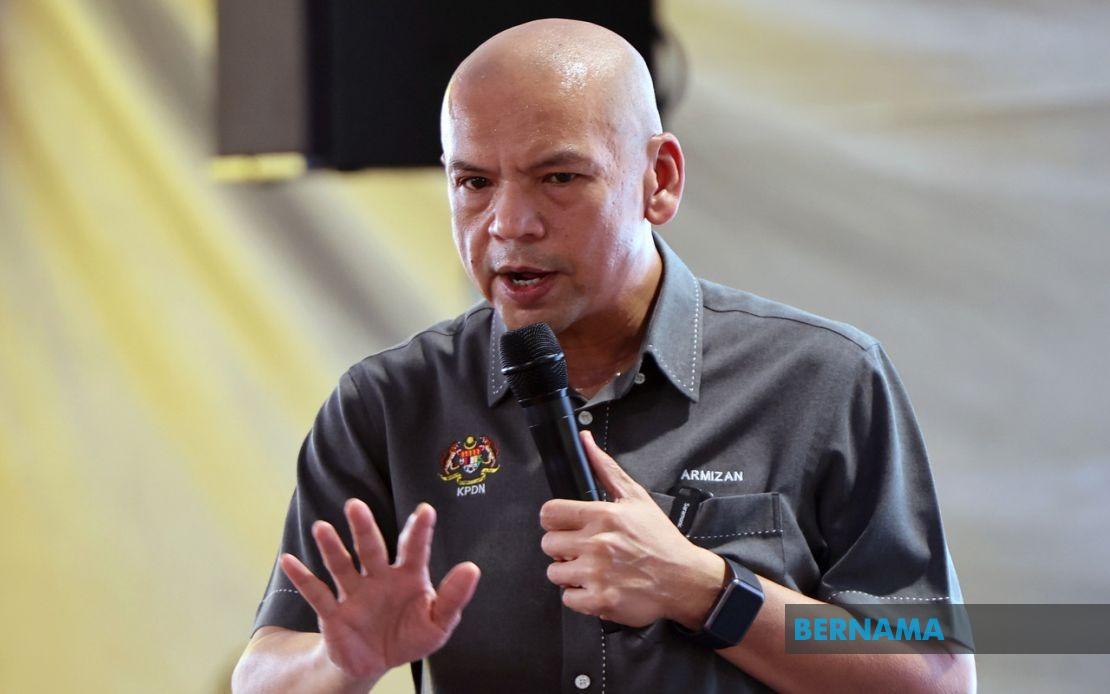
Malaysia's Domestic Trade and Cost of Living Minister Datuk Armizan Mohd Ali has unveiled a targeted support mechanism to cushion the financial burden on small enterprises following the rollout of a focused diesel subsidy programme across Sabah, Sarawak, and Labuan beginning July 1. Under this initiative, eligible small companies and local contractors will receive a monthly quota of 300 litres through fleet card arrangements, a direct response to operational cost pressures facing the nation's micro-business sector.
The decision to grant this assistance represents a pragmatic recalibration of subsidy distribution after the ministry identified a critical gap in the original framework. Small enterprises structured as partnerships or sole proprietorships—entities that operate commercial vehicles for business purposes but fall outside the two primary beneficiary categories—had struggled to secure support under conventional application channels. This new flexibility addresses that structural shortcoming by recognising that genuine business operators required relief even when their vehicle registration structures differed from larger corporate entities.
Armizan explained that the established Subsidised Diesel Control System encompasses only two operational sectors: public transport and goods or consumer necessities distribution. This narrow targeting, while fiscally prudent, inadvertently excluded legitimate small business users whose commercial activities depend equally on diesel-powered transport. The 300-litre monthly allocation effectively creates a third pathway for this overlooked demographic, allowing proprietors of small logistics operations, maintenance contractors, and similar ventures to access subsidised fuel without requiring individual consumer registration, which many found administratively cumbersome.
The Federal Cabinet's approval of this intervention measure demonstrates governmental responsiveness to implementation feedback gathered during the subsidy programme's initial phases. Rather than adhering rigidly to the original design, policymakers recognised that effective targeting must evolve as real-world distribution challenges emerge. This adaptive approach reflects lessons learned from previous subsidy schemes that sometimes created unintended exclusions, frustrating legitimate users while still remaining vulnerable to diversion and abuse.
Fundamentally, any subsidy mechanism must balance three competing imperatives that Armizan highlighted as central to the ministry's decision-making framework. First comes the necessity of meaningfully reducing costs for intended beneficiaries—a measure of the scheme's primary purpose. Second is disciplined leakage prevention, ensuring that fuel reaches genuine commercial users rather than being diverted to black markets or unauthorised consumption. Third lies the constraint of government fiscal capacity, particularly crucial as Malaysia navigates economic pressures and competing budgetary demands across defence, healthcare, and infrastructure portfolios. These three pillars collectively shape the boundaries of what subsidy expansion remains feasible.
Extending this assistance to Sabah, Sarawak, and Labuan requires particular operational consideration given the geographical challenges of these regions. Interior areas across both Bornean states present authentication and verification difficulties that peninsula-based schemes rarely encounter. Consequently, the ministry plans to mobilise state-level agencies as implementation partners, leveraging local knowledge and administrative infrastructure to register participants and confirm eligibility. This collaborative federalism approach acknowledges that distant federal bureaucracy cannot effectively manage granular subsidy delivery without embedded state cooperation.
The subsidy programme sits within Malaysia's broader effort to manage living costs without dismantling the price signals necessary for sustainable energy consumption. Unlike blanket fuel price controls that encourage overconsumption and create shortages, targeted subsidies attempt surgical precision—supporting specific user categories while allowing market mechanisms to function elsewhere. The 300-litre ceiling for small businesses reflects this calibration, providing meaningful relief without removing all cost discipline that might encourage wasteful fuel usage patterns.
For Malaysian small enterprises already grappling with elevated input costs, labour expenses, and supply chain volatility, even a monthly 300-litre quota can meaningfully improve cash flow positions. The fleet card mechanism further simplifies administration compared to cash rebates or price controls, creating an auditable transaction trail that supports both subsidy tracking and participant accountability. This technological infrastructure distinguishes the current scheme from ad-hoc historical approaches that generated substantial administrative friction.
Beyond the diesel allocation, Armizan also announced the MADANI Foster Village Project initiative in Kampung Sekalong, Menumbok, receiving RM500,000 for five targeted development projects. These undertakings—constructing a multipurpose community hall, upgrading village roads, installing culverts and solar lighting, and erecting a village landmark—exemplify the government's parallel commitment to narrowing urban-rural development disparities. Such grassroots infrastructure investment complements subsidy interventions by addressing underlying structural disadvantages that remote communities face regarding basic service access.
The Papar Member of Parliament indicated this represents the ministry's third MADANI Foster Village deployment, with earlier initiatives in Mukim Kaiduan, Papar in 2024, and Mukim Tikam Batu, Kedah previously. The programme's emphasis on basic amenities—water, electricity, roads, connectivity, community facilities—aligns with recognition that prosperity requires foundational infrastructure, not merely transfer payments. These village projects and the diesel quota scheme together illustrate a two-pronged approach: immediate cost relief for existing business operators coupled with longer-term capacity building through infrastructure investment.
For Southeast Asian policy observers, Malaysia's diesel subsidy refinement demonstrates ongoing experimentation with targeted rather than universal assistance. The region's experiences with fuel subsidies have historically generated fiscal pressures, smuggling concerns, and consumption distortions, making Malaysia's attempt to layer eligibility criteria and technology controls noteworthy. Whether the 300-litre quota, fleet card tracking, and state-level verification adequately contain leakage while maintaining political acceptability will substantially influence whether neighbouring countries adopt similar refinements to their own subsidy architectures.
The implementation timeline requires immediate action, with the ministry planning to commence subsidy delivery and village development projects within compressed timeframes. This urgency reflects both political pressure to demonstrate tangible benefits and practical necessity—delay risks undermining small business confidence and undermining the programme's credibility among intended beneficiaries. As the scheme matures through its initial months, policymakers will accumulate data regarding actual consumption patterns, leakage risks, and participant satisfaction, informing subsequent refinements to this still-evolving assistance structure.

