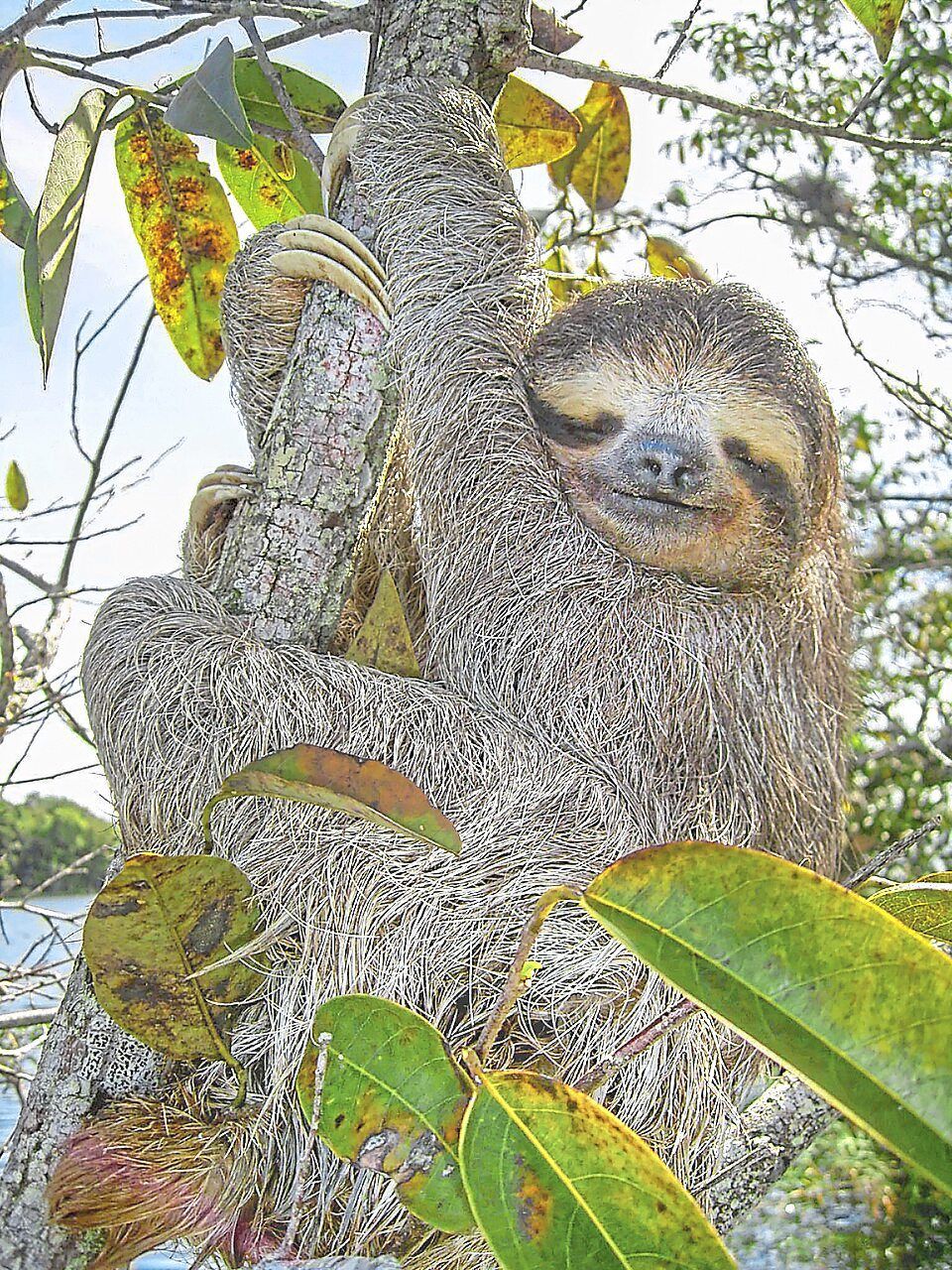
A groundbreaking study of the sloth genome has revealed that these slow-moving tree-dwellers possess unique genetic sequences that could revolutionise our understanding of human ageing and metabolic disease. The international research effort, conducted by scientists from the Wellcome Sanger Institute, the Leibniz Institute for Zoo and Wildlife Research (IZW), the Hospital Sirio Libanes, and their collaborators, represents the first comprehensive sequencing and analysis of the sloth genome. The discovery centres on a remarkable genetic feature: sloths have preserved "jumping genes" – transposable DNA elements – that have remained active over millions of years, a characteristic virtually absent in most other mammals including humans.
The research team obtained biological samples from a captive sloth and extracted DNA from various tissues, which was then sequenced at the Max-Planck Institute for Molecular Cell Biology & Genetics in Germany. Using comparative genomics techniques, the scientists analysed the sloth genome and systematically compared it against the genetic blueprints of other mammals. Their analysis included closely related South American species such as anteaters and armadillos, all members of the Xenarthra clade – the sole group of placental mammals that originated in South America. This comparative approach allowed researchers to identify which genetic features were uniquely conserved in sloths rather than shared across the broader mammalian family.
The analysis uncovered something unexpected: the sloth genome contains multiple copies of active transposons, also known as jumping genes. These are short DNA sequences with the ability to move from one location within the genome to another, essentially rearranging themselves over time. While transposons do appear elsewhere in the human genome, they are typically ancient remnants that have become inactive through evolutionary processes. In sloths, however, these elements remain biochemically functional, suggesting they serve important biological purposes. By tracing the evolutionary history of these genetic elements, the research team determined that these transposons first appeared in the last common ancestor of all sloth species approximately 30 million years ago – an extraordinarily long period over which they have been actively maintained rather than discarded by natural selection.
What makes this discovery particularly significant is the location and function of these jumping genes within the sloth genome. The researchers found that many of these transposable elements are intimately connected to mitochondria – the cellular structures responsible for generating the energy that powers all biological functions and regulating metabolic pathways. Mitochondrial function is fundamental to how organisms convert food into usable energy, and dysfunction in these organelles is implicated in a wide spectrum of human health conditions. The fact that sloths have preserved these specific genetic sequences suggests they play a crucial role in the animal's unique physiology.
Sloths are renowned throughout the animal kingdom for possessing the lowest metabolic rate of any mammal – a characteristic that shapes virtually every aspect of their biology and behaviour. Their heart rate, body temperature, and overall energy consumption are dramatically reduced compared to other mammals of similar size. Yet despite operating at this metabolic minimum, sloths remain remarkably healthy and long-lived in their natural rainforest habitat. The relationship between these conserved jumping genes and the sloth's extraordinarily slow metabolism suggests that these genetic elements may be instrumental in allowing the animal to function effectively while expending minimal energy.
Dr Marcela Uliano-Silva, senior bioinformatician and co-lead author at the Wellcome Sanger Institute, emphasised the broader implications of studying evolutionary oddities. She noted that evolution has essentially conducted billions of biological experiments over millions of years, and by examining unusual animals like sloths, scientists can uncover genetic solutions that humans never developed through their own evolutionary pathway. The genomic analysis revealed that these sloth-specific jumping genes are directly linked to mitochondrial and metabolic pathways, strongly suggesting they play a role in the evolution of their exceptionally slow metabolism. This perspective suggests that nature has already solved certain biological challenges in ways that humans might be able to learn from and apply.
The potential medical applications of this research extend far beyond academic interest. Dr Pedro Galante, co-lead author at the Hospital Sirio Libanes in São Paulo, Brazil, outlined how sloth cell lines could become valuable biological models for studying human disease. Many conditions affecting millions of people worldwide – including type 2 diabetes, age-related disorders, neurodegenerative diseases, and muscle wasting – fundamentally involve problems with energy production and mitochondrial dysfunction. By understanding how sloths maintain healthy mitochondrial function despite their dramatically reduced metabolic rate, researchers may identify new therapeutic targets for treating these conditions. The long-term research agenda includes investigating how these insights could inform tissue preservation techniques for medical transplantation, critical care medicine, treatments for age-related decline, and potentially even strategies for supporting human health during long-duration space missions where metabolic efficiency becomes crucial.
Dr Camila Mazzoni, co-lead author and head of evolutionary and conservation genomics at the IZW in Berlin, highlighted another intriguing dimension of the findings. She suggested that sloths appear to have evolved genetic backup systems that compensate for their metabolically relaxed mitochondria, enabling them to sustain their distinctive lifestyle without compromising cellular health. This concept of evolutionary redundancy – where organisms develop alternative genetic circuits to maintain function when primary systems operate at minimal capacity – could offer profound insights into cellular resilience and adaptability. Understanding these backup mechanisms could illuminate how human cells might be engineered or encouraged to operate more efficiently during energy-restricted states, whether due to ageing, disease, or environmental extremes.
The research represents a significant expansion of mammalian genomics beyond the relatively well-studied species that have dominated the field. The integration of cutting-edge sequencing technology with comparative evolutionary analysis demonstrates how studying biodiversity provides essential context for understanding human biology. As climate change threatens sloth populations and their rainforest habitats, this genomic research simultaneously contributes to conservation efforts by deepening our understanding of these remarkable animals while generating knowledge applicable to human health.
Future research will focus on experimentally validating the functional role of these jumping genes in sloth metabolism and exploring whether insights can be translated into therapeutic applications for human disease. The work exemplifies how basic biological research into non-traditional model organisms can unexpectedly yield practical benefits for human medicine. As research teams continue investigating these genetic mechanisms, the humble three-toed sloth may ultimately help millions of people age more healthily and fight metabolic diseases that currently impose substantial burdens on global health systems.

