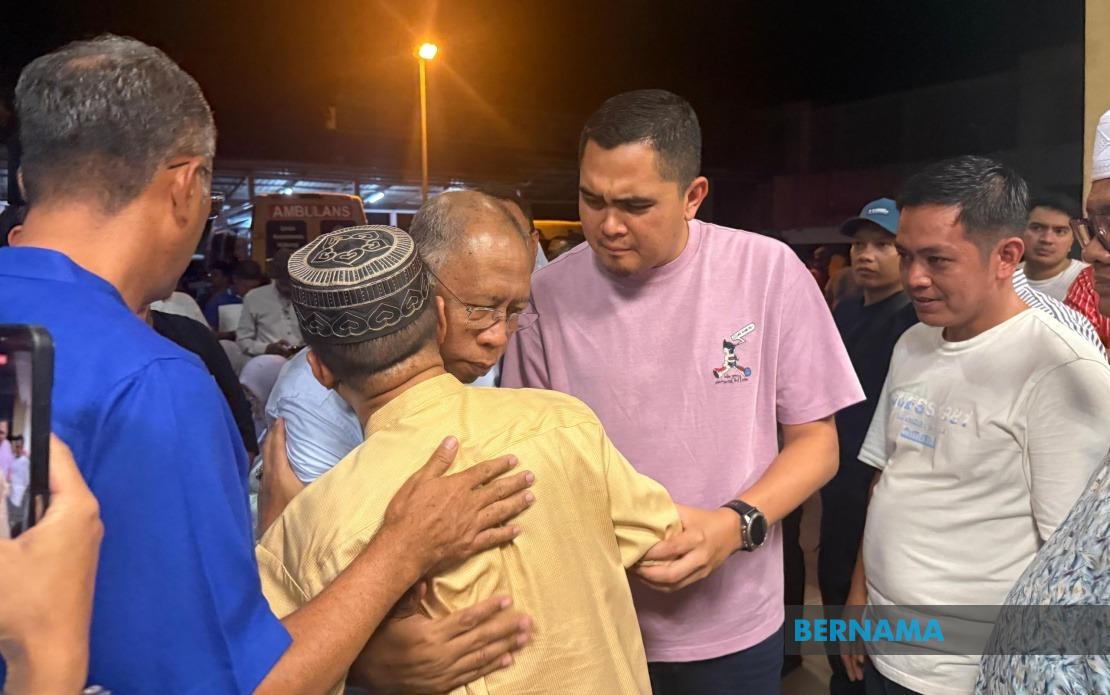
Mohd Radzi Rahimi, a 40-year-old UMNO Youth leader and treasurer of the Pahang division, died alongside his wife Nuriani Mohammad Jafri, his five-year-old son Muhammad Rizz Hazim, and his brother-in-law Mohammad Nizam Mohammad Jafri when their four-wheel-drive vehicle was crushed by a fallen tree along the old Kuala Lumpur-Bentong road near Janda Baik in Bentong on 3 August. His father, Rahimi Abd Samad, recounted the loss at Sultan Haji Ahmad Shah Hospital in Temerloh, emphasizing the deceased's long history of political engagement and his standing within the party.
Rahimi Abd Samad, 63, described his son as a dedicated political activist whose involvement in UMNO had spanned decades. Beginning with ten years of service in the Maran UMNO Youth division, Mohd Radzi had risen through the ranks to become Youth chief of that division before being appointed as Treasurer of Pahang UMNO Youth. The trajectory reflected both his commitment and the confidence party members placed in him, a recognition underscored by the high-profile visitors who came to pay respects at the hospital morgue.
The elder Rahimi recalled that his son had been respected across the broader UMNO membership base, cultivating relationships that extended well into senior party circles. The respect manifested in the immediate response from UMNO leadership following the tragedy. Datuk Dr Muhammad Akmal Saleh, the UMNO Youth chief, visited to pay his respects, as did UMNO Supreme Council member Datuk Seri Shahaniza Shamsuddin, who also serves as Maran UMNO division chief, and Kuantan UMNO division chief Datuk Seri Ab. Hamid Nazahar. These high-level visits underscored Mohd Radzi's significance within the party's youth wing and broader organizational structure.
The fatal incident occurred while Mohd Radzi and his family were returning to Maran after taking part in a motorcycle programme with youths from the division in Pulau Pangkor, Perak. This recreational outing, meant to strengthen bonds among party members and their families, ended tragically when environmental conditions became hazardous. The father described his last meeting with his son, which had taken place on Thursday before Mohd Radzi's departure for Pangkor, noting that everything had appeared routine at that time.
According to Rahimi, his son had mentioned only that he would be joining a motorcycle convoy to Pulau Pangkor with friends, with no indication that circumstances would take such a devastating turn. The casual nature of their farewell took on painful significance in retrospect, as it would be the last conversation between father and son. The incident highlights the unpredictability of tragedy and how ordinary family activities can suddenly become catastrophic without warning or fault.
The accident claimed four lives instantaneously, though Mohd Radzi's other son, Muhammad Rizz Haziq Mohd Radzi, survived the impact but sustained severe head injuries. The child remained hospitalized at Sultan Haji Ahmad Shah Hospital receiving intensive treatment for his injuries, representing a silver thread of survival amid the broader family devastation. The disparity in outcomes within the vehicle underscored both the randomness of such accidents and the emotional complexity of the tragedy, with one family member fighting for recovery while others had been lost.
Forensic examinations were completed by 9 pm on the day of the incident, with the remains then prepared for Islamic funeral rites. The bodies were to be brought to Masjid Kampung Paya Luas in Temerloh for ritual washing and shrouding before transportation to Masjid As-Syakirin in Maran for funeral prayers. Burial was scheduled at Taman Sri Chendung Muslim cemetery, providing the family with a framework for mourning within their faith community. These arrangements reflected both Islamic tradition and the community's acknowledgment of Mohd Radzi's standing within the Maran constituency.
The loss of Mohd Radzi represents a significant blow to Pahang UMNO Youth, which has lost both an experienced administrator and a grassroots organizer with deep connections to party members. His decade-long tenure in the Maran division youth wing had given him extensive relationships and institutional knowledge that took years to build. The sudden nature of his passing left no opportunity for transition planning or succession, creating an organizational void that would need careful management by remaining party leadership.
Beyond the political dimensions, the tragedy underscores the human cost of road incidents in Malaysia, particularly those involving environmental hazards such as fallen trees. While the victims were engaged in a legitimate recreational activity organized by their political association, the incident serves as a reminder of broader safety concerns affecting Malaysian families nationwide. The case drew attention to highway maintenance and hazard management along secondary routes, areas where proactive measures could prevent similar occurrences.
For the UMNO Youth movement in Pahang specifically, the loss of Mohd Radzi and his family marks a sobering moment, uniting party colleagues across divisions in shared grief. The attendance of senior party figures at the hospital conveyed both personal condolences and organizational solidarity during a period of acute loss. The broader implications extend to questions about how political organizations support families of deceased members and how succession planning occurs when experienced leaders are suddenly lost.

