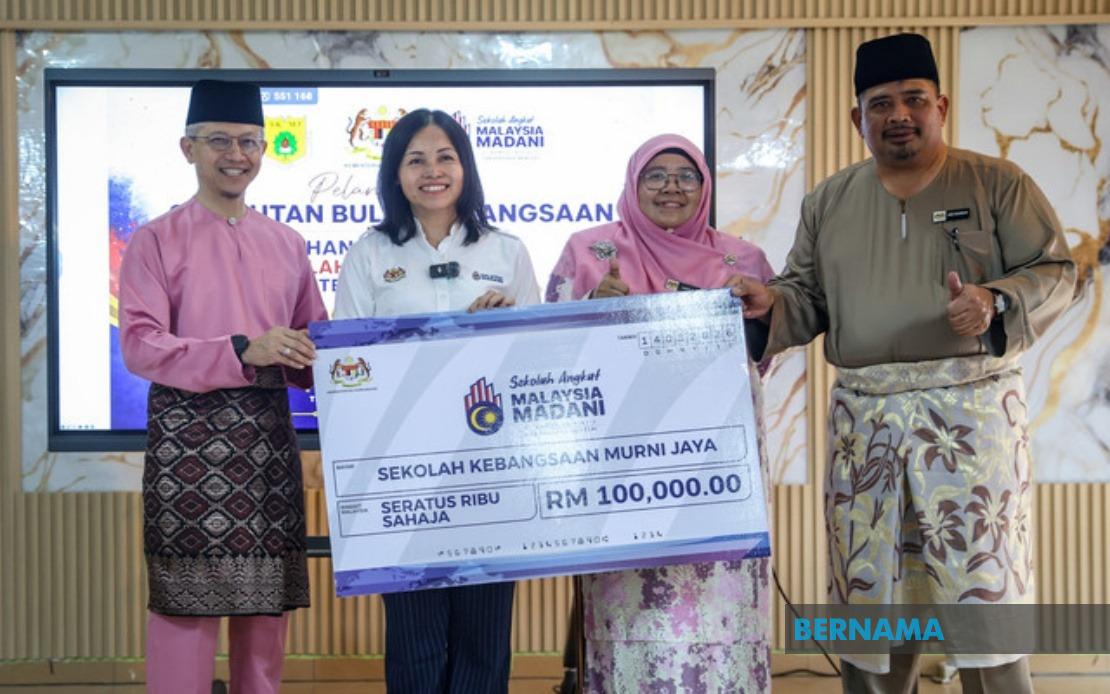
SK Murni Jaya in the Layang-Layang area of Kulai has been selected as a beneficiary of the Ministry of Communications' MADANI Adopted School programme, receiving RM100,000 to enhance its educational infrastructure. The funding allocation marks part of a broader government initiative to strengthen school facilities across the nation, with Deputy Communications Minister Teo Nie Ching overseeing the 2026 funding handover ceremony at the institution.
The financial support represents a strategic investment in modernising the school's learning environment through a carefully curated list of improvements. The allocation will be distributed across multiple infrastructure and technology categories, addressing both immediate facility needs and longer-term pedagogical objectives aligned with Malaysia's education development goals.
School signage represents the initial category of expenditure, with four new directional and identification boards planned to enhance campus navigation and create a more professional appearance. These signboards will improve accessibility for visitors and provide clearer wayfinding throughout the school compound, reflecting the broader push towards institutional excellence in the education sector.
Digital learning infrastructure forms a substantial component of the upgrade plan. Two Smartboards designated for the school's hall and resource centre will enable interactive teaching methodologies, allowing educators to deliver more dynamic and engaging lessons that cater to diverse student learning preferences. The procurement of ten iPads for the computer laboratory will further expand digital access, providing students with contemporary technology tools essential for developing digital literacy and computational thinking skills.
The ministry has allocated resources for environmental and aesthetic improvements that directly impact the school experience. Lighting upgrades throughout campus facilities will enhance safety, security, and the overall learning atmosphere, whilst the beautification of the hall addresses both functionality and the psychological aspects of educational spaces. These enhancements recognise that physical environment quality influences student motivation and teacher effectiveness.
Auditory and climate comfort receives attention through the acquisition of a new public address system and two air-conditioning units. A modern PA system ensures effective communication across the entire campus during assemblies, emergencies, and routine announcements, whilst additional air-conditioning units will improve comfort in teaching and learning spaces, particularly important in Malaysia's tropical climate where temperature control directly affects classroom productivity.
STEM and vocational technical education initiatives gain momentum through the inclusion of a Robot Sumo set in the funding allocation. This equipment enables hands-on engagement with robotics and coding principles, preparing students for emerging technological career pathways whilst building problem-solving capabilities and fostering interest in science, technology, engineering, and mathematics disciplines from foundational educational levels.
Complementary to the primary upgrade package, the ministry has earmarked an additional RM20,000 specifically for school canteen infrastructure, funding the purchase of 19 tables and chairs. This targeted allocation acknowledges that proper dining facilities contribute to student welfare, nutrition management, and the social cohesion that school dining environments facilitate.
Deputy Minister Teo emphasised timeline compliance during the funding ceremony, stipulating that SK Murni Jaya must complete its facility upgrades by October in accordance with implementation schedules. Simultaneously, all other schools receiving comparable MADANI Adopted School funding must achieve full implementation of their respective projects within the calendar year, ensuring consistent standards and accountability across the entire programme.
The MADANI Adopted School initiative represents the government's commitment to reducing infrastructure disparities between urban and less-resourced educational institutions. By systematically upgrading facilities at selected schools, the programme aims to create more equitable learning opportunities whilst simultaneously encouraging technological adoption and modern pedagogical approaches across Malaysia's diverse school system.
The cumulative investment in SK Murni Jaya reflects broader education sector priorities: digital transformation, STEM capability building, improved student welfare, and infrastructure modernisation. These targeted interventions signal recognition that contemporary education requires integrated support spanning technology, environment, and learning resources to prepare students effectively for economic and social participation in an increasingly digitised society.
For Malaysian educational stakeholders, the MADANI Adopted School programme demonstrates structured government investment in institutional capacity building. Schools selected for participation gain competitive advantages through enhanced facilities that attract quality educators and improve student outcomes, whilst the systematic approach to implementation ensures sustainable development rather than sporadic, ad-hoc improvements.

