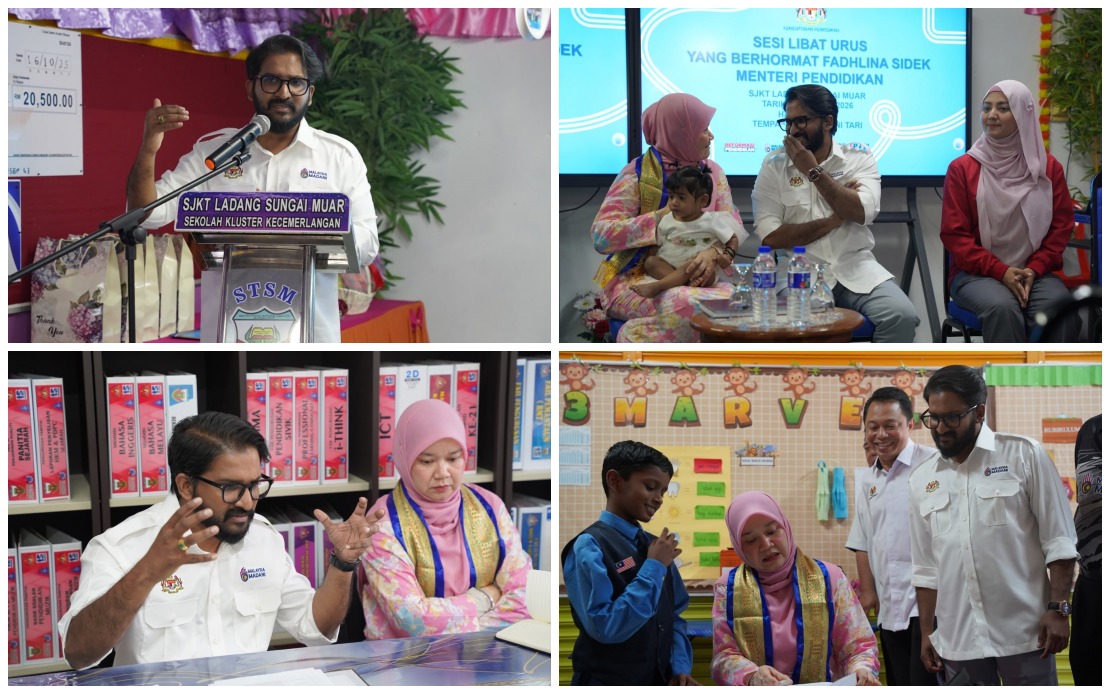
The long-awaited relocation of Sekolah Jenis Kebangsaan Tamil (SJKT) Ladang Sungai Muar in Segamat has progressed significantly, moving into the critical land acquisition phase with formal involvement of the Segamat Land and Mines Office. The advancement represents a concrete step forward after years of advocacy by local elected representatives, demonstrating that the project has transitioned from planning discussions into active administrative implementation.
Segamat Member of Parliament R. Yuneswaran announced the development following an engagement meeting held at the school premises, an occasion marked by the attendance of Education Minister Fadhlina Sidek. The minister's direct involvement underscores heightened ministerial attention to the relocation initiative, signalling that education infrastructure challenges in the district now command consideration at the highest levels of the Education Ministry. Such high-level participation typically accelerates bureaucratic processes and ensures resource prioritisation, particularly important for projects addressing safety and educational standards in Tamil-medium vernacular schools.
Since securing his parliamentary seat in 2022, Yuneswaran has maintained consistent pressure on education authorities to advance the school's relocation. The persistent advocacy reflects deeper concerns extending beyond symbolic gestures—the existing location presents tangible safety hazards, remains geographically isolated from the student community it serves, and lacks adequate supporting infrastructure. These interconnected challenges have created an environment where effective teaching and learning becomes unnecessarily compromised, a situation particularly acute in resource-constrained vernacular school systems that often receive proportionally less development attention than national-type institutions.
The safety dimension carries particular weight in Malaysian educational discourse. Schools situated in locations prone to hazards or environmental risks place both students and educators in unnecessary jeopardy. Distance from the residential areas where students live translates into extended commute times, potentially affecting attendance rates and learning outcomes while draining family resources. Meanwhile, inadequate infrastructure—whether relating to utilities, transportation links, sanitation facilities, or emergency services—compounds these difficulties and directly undermines the quality of educational delivery.
For Tamil-medium vernacular schools specifically, such infrastructure gaps carry additional significance within Malaysia's plural educational landscape. These institutions serve crucial roles in preserving mother-tongue education and cultural continuity while contributing to national diversity. When such schools operate under suboptimal conditions, the message transmitted—intentionally or otherwise—suggests differential investment in vernacular education compared to mainstream alternatives. Addressing infrastructure deficits in Tamil schools thus carries symbolic importance beyond the immediate physical improvements involved.
The land ownership stage represents the gateway to actual construction and relocation, though property acquisition in Malaysia frequently encounters procedural complexities. The involvement of the Segamat Land and Mines Office indicates that preliminary site identification has occurred and formal channels have been activated. This phase typically involves surveying, title verification, environmental assessments, and potential negotiations with existing land holders. The timeline for completing these procedures varies considerably depending on land availability, existing tenure arrangements, and administrative processing speeds.
Yuneswaran's public appreciation for the Education Ministry's engagement reflects the political weight attached to delivering on this commitment. In electoral cycles, education infrastructure developments carry significant voter resonance, particularly among Tamil-speaking communities where educational opportunities and institutional quality remain salient political considerations. Demonstrating tangible progress on school relocations and improvements helps legitimise government responsiveness to vernacular community concerns and justifies continued support in subsequent electoral contests.
The MADANI Government's stated commitment to prioritising education appears reflected through this initiative, though critics might observe that similar relocation projects for Tamil schools in other districts remain pending. The Segamat case could establish precedent procedures applicable to comparable situations elsewhere in Johor and beyond, potentially accelerating resolution of infrastructure challenges affecting other vernacular institutions. How efficiently this particular project progresses will influence community confidence in government capability to deliver on educational commitments more broadly.
Monitoring mechanisms will prove essential moving forward. Yuneswaran's commitment to continuous follow-up acknowledges that between announcement and completion, numerous potential delays can occur—land valuation disputes, bureaucratic bottlenecks, budget allocation uncertainties, or competing claims on resources. Public officials who explicitly commit to monitoring progress face implicit accountability if projects stall, creating incentive structures that can help overcome institutional inertia.
For Malaysian education stakeholders, particularly those advocating for vernacular school improvements, the Segamat relocation represents a measurable success worth tracking. The progression from advocacy stage through to land acquisition procedures demonstrates that persistent, focused pressure through appropriate channels can yield administrative movement. Whether this translates into completed relocation within reasonable timeframes will ultimately determine whether the initiative genuinely improves educational conditions for Tamil students in Segamat or remains another long-delayed infrastructure promise.

