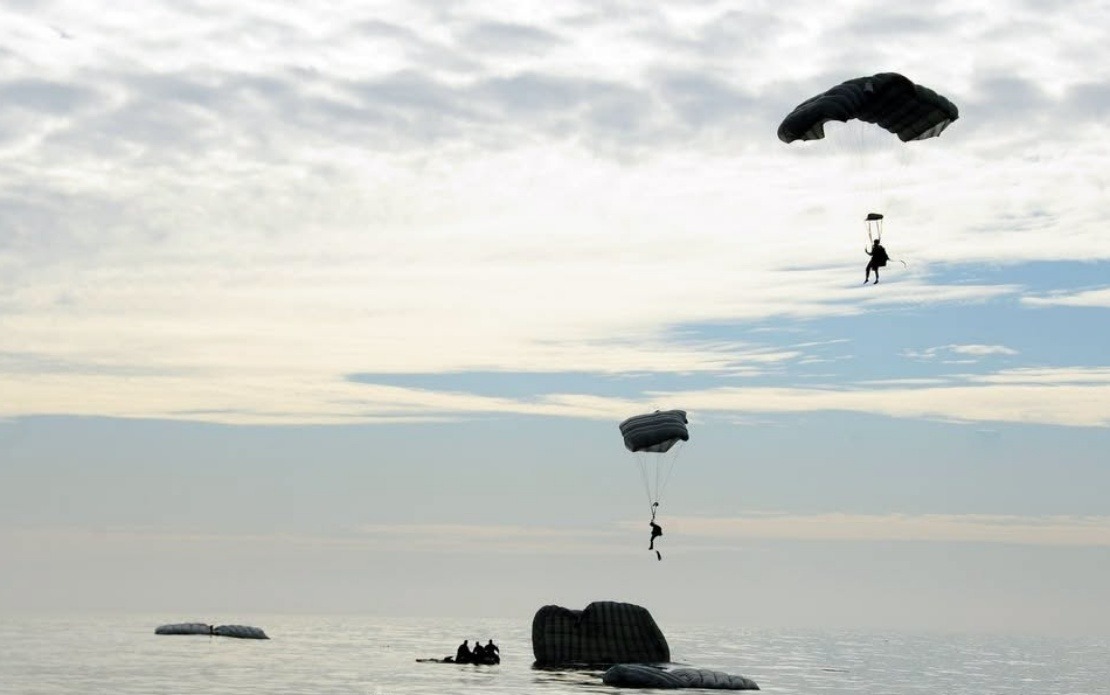
Six elite personnel from the Royal Malaysian Navy's Naval Special Warfare Forces (PASKAL) have been safely recovered after an unplanned maritime drift during a free-fall parachuting exercise in the South China Sea. The incident occurred on 12 August when the operators missed their designated landing site due to sudden and severe weather conditions that dramatically reduced visibility during their descent. All six personnel were subsequently located and retrieved by an RMN vessel, with the military confirming that there were no injuries and all involved returned to base in good health.
The Navy's statement characterised the episode as a demonstration of the effectiveness of PASKAL's rigorous and scenario-based training regimen. Rather than treating the incident as a failure, the RMN framed it as validation of how well its elite units are prepared for unpredictable circumstances that extend beyond conventional combat scenarios. This perspective reflects the military's confidence in both its training protocols and the individual capabilities of its personnel when confronted with genuine survival challenges in hostile environments.
PASKAL, which stands for Pasukan Gerakan Khas Laut (Maritime Special Operations Force), represents Malaysia's premier naval commando unit. The force specialises in maritime counter-terrorism, underwater reconnaissance, amphibious assaults, and other high-risk operations that demand exceptional physical conditioning, technical expertise, and psychological resilience. Training exercises like the parachute operation that resulted in this incident are designed to stress-test personnel under conditions that approximate real operational hazards, ensuring that when actual missions arise, operators possess the muscle memory and mental fortitude to execute successfully.
The sudden weather shift that forced the personnel off course is not unusual in the waters surrounding the South China Sea, a region notorious for its rapid meteorological changes and unpredictable sea states. Tropical weather systems can develop with little warning, transforming calm conditions into challenging environments within minutes. For parachute operations, visibility becomes a critical factor determining whether jumpers can locate their designated landing zones and execute controlled descents. When cloud cover, rain, or spray obscures the visual references that operators rely upon for navigation and spatial orientation, precision becomes impossible, and contingency procedures must immediately take precedence.
The recovery operation itself underscores Malaysia's maritime surveillance and response capabilities in the South China Sea, a strategically vital waterway through which significant global trade passes annually. The RMN maintains regular naval patrols and exercise operations in these waters, partly to sustain operational readiness and partly to demonstrate consistent Malaysian presence in an increasingly crowded geopolitical space. The swift location and rescue of the drifting personnel indicates that the Navy maintains adequate surface assets and communication systems to monitor and respond to developments during training activities.
From a broader defence perspective, this incident highlights the continuous investment required to maintain effective naval special operations capabilities. Training accidents and unexpected events during exercises, when managed properly, become valuable learning opportunities that refine procedures and enhance decision-making under pressure. The RMN's public acknowledgment of the incident and its positive framing suggests institutional confidence that such events, when handled transparently, strengthen rather than undermine public trust in military competence and safety protocols.
The emphasis on personnel resilience and survival capabilities in the RMN's statement reflects modern military doctrine that recognises psychological factors as equally important as technical skills in determining operational success. PASKAL training deliberately incorporates elements designed to build mental toughness—the capacity to remain calm, think clearly, and execute correct responses when circumstances deviate from expectations. A parachute exercise that results in an unplanned water insertion becomes an unscheduled but valuable test of whether training has genuinely instilled such capabilities.
The incident also occurs within a context of Malaysia's broader defence modernisation and maritime security priorities. Southeast Asia faces mounting pressure from multiple sources—transnational maritime crime, territorial disputes, piracy, and terrorism—all of which demand well-trained naval special forces capable of operating autonomously across vast ocean expanses. Nations must balance the investment in realistic, challenging training with the responsibility to minimise unnecessary risk to personnel. The RMN's statement that it remains "committed to balancing combat readiness with personnel safety" articulates this tension explicitly.
For regional observers, Malaysia's handling of this incident and its public explanation of events involving its military provide insight into institutional transparency and professionalism within the RMN. Unlike some regional militaries that might attempt to suppress news of training incidents or deflect responsibility, Malaysia's defence establishment chose to document what occurred, acknowledge the role of environmental factors, and use the episode as a platform to highlight the calibre of its personnel and training standards. This approach builds confidence among allies and domestic stakeholders regarding the competence and accountability of Malaysian defence institutions.
Looking forward, this incident will likely prompt reviews of parachute exercise protocols, particularly regarding weather forecasting, decision-making thresholds for postponement, and recovery procedures. Such reviews form part of the standard safety management cycle that professional military organisations maintain. PASKAL's reputation as a highly capable unit depends partly on continuous refinement of procedures based on operational experience and training events, ensuring that the force remains among Southeast Asia's premier maritime special operations units.

