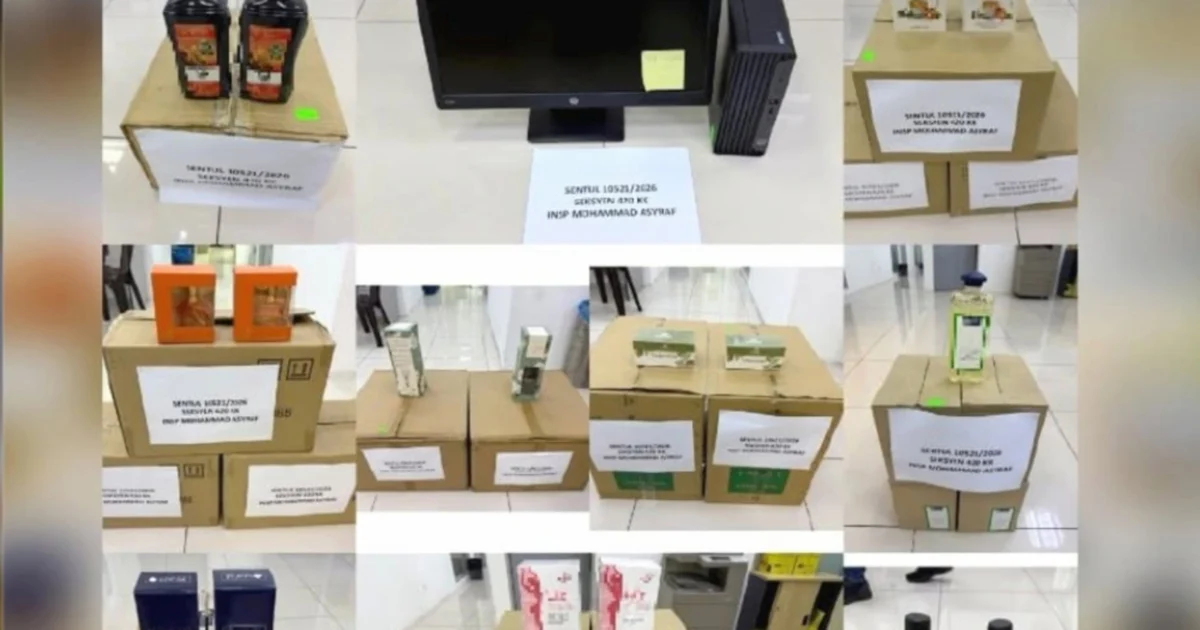
A coordinated law enforcement operation in Kuala Lumpur has successfully shut down a fraudulent investment scheme centred on perfume trading, with police apprehending six suspects following a raid on a premises located in KL Eco City on Wednesday. The operation represents another significant blow against investment fraud syndicates that have proliferated across Malaysia in recent years, targeting both local and regional investors through increasingly sophisticated deceptive practices.
The dismantling of this perfume-based investment operation highlights the evolving tactics employed by scam networks seeking to exploit consumer interest in luxury goods and investment opportunities. Rather than traditional Ponzi schemes or cryptocurrency fraud, these syndicates leverage the perceived legitimacy of the fragrance industry, positioning perfume trading and distribution as a viable investment avenue with guaranteed returns. Such schemes typically recruit participants through social media platforms and messaging applications, creating a veneer of legitimacy through professional marketing materials and testimonials from purported successful investors.
Investment scams of this nature operate by convincing participants to purchase inventory at inflated prices, promising substantial returns through guaranteed buyback schemes or downstream commission structures. Victims are typically assured that minimal effort is required, with the syndicate handling sales and distribution logistics. In reality, returns are generated not from legitimate perfume sales but from recruitment of new investors, creating an unsustainable pyramid structure that inevitably collapses when recruitment saturates. Early participants may receive initial payments sourced from funds contributed by newer recruits, reinforcing the illusion of profitability.
The KL Eco City premises served as an operational hub for the syndicate, likely housing marketing materials, administrative records, and communication infrastructure used to coordinate the fraud network. These fixed locations are crucial to scam operations, providing a physical address that enhances credibility during recruitment and allowing syndicate leaders to manage multiple streams of fraudulent activity simultaneously. The raid's success in locating and securing this facility suggests that investigators had been tracking the operation's activities and communications patterns prior to taking enforcement action.
The arrest of six individuals suggests a structured hierarchy within the syndicate, with roles likely divided between recruitment coordinators, financial handlers, and higher-level organizers. Malaysian law enforcement agencies have become increasingly sophisticated in identifying and prosecuting organised crime networks, particularly those targeting vulnerable investors through multi-level marketing structures. The coordination required to execute the raid indicates cooperation between various police units, possibly including the Commercial Crime Investigation Department and intelligence divisions.
For Malaysian consumers, this operation underscores the persistent threat posed by investment fraud schemes that exploit legitimate industries. The fragrance market remains relatively accessible to retail participants, making it an attractive vehicle for scammers seeking to establish apparent authenticity. Investors considering any form of goods-based investment scheme should exercise heightened scrutiny, particularly regarding promises of guaranteed returns, pressure to recruit associates, and requests for substantial upfront capital with unclear financial pathways.
This incident also reflects broader patterns of financial fraud affecting Southeast Asia, where cross-border investment schemes frequently target citizens across multiple countries simultaneously. Victims in Malaysia, Singapore, Indonesia, and Thailand may have participated in the same syndicate through online channels, complicating victim identification and recovery efforts. Regional cooperation among law enforcement agencies remains essential for addressing the transnational nature of organised investment fraud.
The investigation into this perfume investment scam will likely uncover the identities of numerous victims and the total financial losses sustained through the scheme. Authorities typically pursue both criminal prosecution of organisers and civil recovery efforts to compensate defrauded investors. However, recovery rates remain disappointingly low in most cases, as syndicate leaders frequently transfer illicit funds across multiple jurisdictions and convert assets into difficult-to-trace forms.
Public awareness campaigns remain the most effective preventative measure against such schemes. Potential investors must recognise warning signs including unsolicited investment solicitation, emphasis on recruitment over product sales, complex compensation structures, and promises of returns exceeding conventional investment vehicles. Financial literacy initiatives specifically targeting investment fraud recognition have proven effective in reducing victimisation rates across developed Asian markets.
The successful operation at KL Eco City demonstrates continued enforcement capacity against financial crime, yet the scale of investment fraud affecting Malaysia suggests that numerous similar operations remain active. Authorities encourage victims of suspected investment fraud to report incidents to the police Commercial Crime Investigation Department, which maintains dedicated channels for financial crime complaints. Information provision from the public remains crucial for identifying and disrupting organised fraud networks before they victimise additional investors.

