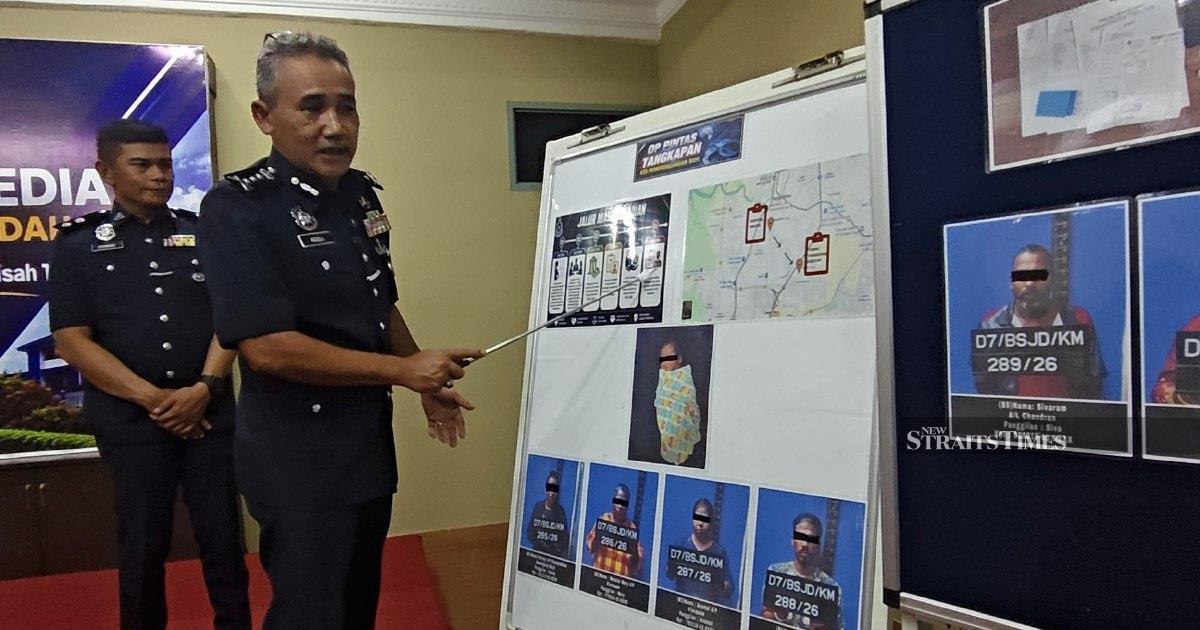
Police in Kedah have arrested six individuals in connection with a suspected baby trafficking operation that authorities say was operating in the Kuala Muda area. Among those detained is a woman who had given birth only five days prior to her arrest, highlighting the disturbing nature of the network that investigators are now probing. The arrests mark another significant intervention by law enforcement against what appears to be an organised scheme involving the illegal movement and sale of infants.
The arrests underline the ongoing vulnerability of newborns and their mothers to exploitation networks in Malaysia. Baby trafficking represents one of the most serious forms of human trafficking, with criminal syndicates often preying on vulnerable pregnant women and new mothers facing financial hardship or family pressure. The fact that a postpartum woman was among those arrested suggests the scope of the investigation may extend beyond simple trafficking to include collusion from family members or individuals in positions of trust around vulnerable mothers.
Kedah has in recent years emerged as a focal point for various human trafficking concerns, given its geographic position as a border state and its connections to larger population centres. The Kuala Muda district, in particular, encompasses both urban and semi-rural areas where monitoring and prevention efforts can be complicated. Criminal networks operating in such regions often exploit gaps in oversight and the relative ease with which they can move across jurisdictional boundaries, making coordinated police action essential.
The arrest operation reflects the Royal Malaysia Police's commitment to tackling human trafficking in all its forms. Baby trafficking in Malaysia typically involves the illegal adoption or sale of infants to childless couples, often with falsified documentation. Victims are frequently drawn from economically disadvantaged communities, and the trauma inflicted extends not only to the separated mothers but also to the children who may face uncertain futures with unvetted caregivers. The network's apparent sophistication suggests it may have operated across state lines and potentially involved multiple layers of intermediaries.
The involvement of a recent mother in custody raises critical questions about how vulnerable women in the immediate postpartum period are protected. This demographic faces heightened risks including depression, coercion from family members, and financial desperation. Criminal syndicates have demonstrated awareness of these vulnerabilities and have historically targeted maternity wards, hospitals, and new mothers' support networks to identify and exploit potential victims. The arrest pattern suggests authorities may have uncovered a more complex operation than initially apparent.
Malaysia's legal framework addresses human trafficking through the Human Trafficking Act 2015, which carries severe penalties including imprisonment and substantial fines. Baby trafficking specifically falls within the broader definition of trafficking for the purpose of exploitation, whether financial or otherwise. However, prosecuting such cases presents unique challenges, particularly when establishing the consent or coercion of pregnant women and new mothers, and when tracing the chain of custody and movement of infants across networks.
The investigation's progression will be closely watched by child welfare and human rights organisations operating in Malaysia. These groups have consistently flagged baby trafficking as an underfunded area of law enforcement attention, arguing that resources dedicated to combating the practice pale in comparison to its prevalence. The Kedah operation, if it confirms suspicions about the scale of trafficking in this specific region, could catalyse calls for enhanced prevention measures and victim support mechanisms.
For Malaysian readers, the case underscores the importance of community vigilance and reporting suspicious activities involving pregnant women or new mothers. Hospitals, clinics, and maternity services across the country have been encouraged to implement enhanced screening protocols to identify at-risk women and prevent predatory approaches by trafficking networks. Citizens witnessing signs of exploitation are urged to contact the police or the Human Trafficking hotline immediately.
The broader regional context is significant as well. Southeast Asia remains a hotspot for human trafficking, with networks often spanning multiple countries. Malaysia, as both a destination and transit point, faces particular challenges in disrupting these criminal operations. Cooperation between Malaysian law enforcement and neighbouring countries' authorities is essential to dismantle trafficking routes and prevent women from being exploited across borders.
The arrests also raise awareness about the psychological and legal support required for victims, particularly mothers separated from their newborns. Rehabilitation programmes and legal assistance for trafficking survivors remain underdeveloped in Malaysia compared to the scale of the problem. This case is likely to reignite policy discussions about whether current victim support frameworks are adequate to address the complex trauma of mothers who have been exploited.
Authorities have indicated that investigations into the suspected trafficking ring are continuing, with further arrests possible as the network's full scope becomes clearer. The case exemplifies both the persistent threat posed by human trafficking in Malaysia and the determination of law enforcement to confront it. For potential victims and their families, it serves as a reminder that support exists and that reporting suspicions can lead to meaningful intervention and protection.

