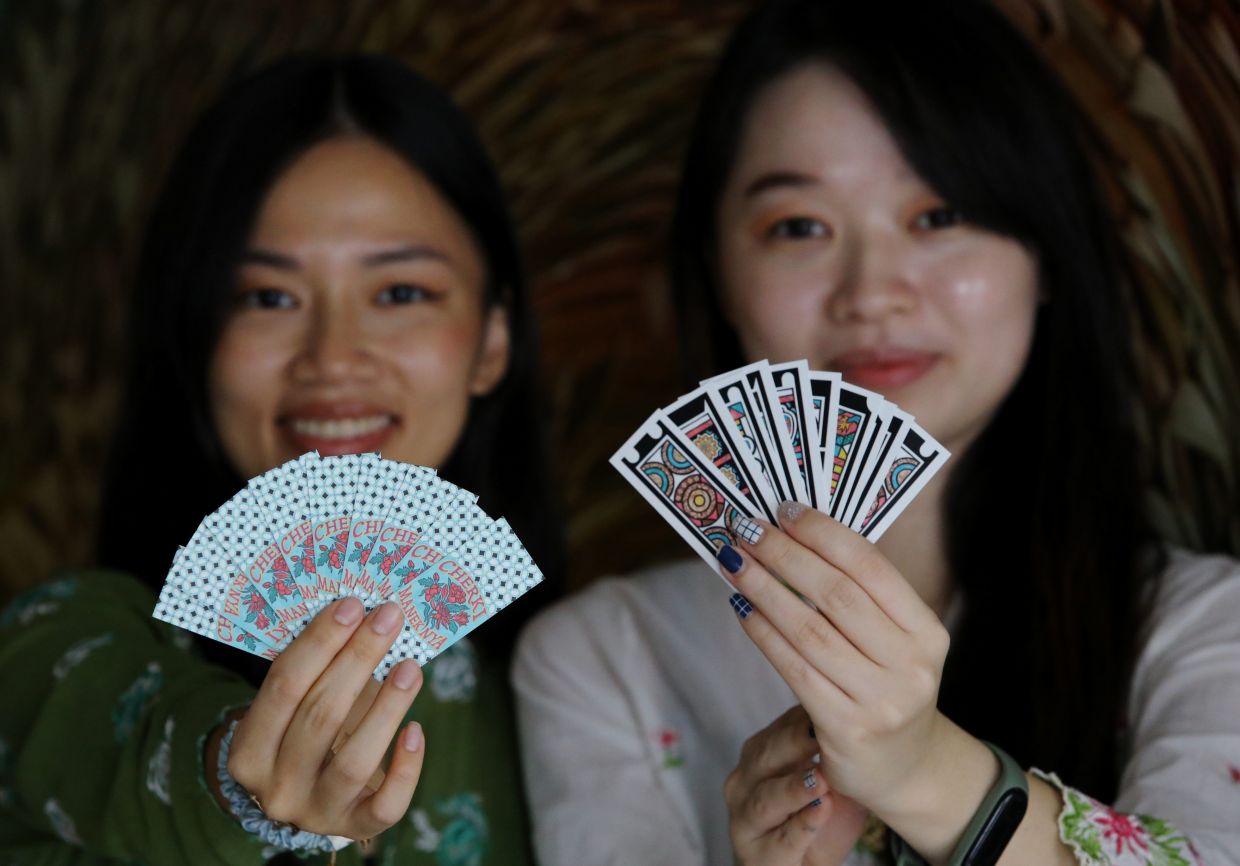
Two Melaka-born sisters are attempting to rescue a fading piece of Peranakan heritage by breathing new life into Cherki, a traditional card game that has largely disappeared from the cultural consciousness of younger community members. Lee Swee Lin, 32, and Lee Swee May, 31, have redesigned the game with vibrant colours and modern illustrations while maintaining its traditional structure and symbolic elements, hoping to make it relevant for a generation increasingly drawn to digital entertainment rather than ancestral customs.
The Cherki project represents a natural extension of the sisters' existing business focused on Peranakan beaded footwear and decorative pieces, both based in Kuala Lumpur. However, the motivation runs deeper than commercial opportunity. The sisters credit their paternal grandmother, Deo Yeok Kim, as their primary inspiration, acknowledging that much of what they understand about Peranakan culture came directly from living in her Melaka household and observing how she maintained traditions through daily practice, food preparation, storytelling and language use. Her recent passing prompted them to recognise how much intergenerational knowledge transmission had shaped their own cultural identity, spurring them to act before other traditions similarly fade from community memory.
Traditionally, Cherki cards displayed simple black-and-white designs with little visual appeal to contemporary eyes. The Lee sisters worked with a small design team throughout 2024, employing digital tools including Procreate and Adobe Illustrator to introduce colour and modern aesthetic sensibilities without compromising the game's essential character. They also developed clearer instructional materials to lower barriers to entry for players unfamiliar with the game's rules. The revamped deck retains Cherki's fundamental structure of 30 patterns divided into three suits—coins, strings and myriads—each with values from one to nine, though the sisters increased the card count to four decks instead of the traditional two and renamed the special cards from white flower, red flower and old thousand to butterfly, dragon and phoenix.
The redesigned cards deliberately incorporate distinctly Peranakan symbols and motifs. Value cards feature kantan, a fragrant flower commonly used in Nyonya cooking; chupu, traditional porcelain jars designed for serving food; kerongsang, the ornamental brooch used to fasten kebaya garments; and gelang, decorative bracelets worn by Nyonya women. This visual strategy embeds cultural education directly into gameplay, allowing players to absorb knowledge about material heritage with each hand dealt. Swee May explained their philosophy: they wanted Cherki to feel like a game people genuinely desired to pull out with friends today rather than a historical artefact relegated to museum collections. The colour and modern illustration style make it visually compelling, while the preserved traditional patterns and symbols maintain the sense of playing with ancestral knowledge.
The initiative addresses a documented cultural problem within the Peranakan community. A 2022 academic study comparing cultural knowledge between original Baba Nyonya descendants and newer community members in Malacca found that younger members increasingly lack exposure to traditional practices, having been shaped instead by global pop culture and digital entertainment. As lifestyles modernise, fewer opportunities exist for organic intergenerational transmission of cultural knowledge within families, particularly among Peranakans living away from ancestral strongholds in Melaka and Penang. Lee Yuen Thien, 36, deputy president of Persatuan Peranakan Baba Nyonya Malaysia and manager of the Baba & Nyonya Heritage Museum Melaka, observes that career obligations and competing modern interests have deprioritised cultural participation among younger members. The association currently maintains 3,000 registered members, though estimates suggest the broader Peranakan population nationwide numbers between 10,000 and 15,000 individuals.
Demographic shifts within the community have accelerated this disconnection. Internal migration, evolving lifestyle preferences and intermarriage have fundamentally reshaped Peranakan society, particularly among those living geographically distant from traditional cultural centres. Swee Lin emphasises that without deliberate preservation efforts, unique games like Cherki face eventual extinction. She believes reintroducing the game can bridge the widening gap between younger Peranakans and their cultural foundations, helping younger community members develop stronger connections to their identity during a period when such continuity faces genuine threat from competing demands on time and attention.
Cherki itself possesses historical significance extending well beyond Malaysia. The game, also known as Ceki, Chi Kee or Koa, has been played primarily in Singapore, Malaysia, Indonesia and Thailand. Scholars believe card games originated in China, with Tang Dynasty records from the ninth century referencing a "leaf game" that eventually travelled westward via trading routes, reaching Europe by the fourteenth century. Peranakans adopted the term daun ceki—daun meaning "leaf" in Malay—to describe these cards, demonstrating how the community integrated imported cultural elements into their own distinctive identity.
Lee Yuen Thien argues that cultural preservation need not require rigidity or rejection of contemporary influences. Rather, communities must consciously guide cultural evolution, ensuring younger generations develop awareness of their ancestry and heritage while allowing traditions to adapt to modern contexts. This balanced approach recognises that cultures survive through continuous reimagining rather than static reproduction. By sparking genuine interest in Peranakan traditions among younger members, he suggests, communities can create pathways for cultural continuity that feel authentic to contemporary life rather than like obligatory historical obligations.
The Cherki redesign ultimately reflects a broader challenge facing heritage communities across Southeast Asia: how to preserve distinct cultural identities amid rapid modernisation, geographic dispersion and competing claims on younger members' time and attention. The Lee sisters' approach—making traditions visually appealing, functionally accessible and genuinely enjoyable—represents one pragmatic response to this challenge. Whether their efforts catalyse broader interest in Cherki among younger Peranakans remains uncertain, but their project demonstrates how cultural practitioners are increasingly taking active responsibility for heritage preservation rather than assuming it will naturally transmit across generations. Their work suggests that heritage need not exist in opposition to modernity; rather, thoughtful contemporary design might be precisely what permits ancestral traditions to survive into future generations.

