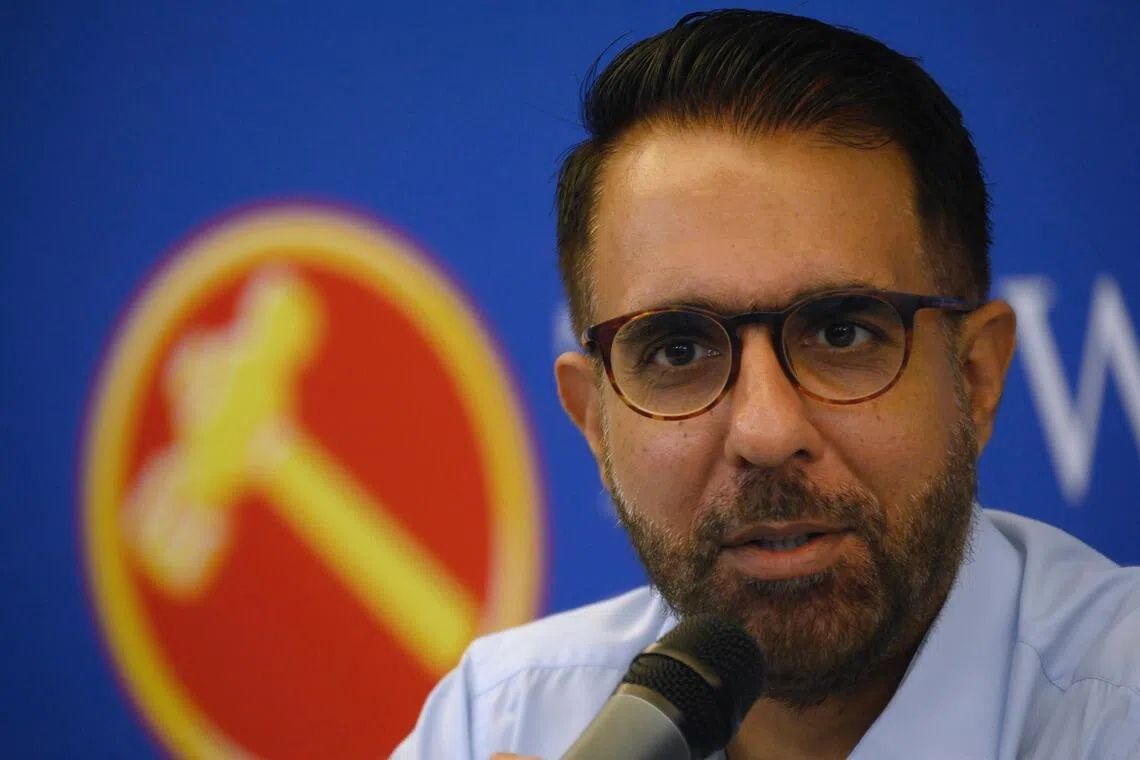
A brewing internal revolt within Singapore's Workers' Party has set the stage for a potentially historic leadership contest on June 28, when the party's roughly 100-strong cadre body will decide whether to retain Secretary-General Pritam Singh or oust him in favour of an alternative. The dispute centers on Singh's December 2025 court conviction for lying to a parliamentary committee, an outcome that has crystallised long-standing grievances among senior party figures and prompted active recruitment efforts to find a credible challenger to the man who has led the opposition party for eight years without facing electoral opposition.
The catalyst for the current upheaval traces back to the handling of a fabricated parliamentary anecdote by former Sengkang GRC MP Raeesah Khan in August 2021. Khan eventually admitted the falsehood four months later, but an investigation by Parliament's privileges committee and subsequent court proceedings determined that Singh had guided her in sustaining the dishonesty rather than insisting she promptly correct the record. This finding strikes at the very foundation of the Workers' Party's political brand—its reputation for ethical probity and trustworthiness in contrast to Singapore's ruling establishment. For opposition members operating in a constrained political environment, that moral distinction has long represented their primary competitive advantage with voters.
The practical mechanics of the June 28 proceedings will unfold across two distinct meetings. First comes a special conference, triggered by a December petition from 25 cadres demanding that Singh account for his actions and resign voluntarily. Should he refuse, these members have requested a secret ballot to determine his tenure. This special gathering will precede the party's regular biennial cadre conference, where the full slate of leadership positions, including the secretary-general post, comes up for election. The sequence creates an unusual dynamic: Singh could theoretically step down at the first meeting, then stand for re-election at the second, potentially complicating efforts to dislodge him permanently.
Identifying a viable challenger has emerged as the central operational challenge for the opposition bloc. Party insiders, speaking on condition of anonymity due to fears of disciplinary repercussions for public disloyalty, have pointed to several senior MPs as potential candidates. Gerald Giam, who represents Aljunied GRC, ranks among the most frequently mentioned possibilities, alongside Hougang MP Dennis Tan. Sengkang GRC MPs He Ting Ru and Jamus Lim have also surfaced in preliminary discussions, though their involvement in the disciplinary panel that upheld Singh's punishment creates complications. So far, none of these figures has publicly declared an intention to contest, and party insiders acknowledge that the situation remains fluid with potential shifts right up to voting day.
The emergence of former party chief Low Thia Khiang as a potential kingmaker has generated particular intrigue within Workers' Party circles. Low led the party from 2001 to 2018 and orchestrated its breakthrough 2011 victory in Aljunied GRC, securing the party's first group representation constituency win. Despite stepping down from the secretary-general position, Low retains seat on the central executive committee and, crucially, substantial residual influence among the cadre base. Rumours circulating within party structures suggest that Low voted against Singh during the recent committee deliberations on disciplinary findings, fuelling speculation that he may strategically back an alternative candidate for the top position. Low himself faced a leadership challenge in 2016 when Aljunied GRC MP Chen Show Mao, backed by some of the same veteran cadres now opposing Singh, unsuccessfully contested the election.
The numerical arithmetic underlying a potential victory appears tight but plausible. The identifiable bloc of unhappy cadres numbers approximately 30, with calculations suggesting that if Low were to publicly endorse a challenger, the combined vote total might suffice to unseat Singh, who requires only a simple majority to retain his position. However, insiders have cautioned against overconfidence, noting that even disgruntled party members may hesitate to break ranks without clearer signals of acceptable alternatives or stronger institutional backing. The circumstances remain sufficiently uncertain that some observers believe the outcome could hinge on the tone and outcome of the special conference scheduled for the morning of June 28.
The substantive complaints animating this challenge extend beyond the abstract matter of Singh's court conviction, touching on several operational and strategic concerns. The 25 cadres who triggered the special conference argue that Singh made a fundamental error in not immediately demanding that Khan clarify her fabrication when it first came to light. By allowing the falsehood to persist from August to November 2021, they contend, he compromised the party's integrity and created a vulnerability to precisely the sort of reputational damage that has now materialised. Some cadres have privately expressed anxiety that Singh's continued leadership fundamentally undercuts the Workers' Party's central electoral pitch: that voters can trust opposition members precisely because they adhere to higher standards of candour than the establishment.
Secondary grievances have accumulated alongside the conviction issue. The Workers' Party's showing in the 2025 general election disappointed several cadres who had anticipated capturing additional constituencies based on what they regarded as a particularly strong roster of candidates. The party failed to gain ground at that poll, and some members questioned Singh's strategic decision to withdraw from Marine Parade-Braddell Heights GRC on nomination day. Additionally, Prime Minister Lawrence Wong's removal of Singh as Leader of the Opposition in January 2026 triggered fresh criticism, particularly the party's subsequent decision to decline Wong's invitation to nominate a replacement opposition leader. That choice to close ranks and present unified support for Singh struck some cadres as strategically misguided, sacrificing the opposition's parliamentary visibility and institutional prominence out of personal loyalty considerations.
The Workers' Party's governance structure places extraordinary emphasis on the preferences of the cadre layer—the roughly 100-person inner circle that functions as the party's supreme decision-making body. This narrow base, while historically valuable in maintaining ideological coherence and organisational discipline, has also created an environment where internal grievances can translate swiftly into existential leadership challenges. Singh's eight-year tenure unchallenged at the ballot box has paradoxically made the cadre body less accustomed to contested elections, potentially amplifying the sense of rupture surrounding current developments. Some party veterans recall that even Low's 2016 challenge, though unsuccessful, occurred within a context of greater acceptance that leadership contests represented routine features of democratic party life rather than exceptional crises.
The implications of the June 28 outcome extend well beyond the Workers' Party's internal machinery. Singapore's opposition politics operate within severely constrained parameters, with the establishment commanding overwhelming parliamentary supermajorities and controlling most electoral terrain. Under these circumstances, the Workers' Party's capacity to project an image of trustworthy, competent governance becomes disproportionately important to its electoral fortunes. A conviction of the party leader for misleading Parliament inevitably complicates that narrative, but retaining Singh despite the conviction could equally damage the party's brand by suggesting that institutional loyalty trumps ethical principles. The cadres gathering on June 28 face a choice whose consequences will reverberate through Singapore's opposition landscape for years to come.
For Malaysian observers monitoring regional political developments, the Workers' Party situation illustrates both the advantages and vulnerabilities of small opposition parties operating under majoritarian pressure. The party's genuine institutional commitment to internal democracy and accountability—even when exercised painfully—contrasts sharply with governance patterns in other regional democracies. Simultaneously, however, the episode demonstrates how concentrated decision-making structures and tight-knit party leaderships can spiral into destabilising crises once factional tensions breach certain thresholds. The careful watching of June 28 proceedings among opposition figures across Southeast Asia reflects broader concerns about how fragile opposition institutions can become when subjected to simultaneous institutional and reputational pressures.

