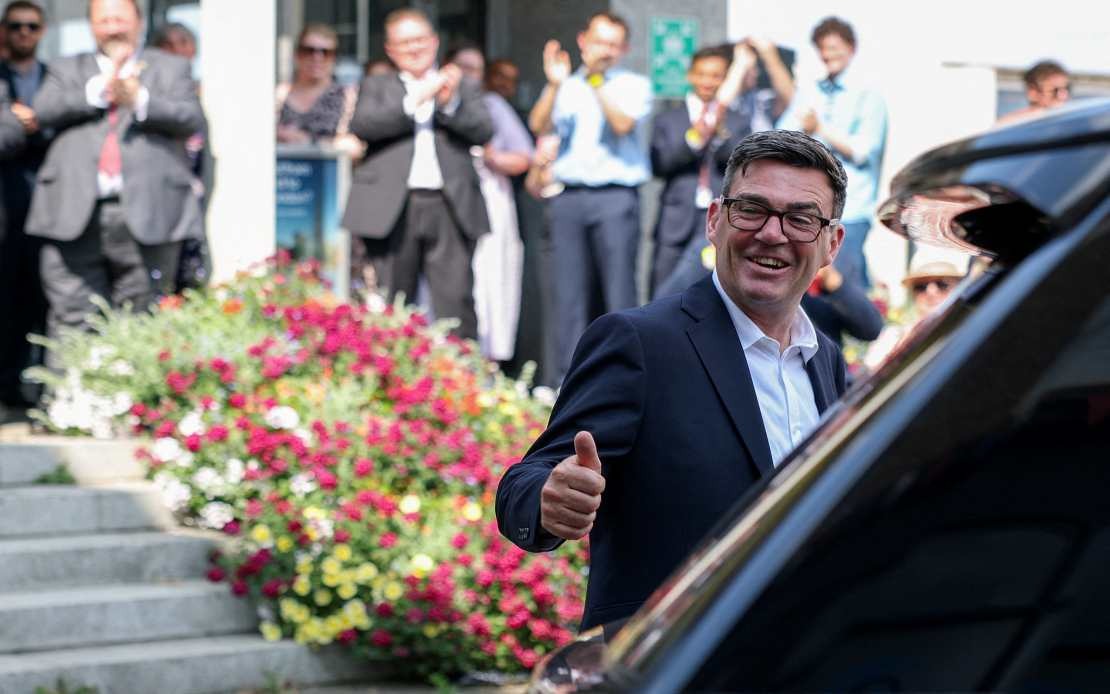
Singapore's Prime Minister Lawrence Wong has formally congratulated Andy Burnham following his appointment as the United Kingdom's new prime minister, marking a diplomatic overture that underscores the strategic importance both nations place on their relationship amidst shifting global dynamics. Burnham, who leads the Labour Party, was invited by King Charles III on Monday to form a government after securing electoral victory, elevating him to one of the Western world's most consequential political offices during an era of pronounced international tension and economic uncertainty.
In his message, Wong extended wishes for Burnham's success in navigating the profound geopolitical and economic transformation currently reshaping the global order whilst securing prosperity for the British public. The tone of the congratulatory letter reflects Singapore's diplomatic sophistication in recognising the symbolic weight of leadership transitions in major developed economies and the necessity of maintaining robust working relationships across ideological and geographical boundaries. For Southeast Asia, UK leadership changes carry tangible implications given Britain's enduring presence and influence in regional security frameworks.
Wong's statement stressed the historical depth and contemporary resilience of Singapore-UK ties, grounding the relationship within a formal Strategic Partnership framework that has evolved over generations. This partnership represents far more than ceremonial goodwill; it encompasses substantive cooperation spanning defence, trade, investment, and knowledge exchange. The reference to "trust built over many decades" carries particular weight in diplomatic language, signalling that the relationship has weathered multiple international storms and policy shifts without losing fundamental coherence or purpose.
The Singapore Prime Minister identified several domains where bilateral collaboration could intensify, specifically highlighting innovation, science and technology, and defence cooperation. These sectoral focuses reveal strategic thinking about where Singapore and the UK possess complementary strengths and mutual interests. Singapore's position as a global financial centre and technology hub aligns naturally with British expertise in research institutions and advanced manufacturing. Defence cooperation remains especially pertinent given both nations' interest in maintaining open sea lanes and regional stability in an increasingly contested Indo-Pacific environment.
Wong emphasised Singapore's appreciation for Britain's sustained regional engagement, a point that carries geopolitical significance often overlooked by casual observers. The United Kingdom maintains formal relationships through multiple regional architecture frameworks, including its status as an ASEAN Dialogue Partner, a designation reflecting close working arrangements with the ten-nation Association of Southeast Asian Nations. Additionally, Britain participates in the Five Power Defence Arrangements, a regional security mechanism involving Singapore, Malaysia, Australia, and New Zealand. These institutional connections mean British policy directly influences regional stability and development trajectories.
The Singapore leader's reference to both nations assuming major international responsibilities in the coming years reveals forward-looking diplomatic planning. Singapore will assume the ASEAN Chairmanship, a rotating position that carries substantial responsibility for coordinating the bloc's external relations and internal cohesion. Simultaneously, the UK will hold the G20 Presidency in 2027, positioning Britain to shape global economic governance and multilateral responses to transnational challenges. Wong explicitly identified this conjunction as creating "a unique opportunity" for coordinated action addressing shared challenges at both regional and global scales.
The specific mention of multilateral cooperation reflects an important strategic priority for Singapore and, by extension, broader Southeast Asian interests. As a small island nation with significant economic dependence on international trade and open maritime routes, Singapore has consistently championed rules-based multilateral systems. Any UK government's commitment to such frameworks directly affects regional prosperity and stability. Burnham's Labour government inherits Britain's substantial influence within multiple international organisations, forums, and treaty arrangements that shape regional outcomes.
The timing of Wong's message carries additional resonance given current global circumstances. The international environment has become markedly more contested, with great power competition intensifying and economic nationalism gaining traction in several major economies. In such circumstances, Singapore's efforts to reinforce partnerships with established democratic allies and rule-of-law-based systems underscore the value it places on institutional stability and predictable international behaviour. Burnham's ascension to the prime ministership represents a natural inflection point for such reinforcement.
For Southeast Asian observers, the substantive focus on defence cooperation warrants particular attention. The region faces complex security challenges, from traditional maritime disputes to emerging domains including cyber warfare and artificial intelligence-enabled military capabilities. British expertise, experience, and technological sophistication contribute meaningfully to regional defence thinking and capability development. Singapore's own military modernisation efforts increasingly incorporate partnerships with advanced industrial democracies, making the quality of the UK relationship materially important.
The congratulatory letter also implicitly acknowledges the interconnected nature of contemporary global challenges. Wong's reference to addressing "shared global and regional challenges" extends beyond traditional bilateral concerns to encompass issues like climate change, pandemic preparedness, supply chain resilience, and technological governance. These cross-cutting challenges cannot be effectively addressed through unilateral action; they demand the coordinated commitment of multiple nations with complementary capacities and resources. Both Singapore and the UK bring significant capabilities to bear on such challenges.
Wong's articulation of confidence that Singapore-UK cooperation will strengthen across multiple domains represents more than ceremonial optimism. It reflects institutional relationships, ongoing dialogues, and concrete collaboration mechanisms that transcend individual leadership transitions. However, leadership changes do matter insofar as they establish tone, priorities, and the degree of political capital allocated to particular relationships. Wong's message serves to communicate that from Singapore's perspective, the bilateral relationship deserves continued investment and attention under Burnham's administration.
The broader context for this exchange involves Britain's evolving regional role following its departure from the European Union. The UK has pursued a deliberate strategy of enhanced engagement with Asia-Pacific nations, recognising that long-term prosperity and security require active participation in the world's most dynamic region. Singapore, as a major financial centre and strategic location, naturally figures prominently in such calculations. Burnham's government will inherit this strategic orientation and the institutional commitments and partnerships it has generated.

