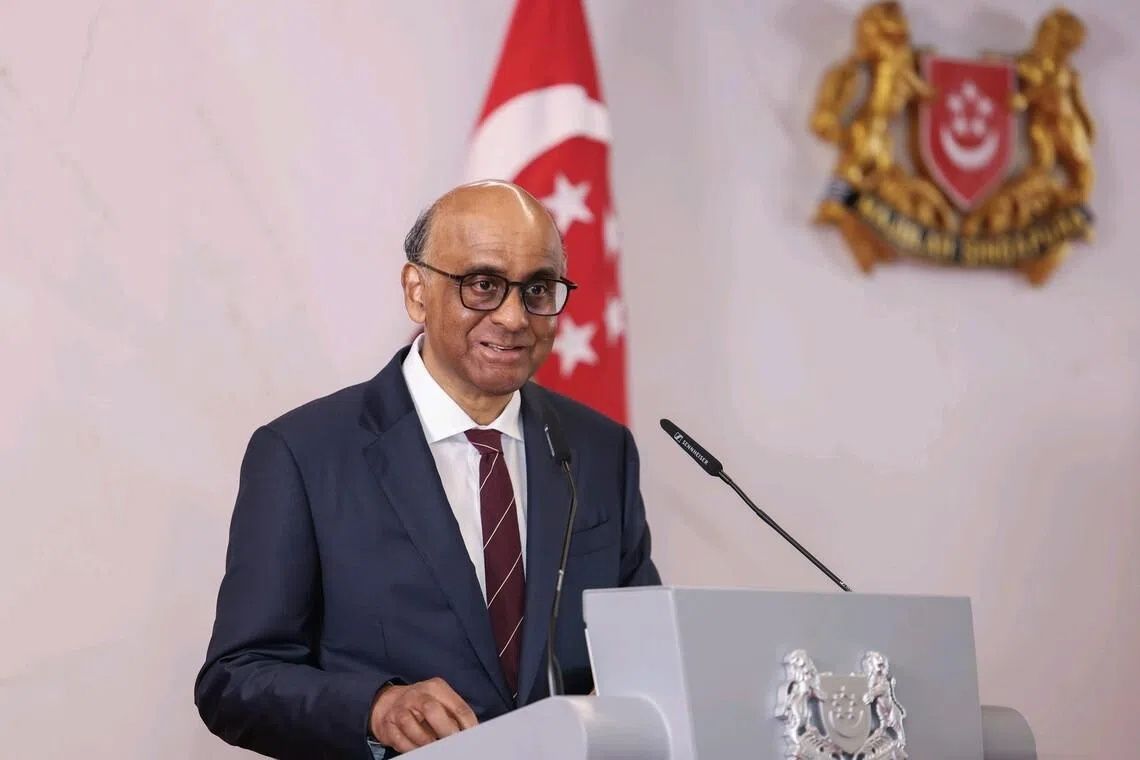
Singapore President Tharman Shanmugaratnam is preparing for an official State Visit to Malaysia at the invitation of His Majesty Sultan Ibrahim, King of Malaysia. In remarks shared exclusively with Bernama, the Singapore President articulated a vision for the bilateral relationship grounded in shared heritage, institutional trust, and a commitment to resolving differences through principled dialogue. His framing of the partnership—as something transcending simple transactional arrangements—reflects a maturing diplomatic approach that emphasises the accumulated goodwill developed over six decades of independent coexistence.
The foundation of Singapore-Malaysia relations rests upon historical and cultural foundations that predate both nations' independence. President Tharman underscored this reality by noting the interconnectedness of their peoples through kinship networks, linguistic commonalities, and cultural practices that evolved across centuries. The Johor-Singapore Causeway exemplifies this integration at its most literal level—it remains the world's busiest land border crossing, channelling hundreds of thousands of daily movements between the two countries. This constant human traffic embodies an economic and social interdependence that statistics alone cannot fully capture. The relationship's depth extends beyond commerce into the realm of shared identity, as evidenced by their joint success in securing United Nations Educational, Scientific and Cultural Organization recognition for the kebaya, a traditional garment worn across the region, alongside Brunei, Indonesia, and Thailand. Similar collaborative efforts to secure UNESCO status for Chingay, the vibrant street procession celebrating multicultural traditions, demonstrate how both governments actively work to preserve and transmit cultural heritage to younger generations.
The bilateral relationship's resilience has been tested repeatedly by sensitive and complex disputes inherited from colonial history and geographic proximity. What distinguishes the Singapore-Malaysia partnership from comparable neighbour relationships is the consistent choice by successive administrations to manage disagreements through dialogue, mutual respect, and adherence to international law rather than allowing grievances to calcify into permanent animosity. President Tharman acknowledges that conflict between close neighbours is inevitable, yet emphasises that the relationship's strength derives not from the absence of friction but from disciplined management of disputes. This approach has generated high levels of trust and familiarity among political leadership, government officials, and increasingly among civil society actors on both sides. For a region where border tensions and historical animosities frequently simmer beneath surface-level cooperation, the Singapore-Malaysia model offers instructive lessons about conflict resolution and the maintenance of productive relationships despite underlying disagreements.
Two flagship infrastructure projects—the Johor-Singapore Special Economic Zone and the Rapid Transit System Link—represent the contemporary expression of this partnership's practical benefits. The JS-SEZ, positioned as a model for win-win cooperation, seeks to harness Singapore's financial and technological sophistication alongside Malaysia's land resources and labour advantages. The initiative aims to create an integrated economic space where businesses and investors can leverage complementary strengths to achieve growth neither country could generate independently. The RTS Link, meanwhile, addresses the daily reality of hundreds of thousands of workers, students, and traders who traverse the land checkpoints in both directions. By reducing commute times and transaction costs associated with border crossing, the link promises tangible improvements to the quality of life for ordinary people whose livelihoods depend on cross-border mobility. For Malaysian readers particularly, these projects carry significance beyond their economic metrics—they symbolise recognition that Singapore's prosperity is inseparable from regional stability and that Malaysia's development benefits from deepened integration with its wealthier neighbour.
President Tharman situates these bilateral initiatives within a broader regional context shaped by fracturing multilateral trading systems and intensifying great-power competition. He argues that Singapore and Malaysia must deepen economic integration not merely to maximise mutual advantage but as a strategic imperative amid global turbulence. The two countries share particular vulnerabilities around energy security and supply chain resilience—challenges that collaborative responses can ameliorate more effectively than unilateral measures. As tropical nations facing identical climate-change pressures, both have announced ambitious sustainability and energy transition targets. Cooperation in renewable energy development and carbon credit markets represents a genuine convergence of interests rather than a relationship of dependency or subordination. The framing acknowledges that regional integration serves as a buffer against external disruption and a means of amplifying Southeast Asia's collective voice in international economic forums.
The digital economy presents another avenue for deepened cooperation. ASEAN recently concluded negotiations on a Digital Economy Framework Agreement, scheduled for signature at the 49th ASEAN Summit in Manila in November 2026. Current projections suggest the ASEAN digital economy could reach US$1 trillion by 2030 on its existing trajectory; however, studies estimate that a comprehensive framework agreement could double this figure to US$2 trillion. For Singapore and Malaysia, both digitally advanced economies within ASEAN, meaningful participation in expanding this digital space offers opportunities to shape regional standards, capture disproportionate value creation, and position themselves advantageously relative to other regional economies. The potential economic uplift represents a compelling reason for political leaders in both countries to commit sustained attention to deepening digital infrastructure integration and regulatory harmonisation.
Yet President Tharman emphasises that the relationship cannot be reduced to economic calculus or institutional frameworks alone. The trust accumulated over sixty years constitutes what he terms the "bedrock" upon which practical cooperation rests. In an increasingly troubled world, this accumulated trust—continuously renewed through dialogue, exchange, and demonstration of good faith—provides psychological and diplomatic insurance that transcends any single agreement or project. This perspective carries particular relevance for Malaysian readers accustomed to periodic tensions with their larger, wealthier neighbour. The President's assertion that the relationship has "never been, and must never be, a purely transactional relationship" suggests recognition that Malaysians understandably harbour sensitivities about asymmetrical power dynamics. By explicitly foregrounding trust and historical connection, he seeks to anchor the partnership in something more resilient than temporary convergences of interest.
People-to-people ties represent the relationship's most fragile yet potentially most vital component. President Tharman acknowledges that what came naturally to earlier generations—organic contact, shared cultural consumption, familial networks—increasingly requires deliberate institutional support among younger Singaporeans and Malaysians. The suggestion that bilateral exchange programmes, joint internships, youth leadership forums, and collaborative community projects should be expanded and actively promoted reflects recognition that generational disconnection poses genuine risks to the relationship's long-term stability. This concern carries practical implications: as digital communication replaces face-to-face contact and as both societies become more internally focused, the lived understanding of shared identity and mutual interest that characterised previous generations risks attenuating. Investment in youth engagement therefore constitutes not sentimental cultural work but essential maintenance of the relational foundation upon which institutional cooperation depends.
Within ASEAN's broader context, Singapore and Malaysia occupy distinctive positions as founding members with substantial capacity to shape the bloc's direction and effectiveness. President Tharman frames strengthening ASEAN centrality, unity, and relevance as a shared interest requiring active commitment from both countries, particularly amid global challenges including geopolitical fragmentation, climate change, and economic volatility. The reference to Prime Minister Datuk Seri Anwar Ibrahim, though incomplete in the source material, suggests that current Malaysian political leadership shares this commitment to ASEAN-centric regionalism. For Southeast Asian readers, this represents important confirmation that Singapore—often perceived as having interests distinct from or even opposed to broader ASEAN aspirations—continues to view regional multilateralism as strategically advantageous rather than constraining.
The State Visit itself functions as diplomatic reaffirmation of partnership at the highest level. Such ceremonial occasions, while sometimes dismissed as empty ritual, serve important functions in signalling political priority, allowing leaders to articulate shared vision in public forums, and generating opportunities for substantive bilateral discussions outside normal diplomatic channels. President Tharman's willingness to grant an exclusive written interview to the Malaysian national news agency before his arrival demonstrates attentiveness to Malaysian audience and respect for Malaysian media in narrating the bilateral relationship. The poetic framing in his comments—references to "letting hearts shake hands," to trust as bedrock, to relationship as multidimensional rather than merely functional—suggests conscious effort to communicate in registers that resonate emotionally alongside rational-actor appeals to mutual interest.
Looking forward, the relationship's trajectory depends upon several factors operating simultaneously. Institutional mechanisms for conflict resolution must remain robust and accessible as new disputes inevitably arise. Economic integration must deliver tangible benefits to ordinary people in both countries rather than concentrating gains among elite constituencies. Leadership across both governments must continue prioritising relationship maintenance even when domestic political pressures pull toward nationalist posturing. And crucially, younger generations must develop their own stakes in the partnership—through employment in cross-border enterprises, through friendships and family connections, through participation in regional organisations and networks. President Tharman's articulation of these challenges and opportunities provides roadmap for what sustained partnership requires. For Malaysia, the message contains reassurance that Singapore's leadership recognises the relationship's fundamental importance and views it as meriting sustained investment and careful stewardship rather than benign neglect.

