Prime Minister Lawrence Wong has formally expressed Singapore's solidarity with Indonesia following a major seismic disaster that struck the country's eastern region over the weekend. In communications directed towards Indonesia's President Prabowo Subianto, Wong conveyed the sympathies of the Singapore Government and its people in the wake of the catastrophic earthquake that devastated the Flores islands on Saturday, August 15.
The 7.7-magnitude earthquake centred off the coast of Flores proved particularly destructive, resulting in confirmed deaths exceeding 50 people according to Indonesian authorities, with at least 135 others sustaining injuries. The immediate aftermath saw hundreds of residential and commercial structures sustaining significant damage, rendering the scale of the disaster immediately apparent to regional observers. The earthquake's early-morning timing meant that many residents were still indoors or in their homes, likely contributing to the substantial casualty figures recorded by emergency services.
The initial major quake was followed by a secondary seismic event of considerable magnitude. Approximately six hours after the primary tremor, a 6.1-magnitude earthquake struck off the northern coast of Sumatra, though initial reports indicated this secondary quake produced no fatalities. This successive seismic activity underscored the volatile geological conditions across the Indonesian archipelago and the unpredictable nature of earthquake hazards in the region.
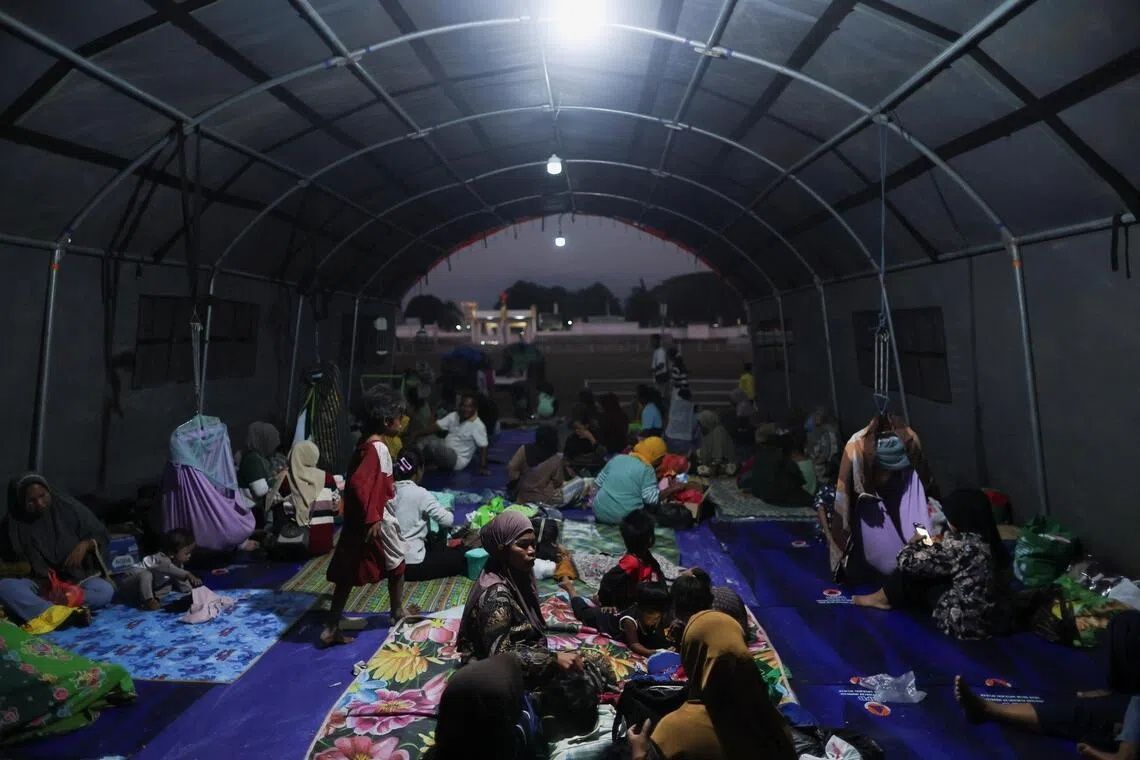
The aftermath unleashed a cascade of aftershocks that prolonged the terror and instability experienced by residents. Indonesian national disaster agency officials reported that nearly 1,000 aftershocks rippled through the affected area during the hours immediately following the initial earthquake. This relentless seismic activity forced approximately 5,000 residents to flee their homes entirely, abandoning their belongings and seeking safety in open spaces away from potentially unstable structures.
Wong's official response, shared through a Facebook announcement on Sunday, August 16, reflected the tone of inter-governmental sympathy customary in regional disaster situations. He expressed deep sadness regarding the loss of lives and the widespread destruction caused by the sequential earthquakes. The statement represented not merely personal sentiment but the formal position of the Singapore Government in acknowledging the tragedy that had befallen a significant neighbour in the Southeast Asian region.
The Prime Minister's message stressed Singapore's recognition of the immense human cost inflicted by the natural disaster. Beyond acknowledging the deaths and injuries, Wong's statement highlighted the broader consequences for displaced families and communities grappling with the sudden loss of homes and livelihoods. His remarks extended sympathies specifically to the families of deceased victims and to all individuals whose lives had been disrupted by the catastrophe.
Critically, Wong's statement also recognised the extraordinary efforts being deployed by Indonesian authorities and emergency personnel operating under extremely challenging conditions. He acknowledged the tireless work being undertaken in relief operations and the longer-term recovery efforts essential to restoring normalcy to the affected regions. This recognition of institutional response underscored the importance Singapore attaches to demonstrating support for Indonesia's capacity to manage the crisis independently whilst standing ready to offer assistance if requested.
The humanitarian dimensions of the disaster became increasingly apparent as rescue and relief operations commenced. Officials coordinating on-ground response efforts identified urgent material needs that went far beyond basic medical treatment. Survivors required emergency shelter in the form of tents, adequate food supplies, pharmaceutical and medical resources, access to uncontaminated drinking water, and electricity generation capacity to restore basic services and enable continued rescue operations during nightfall.
The Flores earthquake represents a sobering reminder of the seismic hazards that characterise the Indonesian archipelago, situated as it is along major tectonic plate boundaries. For Malaysia and other Southeast Asian nations, such disasters underline the region's vulnerability to natural hazards and the critical importance of maintaining robust emergency response systems and international cooperation frameworks. Singapore's diplomatic response reflects the expectation that neighbouring states will demonstrate solidarity during moments of crisis, a principle that binds the region together beyond routine economic and political interactions.
The sequence of events—the initial 7.7-magnitude earthquake, the secondary 6.1-magnitude quake, and the subsequent avalanche of aftershocks—illustrated how a single seismic event can generate cascading impacts across extended periods. For regional planners and policymakers, the incident reinforces the necessity of investment in earthquake early-warning systems, building code compliance, and comprehensive disaster management infrastructure capable of responding to multiple simultaneous emergencies across geographically dispersed populations.

