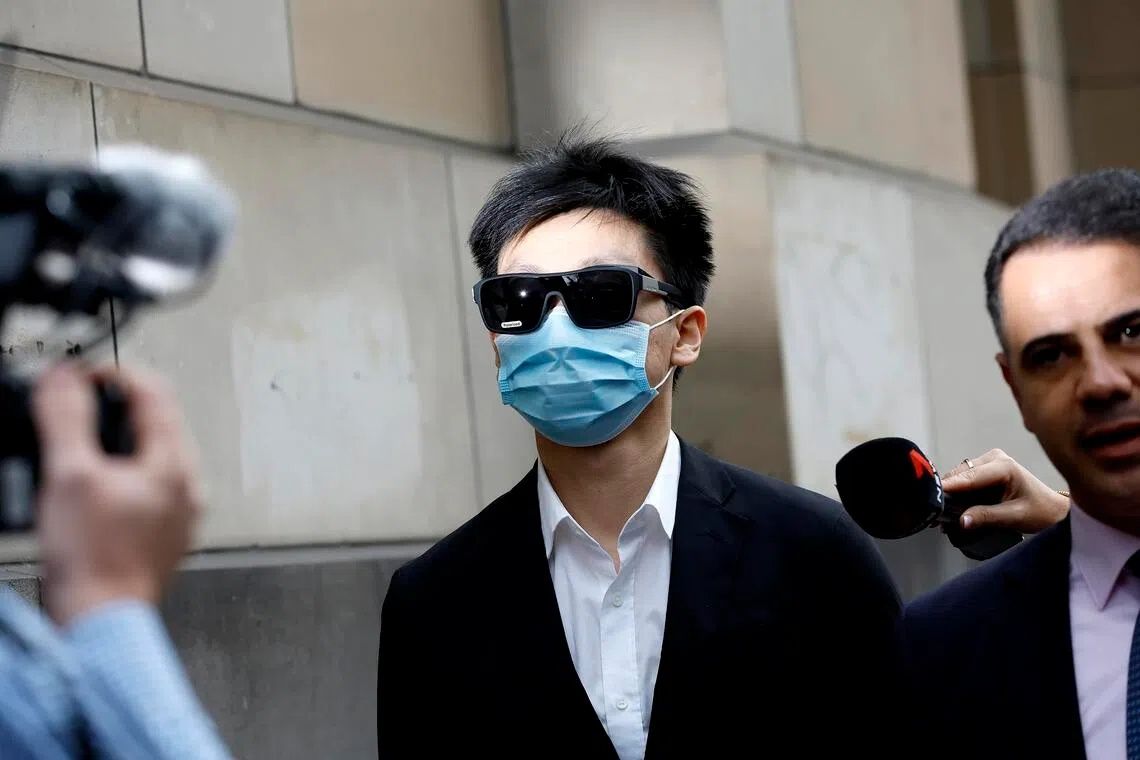
A Singaporean trainee doctor working in Melbourne has pleaded guilty to one of Australia's most serious workplace surveillance crimes, admitting to secretly filming more than 500 colleagues across three major hospitals over a four-year period. Ryan Cho, 28, entered guilty pleas to all 13 consolidated charges at Melbourne Magistrates Court on Thursday, July 9, in a case that has shocked Australia's medical community and raised questions about workplace safety and institutional accountability across the region.
Police investigations into Cho's conduct uncovered a disturbing cache of intimate material retrieved from multiple electronic devices seized from his home, including a laptop, hard drive and mobile phone. Authorities documented more than 10,000 video and image files depicting victims, with Victorian police ultimately laying 910 individual charges after discovering approximately 4,500 videos among the collected material. The sheer scale of the offences — spanning years of deliberate, premeditated surveillance — underscores both the systematic nature of the conduct and the vulnerability of workplace spaces that should be secure.
Cho's illegal filming took place during his time working at three prominent Melbourne healthcare institutions: Austin Hospital, Royal Melbourne Hospital, and Peter MacCallum Cancer Centre, where he was employed between 2021 and 2025 after completing his medical studies at Monash University. The discovery came in July 2025 when staff at Austin Hospital located a mobile phone concealed in a mesh bag inside a staff toilet, a critical moment that triggered the police investigation and his subsequent arrest. Beyond the hospital settings, Cho also admitted to filming individuals with whom he shared residential accommodation, expanding the scope of his violations into private living spaces.
Magistrate Michelle Mykytowycz acknowledged victims present in the courtroom and those participating remotely via video link before confirming that the prosecution and defence had agreed to consolidate the 910 charges into 13 counts. This consolidation procedure, known as "rolling up" charges, is standard in cases involving repetitive offences with identical elements. During the brief 30-minute hearing, the magistrate confirmed she was satisfied there existed sufficient evidence for a jury to convict on all charges, after which Cho was asked to state his plea. Standing in a dark suit and white shirt, Cho responded with a single word — "Guilty" — to each of the 13 consolidated charges.
Cho's medical registration with Australian health regulators was suspended in 2025, effectively ending his medical career at the point of discovery. Despite having arrived in Australia in 2017, he had only recently been granted permanent residency in April 2025, just three months before his arrest. His father, Wilson Cho, a logistics manager from Singapore, attended the court proceedings, having previously stated during an earlier appearance that he had "no idea" his son's behaviour would lead to such serious criminal charges and professional ruin.
The court imposed strict bail conditions that will remain in effect until Cho's next appearance at Melbourne's County Court on November 23, marking the beginning of a three-day pre-sentence hearing. These conditions are unusually restrictive given the severity of his actions: Cho must report to police three times weekly, maintain no contact with witnesses or potential witnesses, and avoid hospitals except in genuine emergencies with prior police approval. He has also been prohibited from accessing photographic or video recording devices outside his home and required to undergo appropriate medical treatment. His passport was surrendered earlier in the proceedings, and a A$50,000 surety was lodged by his parents in 2025.
Cho's parents have committed to living in Melbourne throughout the legal process to monitor their son's compliance with bail conditions. The involvement of family members in supervision reflects the complexity of the case and the need for layered oversight. Cho's barrister, Julian McMahon, previously described him as a "complicated young professional man" with what would "almost certainly be recognised as complex psychological issues," suggesting the defence strategy may focus on mental health factors during sentencing proceedings.
Beyond the criminal charges, the case has sparked civil action that threatens significant institutional liability for the three hospitals involved. Around 100 victims, predominantly women, have lodged complaints with the Australian Human Rights Commission alleging workplace sexual harassment and discrimination. Tony Carbone, managing partner at Carbone Lawyers, told The Straits Times that his firm expects the number of hospital employees joining the human rights complaint to grow substantially, as more workers become aware of the mechanism for seeking redress and potential compensation.
The case carries particular significance for Southeast Asian professionals working abroad, highlighting risks within international healthcare systems and the potential consequences of inadequate workplace surveillance controls. It also raises uncomfortable questions about how such behaviour persisted undetected for years across three separate major institutions, despite the deliberate placement of recording devices in staff bathrooms and showers. For Malaysian and regional healthcare workers abroad, the case serves as a reminder of the importance of workplace safety advocacy and institutional accountability in foreign employment settings.
The pre-sentence hearing scheduled for late November will include victim impact statements, allowing those affected by Cho's conduct to present personal accounts of the psychological and professional consequences of the breach of trust. The court's sentencing decision will likely set precedent for similar surveillance crimes within Australia and may influence how other Commonwealth jurisdictions approach workplace violations of this nature. For medical professionals and students from the region working in Australia, the case underscores both the seriousness with which Australian law enforcement and courts treat such offences and the potential for criminal conviction to effectively terminate international medical careers.

