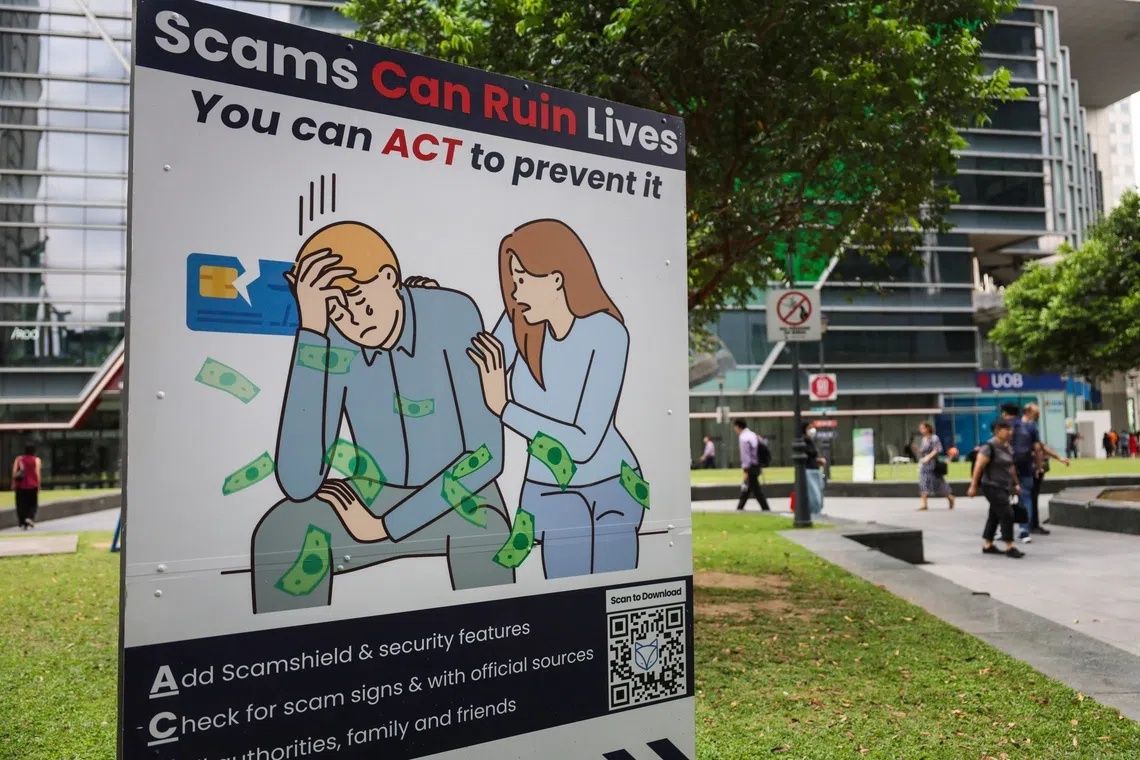
Singapore's Parliament has begun debating comprehensive anti-scam legislation designed to disrupt the infrastructure that enables fraud networks to operate across social media and digital commerce platforms. The Scams (Countermeasures) and Other Matters Bill, tabled on 4 August, introduces criminal penalties for online account mules—individuals who lend their personal details to create accounts on Carousell, TikTok, Telegram, Facebook, Instagram and WhatsApp for use in scams. This legislative gap has allowed scammers to proliferate on these platforms with relative impunity, despite existing laws targeting money mules and SIM card providers.
The new offences represent a significant expansion of Singapore's anti-scam arsenal. Under the proposed changes, supplying personal information to create accounts for criminal activity becomes a criminal act, as does receiving or possessing such accounts. Those convicted face fines reaching S$10,000, imprisonment up to three years, and up to 12 strokes of the cane. This escalation acknowledges a sobering reality: scams now account for three in five police reports in Singapore, with S$913.1 million lost to fraud in 2025 alone. Since 2019, scams have cost Singaporean victims more than S$4 billion, making it one of the nation's most persistent crime challenges.
The legislation also dramatically increases penalties for online service providers that fail to comply with anti-scam codes of practice and government directives. The maximum fine rises from S$1 million to S$10 million, while daily penalties for continuing offences jump from S$100,000 to S$300,000. This tenfold increase targets platforms that have been slow or resistant to implementing fraud prevention measures. Meta has already received two implementation directives—in September 2025 and January 2026—requiring specific anti-scam measures. Police credit these earlier directives with reducing impersonation scams on Facebook, demonstrating that regulatory pressure can work when platforms face meaningful financial consequences.
Government impersonation scams exemplify the urgent need for action. Cases more than doubled from 1,504 in 2024 to 3,363 in 2025, making it the fifth most common scam type by volume. These frauds exploit public trust in government institutions, causing psychological and financial trauma to victims who believe they are dealing with legitimate authorities. The dramatic spike suggests scammers have identified and are actively exploiting vulnerabilities in account creation and identity verification across major platforms.
A particularly troubling development is the integration of artificial intelligence into scam operations. Criminal syndicates now deploy AI to accelerate their activities, creating large volumes of fraudulent accounts, websites and advertisements faster than traditional manual review processes can detect them. In response, the Bill authorises police to issue anti-scam directions through computer programmes, including those powered by AI, enabling rapid identification and blocking of malicious accounts. While this represents a necessary technological counter-measure, the legislation includes safeguards to ensure automated systems operate with accuracy and fairness, addressing legitimate concerns about algorithmic bias or false positives affecting innocent users.
The legislation introduces three new police orders to enhance coordination among banks, telecommunications companies and online platforms. A disclosure order compels service providers to share information about specified accounts and scam-related activities. An account disabling order allows police to shut down specific accounts for up to 30 days, with a possible extension of an additional 30 days, disrupting active fraud operations. These tools feed into Singapore's developing National Scams List, which will enable real-time information sharing between government and private sector partners. This automated intelligence system allows banks to freeze accounts that may be receiving scam proceeds even before fraudsters move the money, effectively choking off the financial oxygen that keeps syndicates operational.
During February's Ministry of Home Affairs budget debate, Minister of State for Home Affairs Goh Pei Ming outlined the ambition of this integrated approach. The shared information will include perpetrator identities, bank account details, phone numbers and online accounts, creating a comprehensive database that stakeholders can use to preemptively block transactions and services. This represents a significant shift from reactive investigation toward predictive intervention, allowing the financial system to act as a barrier against scam proceeds before they are lost to victims.
The facility restriction framework, operational since October 2025, already demonstrates the potential of coordinated restrictions. As of 30 June, the framework had placed 1,423 money mules, 1,439 SIM card mules and 53 corporate mules under restrictions limiting their access to financial services, telecommunications and Singpass accounts. However, compliance has largely been voluntary or dependent on individual sector decisions. The Bill introduces a service limitation order empowering police to mandate restrictions lasting up to three years, removing reliance on voluntary cooperation and ensuring consistent application across the financial and telecommunications sectors.
For Malaysian and Southeast Asian observers, Singapore's legislative approach offers important lessons about combating organised scam networks that operate across borders and platforms. The tenfold increase in corporate fines signals that platforms can no longer treat scam prevention as optional corporate responsibility. The emphasis on targeting account mules addresses a vulnerability that affects the entire region, as scammers frequently recruit individuals across Southeast Asia to supply compromised accounts. The integration of AI-powered detection with human oversight suggests that technological solutions alone are insufficient; they must be paired with legal frameworks that impose real consequences for non-compliance.
The regional dimensions of this problem cannot be overstated. Scam syndicates often operate from one jurisdiction while recruiting account mules from another and targeting victims across multiple countries. Singapore's willingness to regulate foreign platforms through mandatory implementation directives and escalating fines sets a precedent that other Southeast Asian nations may follow. As scammers become increasingly sophisticated in their use of AI and cross-border networks, jurisdictions that fail to establish strong legal and technological countermeasures risk becoming both source and target for organised fraud operations that recognise and exploit regulatory gaps.
The Bill also strengthens police operational capabilities, though specific enhancements are reserved for later legislative discussion. Together, these measures represent Singapore's most comprehensive anti-scam initiative to date, reflecting the escalating sophistication and scale of fraud operations. Success will depend not only on legislative passage but on sustained enforcement, technological investment and genuine cooperation from platforms that have previously resisted regulation. For a region increasingly targeted by scam syndicates, Singapore's approach suggests that strong legal frameworks, coupled with meaningful financial penalties and real-time intelligence sharing, offer the most promising path toward disrupting criminal networks that exploit digital infrastructure for mass fraud.

