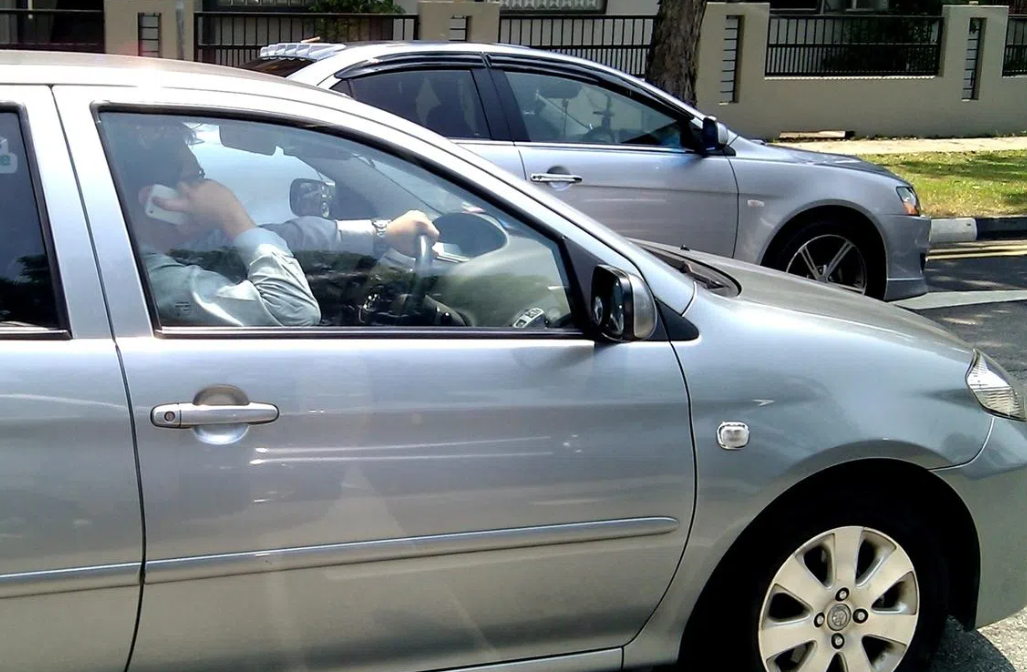
Singapore's government is preparing to significantly toughen road safety legislation in response to alarming increases in traffic incidents across the island. Under a proposed bill tabled by the Ministry of Home Affairs on July 7, drivers caught simply holding a smartphone while the vehicle is in motion could face jail sentences and substantial fines—regardless of whether they were actively using the device. The shift signals a fundamental change in enforcement approach, moving from proving device usage to establishing mere possession as a criminal act.
The scale of Singapore's road safety crisis provides the urgency behind these measures. Between 2021 and 2025, traffic fatalities climbed approximately 24 per cent, while traffic violations surged by some 38 per cent over the same period. The human toll reached a 10-year peak in 2025 with 149 deaths on Singapore's roads, a stark increase from 141 recorded in 2016. Injuries too have intensified, rising from 9,342 people hurt in 2024 to 9,955 in 2025. These figures underscore a troubling pattern of deteriorating road safety despite Singapore's reputation for strict enforcement and orderly traffic management.
Existing legislation already criminalises texting or calling while holding a phone, but enforcement has proven challenging. Officers must directly observe the violation and manually verify what the driver was doing, creating practical barriers to detection. Offenders currently receive 12 demerit points and fines ranging from $400 to $500 under standard enforcement. Those prosecuted in court face steeper consequences: first-time offenders can be imprisoned for up to six months and fined $1,000, while repeat offenders may spend a year in jail and forfeit $2,000. Despite these penalties, the requirement to prove active device usage has limited the government's ability to deter the behaviour comprehensively.
The new bill fundamentally restructures this enforcement model. By criminalising the act of holding a phone while driving—rather than requiring proof of active use—authorities gain a simpler, more defensible basis for prosecution. The Ministry of Home Affairs contends that merely holding a device substantially diverts driver attention from the road, regardless of whether the person is texting, scrolling, or simply gripping the phone. This logic aligns with international road safety research demonstrating that device possession alone degrades situational awareness and reaction times. Critically, the change will enable Traffic Police to employ camera systems and crowd-sourced video evidence, dramatically expanding the enforcement net beyond what officers can manually observe.
The legislation preserves reasonable accommodations. Drivers may continue using mounted devices—phones affixed to dashboards or windscreens via holders—without legal consequence. Similarly, holding devices while the vehicle is stationary remains permissible. This distinction reflects a recognition that hands-free operation and immobile parking do not pose the same distraction risks as hand-held use during transit. For Malaysian readers familiar with similar road safety challenges, this targeted approach offers a practical middle ground between total prohibition and dangerous permissiveness.
Beyond smartphone regulation, the Road Traffic (Miscellaneous Amendments) Bill addresses another category of dangerous driving: deliberate vehicular endangerment. Singapore recognised a gap in its legal framework when sentencing drivers who use cars as weapons but lack clear intent to kill. The case of Jarrett Tee Lee Kiat exemplifies the problem—his five-year-eight-month sentence for causing the death of an 18-year-old during an expressway race seemed insufficient to many given his apparent recklessness and lack of remorse. Current law typically channels such offenders toward dangerous driving causing death charges, which carry a maximum of eight years imprisonment, a penalty many judges and legal authorities view as inadequate for the culpability involved.
To address this gap, the bill introduces a new offence of purposeful endangerment using a vehicle causing death or grievous bodily harm. Convictions under this provision carry substantially higher penalties: imprisonment of up to 15 years, fines, caning, and lifelong driving disqualification (or minimum 10 years if special circumstances apply). This new offence does not require proving intent to kill—the standard for murder and culpable homicide—but rather focuses on deliberate conduct that endangers others using a vehicle as the instrument. The framework thus captures intermediate culpability between mere recklessness and intentional killing, addressing what judges identified as a sentencing inadequacy.
The bill also escalates penalties for standard dangerous and careless driving that causes grievous bodily harm, reflecting judicial concerns about sentencing proportionality. A recent high-profile case illustrates why enhancement proved necessary. In December 2025, Yoong Kok Kai's sentence was increased from three-and-a-half years to five years after he caused a devastating accident while intoxicated, leaving an auxiliary police officer in a persistent vegetative state. The High Court judge remarked pointedly that maximum sentences might be insufficient for the gravest categories of incidents. Under the new amendments, dangerous driving causing grievous hurt carries a maximum of seven years imprisonment for first offenders (up from five) and 13 years for repeat offenders (increased from 10). Careless driving penalties remain unchanged in terms of maximum terms, though aggravating factors trigger steeper additional sentences.
Drug-impaired driving emerges as a third focus area. The bill introduces new offences specifically targeting driving under the influence of drugs, recognising that substance impairment extends beyond alcohol. Singapore has seen growing concern about drug-related traffic incidents, particularly among younger drivers. By explicitly criminalising drug-driving, the legislation creates clearer legal pathways for prosecution and sends an unambiguous message about the dangers of operating vehicles while impaired by any substance.
Aggravating circumstances now warrant harsher supplementary penalties. Drivers committing dangerous or careless driving offences while simultaneously drink-driving will face up to 18 months additional imprisonment, escalated from the current one-year enhancement. This stacked-penalty approach aims to deter compound risk-taking—situations where drivers already impaired choose to drive aggressively or recklessly, exponentially increasing danger to themselves and others.
For Southeast Asian nations grappling with rising traffic fatalities—including Malaysia—Singapore's legislative evolution warrants attention. The approach combines technological enforcement (camera systems and public video submissions) with strengthened criminal penalties and more granular legal categories capturing intermediate wrongdoing. Rather than relying solely on severity of maximum sentences, the framework creates proportionate offences for different culpability levels. The phone-holding prohibition, even without proven use, represents a trend toward shifting enforcement burden from proving active misconduct to establishing objective conditions known to cause danger. Whether this model effectively reduces incidents depends partly on public acceptance and consistent police deployment, factors that will bear watching as the Singapore legislation proceeds through parliament and takes effect.

