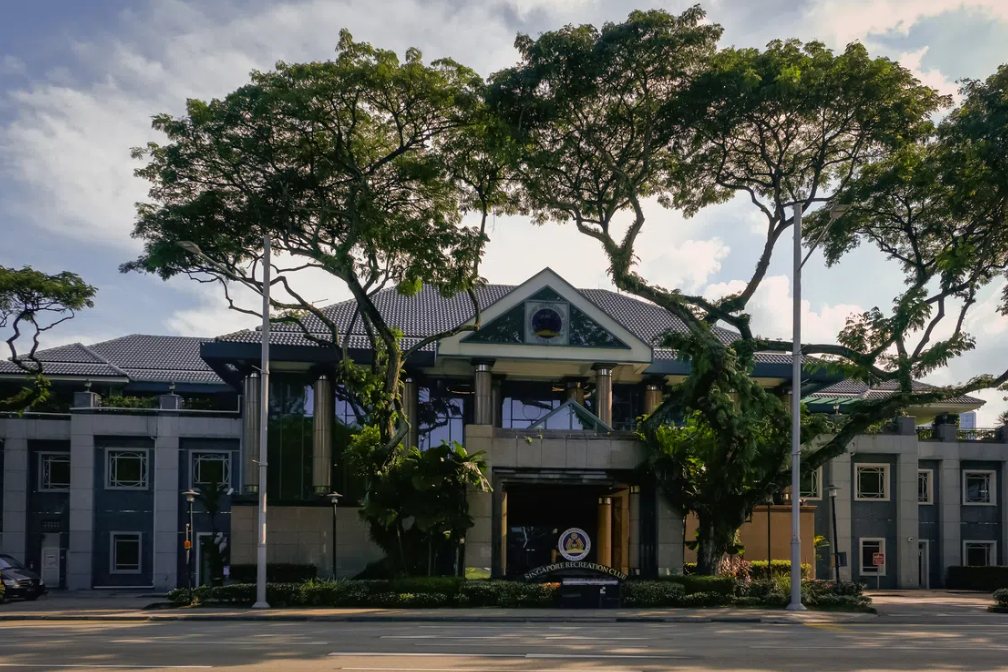
A significant governance dispute at Singapore's prestigious recreation club has cleared a preliminary legal hurdle as a High Court judge on August 26 ruled that the case raises substantive issues worthy of trial. The disagreement centres on whether the Singapore Recreation Club properly obtained member approval to transform its traditional billiards room into a contemporary co-working space, with the court finding merit in arguments that the voting process may have violated the club's own constitutional rules.
Two billiards section members, Sean Kerwin Mathews and Mu Yee Shyong, initiated legal action in November 2025 to overturn a resolution approved at an extraordinary general meeting on October 18, 2025. Senior Judge Chan Seng Onn determined that questions about the resolution's validity and the proper interpretation of voting requirements present matters that require a full courtroom examination rather than dismissal at an early procedural stage. The ruling overturned a lower court decision that would have terminated the case entirely, providing the complainants with an opportunity to present their evidence and arguments.
At the heart of the dispute lies a fundamental disagreement over voting rules. Mathews and Mu assert that the club's Constitution requires resolutions to be decided by members who are physically present at the meeting, with a threshold of at least 280 votes needed from the 559 members who attended. They emphasise that only 151 members voted for the resolution in question, falling well short of the required majority. The club and its management committee contend that the resolution passed with a simple majority of votes cast, according to their interpretation of the voting procedures.
The voting process at the October 2025 meeting introduced complexity that the judge highlighted as central to the case. The management committee presented three distinct resolutions using a structured two-slip voting system. Members voting yes on the first slip to proceed with the original relocation plan were instructed that the second voting slip did not apply to them. Those voting no on the first slip then received a second slip containing two alternative options: convert the billiards room into a co-working space, or integrate the billiards room within a larger co-working space. This arrangement meant members could not vote against both alternatives simultaneously without their votes being invalidated.
Judge Chan expressed significant concern about this voting mechanism, noting what he called the "peculiar" circumstances surrounding the options presented to members. He observed that the way the management committee structured the voting process restricted members' ability to reject both alternative proposals, essentially curtailing their right to say no. The judge suggested that such constraints on voting entitlement raised legitimate questions about whether proper voting procedures had been followed, particularly when members received conflicting instructions about how to express their preferences.
A critical issue examined by the court concerns how spoiled and blank votes should be treated. Out of 514 ballots cast, 151 members voted in favour of the resolution while 125 voted against. An additional 183 votes were spoiled and 55 were left blank. The complainants argue that blank votes should be counted alongside the 125 opposing votes, creating a total of 180 against the resolution, which would constitute a greater number than those in favour. This distinction would determine whether the required threshold was met, depending on how the Constitution is interpreted. The judge found this question unresolved and worthy of examination at trial.
The underlying transformation plan itself originated from March 2024, when club members approved a $16.6 million redevelopment scheme to relocate the billiards room from level 2 to basement 2 and construct a co-working facility on the upper level. Initially, the club budgeted S$1.5 million for potential land betterment charges, a tax based on increases in property values. However, when actual charges materialised at S$4.9 million, substantially exceeding the estimate, the management committee determined that the original plan had become financially unviable. This cost overrun prompted the convening of the October meeting to seek member approval for alternative approaches.
The management committee's defensive arguments focused on practical concerns about pursuing the case. They contended that invalidating the resolution would serve no productive purpose and would leave the club in a state of deadlock with no clear path forward. However, Judge Chan rejected this reasoning, noting that a fresh vote could be held if the current resolution were overturned. He emphasised that the claimants were simply seeking a fair voting process on the substantive issue, and that this legitimate objective could hardly be dismissed as lacking purpose or utility.
The Singapore Recreation Club operates as a significant social institution with approximately 7,000 members, making governance decisions of consequence not only for members but potentially for broader reflection on how heritage organisations navigate modernisation while respecting member rights. The case illustrates growing tensions between the desire to adapt clubs and cultural institutions for contemporary use and the obligation to maintain fair democratic processes that respect member interests and constitutional requirements. For Malaysian observers, the dispute resonates with similar questions facing prestigious clubs and social organisations throughout Southeast Asia regarding how to balance tradition with evolution.
The trial will ultimately determine whether the management committee's conduct aligned with the club's constitutional framework and whether proper voting thresholds were genuinely met. The judgment has implications beyond this specific dispute, potentially establishing important precedents regarding how member organisations must structure voting procedures and interpret their constitutional rules. The fact that the court identified triable issues despite the management committee's arguments for early dismissal suggests that the judge found the complainants' concerns sufficiently serious to warrant full examination.
The case also highlights how voting procedures, while often appearing technical and procedural, carry significant weight in safeguarding member democracy within organisations. When organisations craft voting mechanisms that constrain member options or require sophisticated interpretation of rules, courts become increasingly likely to scrutinise whether processes have maintained fairness. As the Recreation Club case moves toward trial, both club management and member advocates will be closely observing how the judiciary approaches questions of constitutional interpretation and voting rights in private member organisations.

