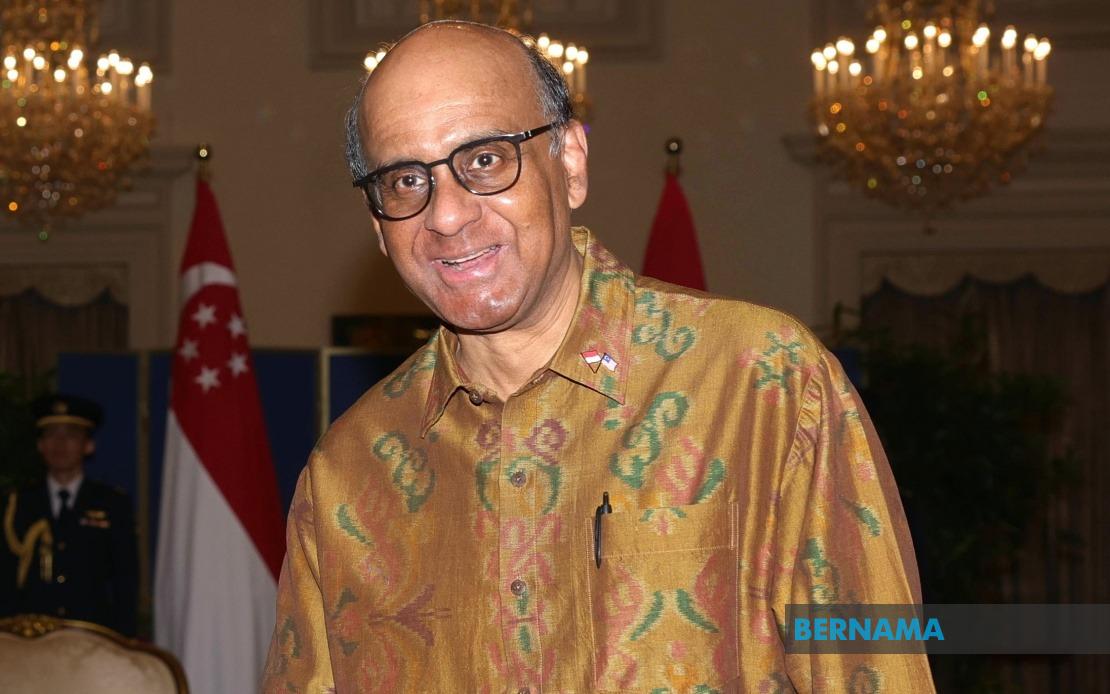
Singapore President Tharman Shanmugaratnam will embark on a three-day state visit to Malaysia beginning July 13, marking his inaugural visit to the neighbouring nation since assuming the presidency of Singapore in September 2023. The Foreign Ministry announced the engagement as a reciprocal gesture following His Majesty Sultan Ibrahim's state visit to Singapore in May 2024, with the trip running through July 15 at the royal invitation. The visit represents a reaffirmation of diplomatic ties between two countries whose relationship has long shaped regional stability and economic cooperation in Southeast Asia.
The state visit carries particular symbolic weight for both nations. For Tharman, who became Singapore's ninth president on September 14, 2023, this journey to Malaysia constitutes his debut presidential state visit abroad, highlighting Malaysia's importance in Singapore's diplomatic calendar. The timing reflects the established protocol of reciprocal high-level engagement between the two countries' leadership, with such exchanges serving as opportunities to review bilateral matters and chart future cooperation.
During his time in Malaysia, Tharman will receive a full ceremonial programme befitting a presidential state visit. He will be formally welcomed with a State Welcoming Ceremony upon arrival, followed by an audience with His Majesty Sultan Ibrahim at Istana Negara, the seat of Malaysia's constitutional monarchy. The itinerary will culminate in a State Banquet, underlining the diplomatic formality and importance Malaysia attaches to the engagement. Prime Minister Datuk Seri Anwar Ibrahim has scheduled a courtesy call with the Singapore president, providing an opportunity for bilateral discussions at the executive level.
Tharman will not travel alone to Malaysia. His spouse, Jane Ittogi Shanmugaratnam, will accompany him, along with several Singapore ministers and senior officials. This composition of the delegation reflects the multifaceted nature of contemporary Malaysia-Singapore relations, extending beyond ceremonial courtesy to encompass substantive policy discussions across multiple portfolios. The presence of ministerial counterparts facilitates parallel engagements on technical and sectoral matters during the visit window.
The economic dimension of the Malaysia-Singapore relationship underscores why such high-level visits remain consequential. Singapore stands as Malaysia's second-largest trading partner globally, and reciprocally, Malaysia represents Singapore's largest trading partner within the Association of Southeast Asian Nations. This complementary economic structure has evolved over decades, reflecting geographical proximity, cultural ties, and carefully managed cooperation despite historical tensions. The trade relationship encompasses manufacturing, services, finance, and digital commerce, with both nations serving as crucial nodes in regional supply chains.
Recent trade figures demonstrate the vitality of this economic partnership. During 2025, bilateral trade between Malaysia and Singapore reached RM402.35 billion, equivalent to approximately US$93.97 billion, marking a modest increase of 1.5 percent compared with the preceding year. While this growth rate reflects broader global economic headwinds and cyclical pressures affecting manufacturing and trade flows across Southeast Asia, the absolute volume underscores the relationship's commercial significance. More encouraging signs emerged in the first five months of 2026, when bilateral trade surged by 14.5 percent year-on-year to RM189.90 billion (US$47.87 billion), compared with RM165.93 billion (US$37.65 billion) recorded during the same period in 2025.
This accelerating trade momentum carries implications for Malaysian policymakers and businesses. The double-digit growth recorded in early 2026 suggests renewed economic dynamism between the two nations, potentially reflecting recovery in key sectors or the maturation of recent trade agreements and investment initiatives. For Malaysian companies, particularly those in manufacturing, logistics, and services, Singapore continues to offer critical market access and investment opportunities. Conversely, Malaysian resources, agricultural products, and labour have remained essential to Singapore's economic model.
The Foreign Ministry's framing of this visit emphasises the "strong and enduring partnership" between Malaysia and Singapore, with language highlighting "deepening cooperation across key areas of mutual interest." This diplomatic formulation acknowledges both the stability of the relationship and ongoing efforts to expand collaboration. For Malaysian and Singaporean readers, this translates to substantive engagement on transnational issues including maritime security, digital economy development, talent mobility, and environmental management across shared water resources and airspace.
From a broader Southeast Asian perspective, the Malaysia-Singapore state visit cycle carries significance beyond bilateral dimensions. Both nations function as anchor economies within ASEAN, with their relationship influencing regional dynamics. Smooth, ceremonial high-level engagement signals stability to international investors and reinforces ASEAN's internal cohesion. Any deterioration in Malaysia-Singapore relations has historically rippled across the region, affecting trade patterns and political calculations among other member states. Conversely, demonstrable diplomatic warmth between Kuala Lumpur and Singapore strengthens ASEAN's collective negotiating position in regional forums and international engagement.
The visit also reflects Tharman's approach to his presidency. Since taking office, he has emphasised Singapore's role as a regional partner and bridge-builder, distinguishing his tenure through greater diplomatic visibility compared with his predecessor. This Malaysia visit aligns with that trajectory, positioning Singapore not merely as a commercial hub but as an engaged stakeholder in Southeast Asian geopolitics and development. For Malaysian observers, Tharman's presidency represents continuity with Singapore's established foreign policy approach while potentially signalling refinements in tone and engagement style.
Looking forward, the outcome of this state visit will likely influence the agenda for subsequent bilateral meetings and working group discussions. Both governments will assess areas requiring policy adjustment, opportunities for expanded collaboration, and potential friction points requiring management. The ceremonial and political success of the visit contributes to maintaining the diplomatic capital essential for navigating inevitable challenges that arise between neighbouring nations sharing land borders, maritime boundaries, water agreements, and dense people-to-people ties.
Ultimately, Tharman's July visit to Malaysia represents routine yet consequential statecraft between two countries whose relationship remains central to regional prosperity and stability. While state visits often involve ceremonial elements dominating public announcements, the substantive discussions occurring behind formal events shape bilateral policy and economic trajectories. Malaysian stakeholders, from government officials to business leaders and civil society, will monitor both the symbolic messages and practical outcomes emerging from this diplomatic engagement, recognising that Malaysia-Singapore relations fundamentally influence opportunities and constraints within the broader Southeast Asian landscape.

