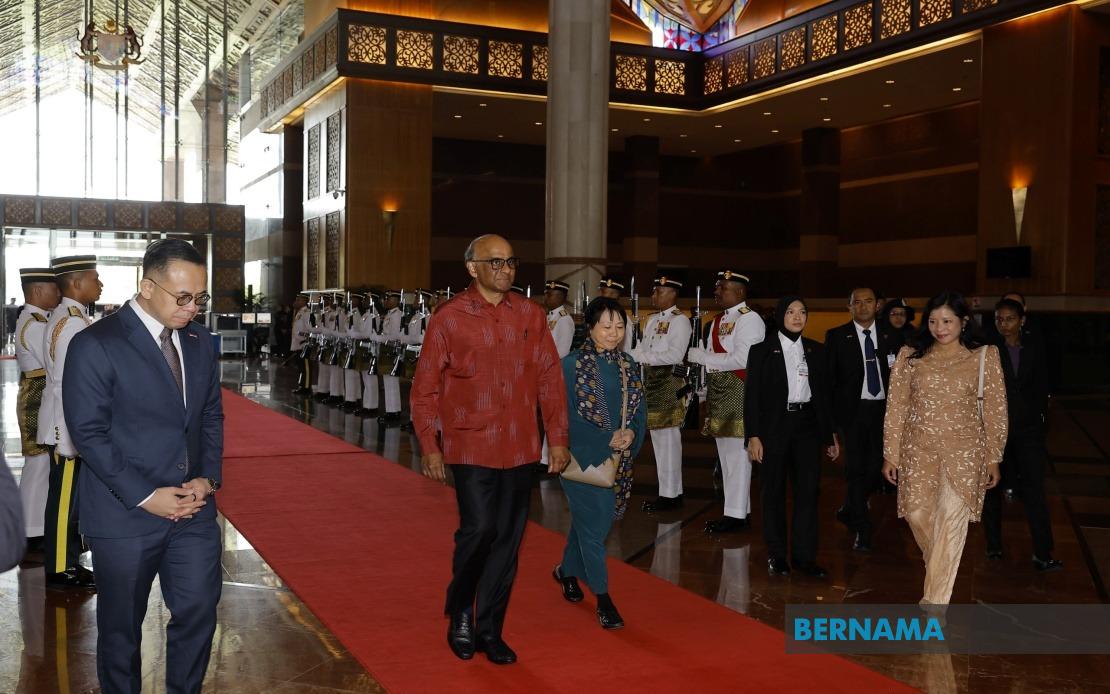
Singapore President Tharman Shanmugaratnam has concluded his three-day state visit to Malaysia, departing from Kuala Lumpur International Airport on the afternoon of July 15. Accompanied by his wife Jane Ittogi and senior officials, the President boarded a commercial flight at 2.20 pm, marking the end of a diplomatic engagement that underscored the enduring partnership between Malaysia and Singapore. Before his departure from the Bunga Raya Complex at KLIA Terminal 1, Tharman received a formal static Guard of Honour composed of two officers and 26 personnel from the First Battalion of the Royal Ranger Regiment, led by Captain Muhammad Hanafi Ja'afar. Minister of Entrepreneur and Cooperatives Development Steven Sim attended the farewell ceremony, reflecting the high-level attention accorded to the visiting dignitary.
The three-day engagement represents the first state visit by Tharman since his inauguration as Singapore's ninth President on September 14, 2023. His arrival on Sunday came at the formal invitation of His Majesty Sultan Ibrahim, King of Malaysia, setting the stage for a series of high-profile meetings and ceremonial functions. The timing of the visit carries particular significance as it reciprocates Sultan Ibrahim's state visit to Singapore held on May 6 and 7, 2024, demonstrating the reciprocal nature of diplomatic relations between the two nations. This pattern of mutual state visits at the highest level exemplifies how Malaysia and Singapore maintain their relationship through regular engagement at the apex of their respective governments.
The substantive programme during Tharman's stay encompassed formal protocols and substantive engagement with Malaysia's leadership. On Monday, the President underwent a full state welcoming ceremony before proceeding to an audience with Sultan Ibrahim at Istana Negara, the principal royal residence. This formal reception highlighted the ceremonial importance Malaysia places on the visit. Subsequently, Prime Minister Datuk Seri Anwar Ibrahim extended a courtesy call to the visiting President, providing an opportunity for substantive discussions on bilateral matters. The attendance of senior cabinet ministers—including Foreign Minister Datuk Seri Mohamad Hasan, Investment, Trade and Industry Minister Datuk Seri Johari Abdul Ghani, and Steven Sim—underscored the breadth of issues likely addressed during these consultations.
Beyond the federal capital, the visit extended to Selangor, where Sultan Sharafuddin Idris Shah, the Sultan of Selangor, granted an audience to Tharman at Istana Alam Shah. This additional engagement with state-level leadership demonstrates how diplomatic visits to Malaysia frequently involve interaction with both the Yang di-Pertuan Agong and individual sultans, reflecting the constitutional structure of Malaysia's monarchy. Such multi-layered engagement ensures that visiting dignitaries establish connections across the various centres of formal authority in the federation.
The bilateral relationship between Malaysia and Singapore has historically centred on managing shared interests and addressing common challenges arising from their geographic proximity and interconnected economies. Both nations remain committed to facilitating trade, investment, and people-to-people exchanges that have generated significant mutual benefits over decades. Infrastructure projects, water agreements, and security cooperation represent substantive areas of ongoing collaboration that require regular high-level attention. State visits of this nature provide crucial platforms for reviewing progress on these initiatives and charting pathways for future cooperation.
For Malaysian policymakers and the broader Southeast Asian region, Tharman's visit carries implications for Singapore's foreign policy orientation under his presidency. As a technocratic leader with deep experience in economic policy and financial matters, his ascent to the presidency signals continuity in Singapore's pragmatic approach to international relations. His engagement with Malaysian leadership during this visit suggests sustained commitment to addressing bilateral issues collaboratively and maintaining the stability that underpins regional prosperity. The substantive nature of meetings with the Prime Minister and various ministers indicates that economic and trade dimensions remain central to the bilateral agenda.
Malaysia's careful orchestration of the state visit—complete with ceremonial protocols, high-level receptions, and multi-layered engagement—reflects the country's recognition of Singapore's importance as a key regional partner. The involvement of multiple ministers in the courtesy call with Tharman indicates that Malaysian officials view this visit as an opportunity to advance cooperation across diverse portfolios. From infrastructure to investment to security concerns, the bilateral relationship encompasses issues that transcend traditional diplomatic categories and require coordinated action at multiple governmental levels.
The reciprocal nature of state visits between Sultan Ibrahim and President Tharman exemplifies the institutionalized patterns of engagement that characterise Malaysia-Singapore relations. These regular high-level interactions ensure that grievances can be aired, opportunities identified, and misunderstandings clarified before they escalate into disputes. In a region where bilateral tensions can occasionally flare, the existence of these structured engagement mechanisms provides reassurance to both governments and the broader international community that the two nations remain committed to peaceful coexistence and mutually beneficial cooperation.
As Tharman returned to Singapore following his visit, both nations would likely view the engagement as successful in reaffirming their commitment to the relationship. For Malaysia's government, the visit provided an opportunity to demonstrate its capacity to engage effectively with regional leaders and its commitment to maintaining stable relations with its most important neighbour. For Singapore, Tharman's successful first state visit as President established his credentials as a diplomatic representative of his nation and reinforced Singapore's position as a valued partner within the region's diplomatic ecosystem. Moving forward, such visits will continue to serve as vital mechanisms for managing the complex web of interests that bind Malaysia and Singapore together.

