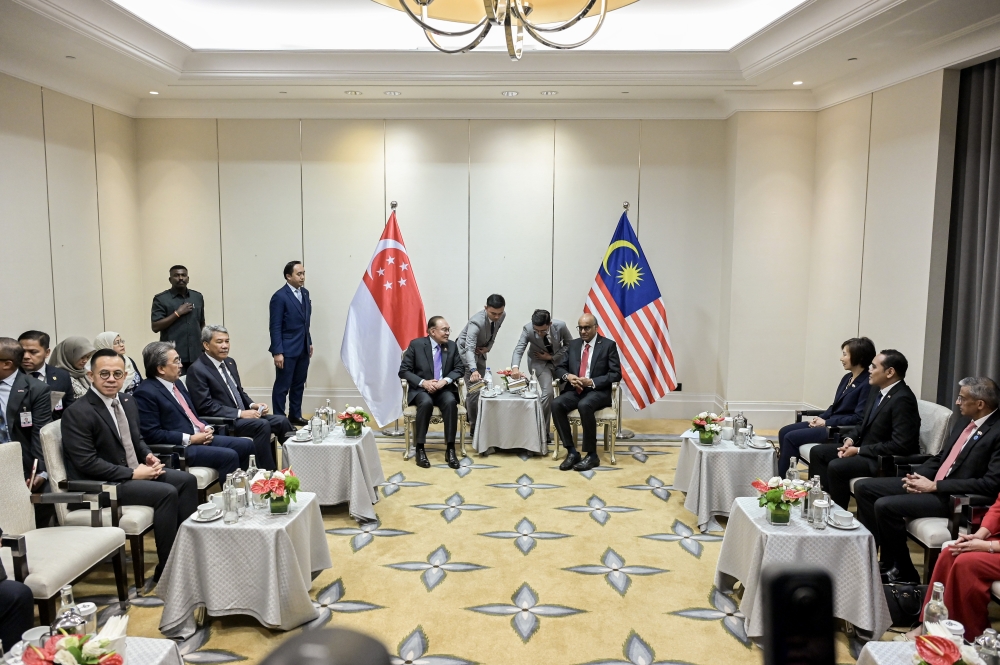
Singapore President Halimah Yacob conducted a substantive 40-minute meeting with Prime Minister Datuk Seri Anwar Ibrahim on Monday during an official state visit to Kuala Lumpur, signalling the importance both governments place on deepening their relationship. The encounter, held as part of the president's ceremonial visit to Malaysia, provided both leaders with an opportunity to address matters of mutual concern and chart the course for future cooperation between the two closest neighbours in Southeast Asia.
The timing of President Halimah's visit carries particular significance given the broader regional context. Malaysia and Singapore, despite their geographical proximity and interconnected economies, have periodically faced tensions over maritime boundaries, water agreements, and infrastructure projects. This state visit represents a deliberate effort by both nations to reinforce diplomatic channels and demonstrate commitment to resolving outstanding issues through dialogue rather than confrontation. For Malaysia, hosting a Singapore president underscores the country's role as a key diplomatic player in Southeast Asia and its willingness to maintain stable relations with all neighbours.
During their discussion, the leaders likely explored avenues for economic cooperation and trade expansion. The two nations share intricate supply chains, with tens of thousands of Malaysians working in Singapore and significant numbers of Singaporeans commuting to or investing in Malaysia. Their bilateral trade relationship, worth several billion ringgit annually, depends fundamentally on political stability and mutual understanding. Any deterioration in relations ripples through business communities on both sides of the causeway, making these high-level meetings economically consequential for ordinary citizens.
Infrastructure and connectivity projects would have featured prominently in their conversation. The proposed high-speed rail linking Kuala Lumpur and Singapore remains a significant undertaking with implications for both nations' regional positioning and economic integration. Similarly, the two countries continue discussions on port development, aviation arrangements, and digital connectivity that directly affect commercial and personal movement across the border. PM Anwar's administration has prioritised infrastructure modernisation as part of its economic agenda, and cooperation with Singapore is central to those ambitions.
Water arrangements represent another substantive area where both leaders hold significant responsibility. Malaysia supplies water to Singapore under longstanding agreements, and the sustainability of this arrangement amid climate change and population growth demands ongoing dialogue. These technical matters, though sometimes overlooked in broader diplomatic narratives, directly impact millions of people on both sides and require careful, consistent engagement at the highest political levels. President Halimah's visit provides an appropriate forum for reviewing implementation of existing agreements and discussing adaptations needed for future years.
Security cooperation between Malaysia and Singapore extends across multiple domains, from maritime patrol and counterterrorism to cybersecurity and organised crime prevention. Both nations face transnational challenges that require seamless coordination and intelligence sharing. The courtesy call between the president and prime minister reinforces institutional relationships and allows leaders to provide strategic direction to their security establishments. Given regional anxieties about maritime safety in the Strait of Malacca and other waterways, security dialogue remains paramount.
The presidential visit also carries symbolic importance for Malaysia's international standing. Receiving a state visit from Singapore's head of state demonstrates Malaysia's position as a respected regional player worthy of high-level visits. For PM Anwar, now in his second term, such visits validate his government's diplomatic initiatives and reinforce his role in shaping Malaysia's regional relationships. The meeting reflects confidence in the stability of his administration and its ability to manage complex bilateral relationships effectively.
From Singapore's perspective, President Halimah's presence in Kuala Lumpur sends a message of continuity and commitment to existing relationships despite any periodic tensions. The 40-minute duration of the courtesy call suggests substantive engagement rather than merely ceremonial interaction, indicating both sides came prepared with substantive agenda items. Singapore's government carefully calibrates such visits to ensure they achieve specific diplomatic objectives while maintaining relations with all Southeast Asian neighbours.
The broader context of Malaysian-Singaporean relations includes generational shifts in both countries' leadership and evolving economic models. Younger decision-makers on both sides have less historical baggage regarding past disputes and may bring fresh perspectives to long-standing issues. President Halimah, as a female leader in a predominantly male regional political landscape, also brings particular perspectives and approaches to diplomatic engagement that merit consideration.
Looking forward, the substantive meeting between these leaders likely produced agreements or understandings to be implemented through technical committees and governmental agencies. Such state visits typically culminate in joint statements outlining areas of cooperation and mutual interest. The effectiveness of these visits ultimately depends on whether commitments translate into concrete actions that benefit both nations' economies, security, and citizens' quality of life. Malaysia and Singapore's ability to work productively together influences not just bilateral relations but the entire Southeast Asian region's stability and prosperity, making such high-level diplomatic engagements genuinely consequential for the wider community of nations.

