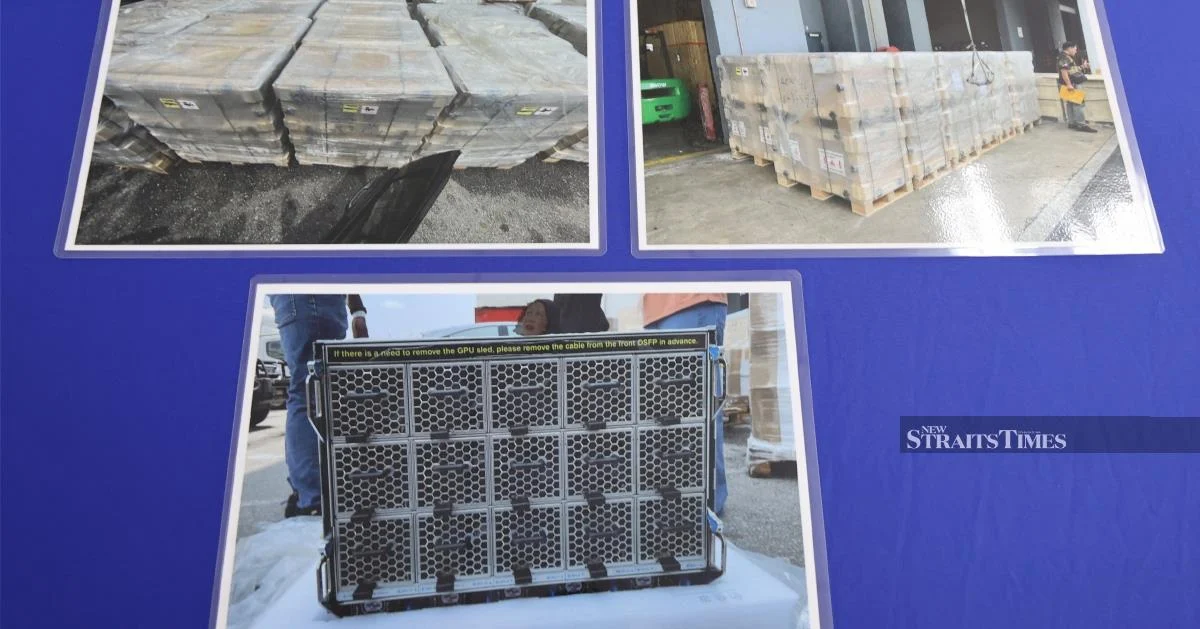
Singapore's police force has moved to seize a high-value residential property worth more than US$40 million, marking a significant escalation in an ongoing fraud investigation centred on the alleged illegal transfer of advanced AI chips in contravention of stringent United States export control regulations. The property seizure was announced Wednesday and represents the authorities' determination to dismantle what officials believe may be a sophisticated scheme to circumvent international technology restrictions.
The investigation touches on a critical flashpoint in contemporary geopolitics, where semiconductors designated for artificial intelligence applications have become subject to increasingly rigorous oversight from Washington. The United States has implemented comprehensive export controls designed to prevent advanced AI processing chips from reaching destinations deemed strategically sensitive, particularly China. These restrictions form a cornerstone of America's broader effort to maintain technological advantage and limit potential military applications of cutting-edge computing technology.
The bungalow seizure signals that Singapore's authorities are pursuing not only the individuals allegedly involved in the scheme but also targeting assets that may have been acquired through proceeds derived from the fraudulent transactions. This multi-pronged enforcement approach underscores the seriousness with which the city-state treats violations involving weapons proliferation concerns and circumvention of international trade restrictions. The property's substantial value—exceeding US$40 million—indicates investigators may believe the alleged illicit activities generated considerable financial returns.
Singapore's position as a global financial hub and major technology entrepot makes it a crucial jurisdiction for monitoring violations of export control regimes. The island nation hosts headquarters and operations for numerous multinational technology companies and serves as a transshipment point for electronics and semiconductors moving throughout Asia. This geographic and commercial prominence means that enforcement actions undertaken in Singapore reverberate across regional supply chains and send clear messages to international business communities about compliance expectations.
For Malaysian readers and businesses operating in Southeast Asia, this development carries significant implications. The region has become increasingly integrated into global semiconductor supply chains, with Malaysia hosting major chip manufacturing and assembly facilities. Any disruption in the legitimate technology trade resulting from enforcement actions against smuggling networks could affect regional commerce. Moreover, Malaysian companies with operations in Singapore or involvement in technology distribution must ensure their own compliance frameworks meet stringent international standards to avoid inadvertent exposure to legal jeopardy.
The investigation reflects broader concerns about technology smuggling networks that exploit Southeast Asia's logistical infrastructure and regulatory differences to route restricted goods through alternative pathways. Sophisticated operators have historically attempted to mask the true end-users of controlled technology by routing shipments through intermediary jurisdictions and employing false documentation. Singapore's law enforcement action demonstrates that regional authorities are increasingly effective at identifying and disrupting such operations before shipments reach their intended destinations.
US export controls on advanced semiconductors have intensified dramatically following geopolitical tensions and strategic competition between Washington and Beijing. Companies handling any technology with potential dual-use applications—civilian and military purposes—face complex compliance obligations. Violations carry severe criminal and civil penalties, including substantial prison sentences for individuals and substantial financial penalties for organisations. The Singapore case illustrates that enforcement is not merely theoretical but actively pursued across international boundaries.
The alleged fraud component of the investigation suggests that misrepresentation occurred at some stage of the transaction process. Perpetrators may have provided false end-use certificates, misstated intended destinations, or engaged in other deceptive practices to secure authorization for shipments or to expedite transactions. Such fraudulent schemes often involve sophisticated conspiracies spanning multiple jurisdictions and coordinating efforts across various commercial and financial intermediaries, making detection challenging but not impossible for well-resourced law enforcement agencies.
Singapore's commitment to pursuing this investigation reflects the government's understanding that its reputation as a trusted international financial and business centre depends upon rigorous enforcement of laws governing illicit commerce and sanctions evasion. Allowing violations to proceed unchecked would undermine Singapore's standing with major trading partners and potentially invite enhanced scrutiny or restrictions on legitimate commerce. The police action therefore serves both immediate criminal justice purposes and broader strategic interests in maintaining Singapore's position within international regulatory frameworks.
For regional businesses and compliance officers, the investigation underscores the critical importance of enhanced due diligence procedures when dealing with high-value technology transactions. Companies must verify the legitimacy of trading partners, scrutinize documentation requirements, and ensure that end-use statements accurately reflect genuine intended applications. Third-party compliance specialists and legal advisers increasingly recommend independent verification of complex technology transactions to mitigate risk exposure.
The seizure of the property also raises questions about asset recovery and the proceeds of crime. Many jurisdictions, including Singapore, maintain legislation permitting forfeiture of assets derived from criminal activity, even if those assets themselves were not directly involved in the offence. Successful prosecution may therefore result in permanent loss of valuable properties and financial assets, providing powerful deterrent effects beyond criminal sentences. This enforcement approach targets not only perpetrators' freedom but also their accumulated wealth.
Looking forward, this investigation will likely contribute to evolving best practices regarding oversight of semiconductor supply chains throughout Southeast Asia. Regional governments are likely to strengthen coordination mechanisms and information-sharing protocols to identify similar schemes. Malaysian authorities, in particular, may implement enhanced screening procedures at ports and logistics facilities handling semiconductor shipments, particularly when such goods show unusual routing patterns or involve undocumented intermediaries.
The broader context involves an accelerating arms race in artificial intelligence technology, where nations compete aggressively for access to advanced computing infrastructure. Export control regimes represent governments' primary tool for managing this competition, but their effectiveness depends upon consistent enforcement across multiple jurisdictions. Singapore's decisive action in seizing the luxury bungalow demonstrates that Southeast Asian authorities are actively participating in this enforcement ecosystem, protecting the integrity of international trade systems while preventing technology flows that could undermine regional security interests.

